
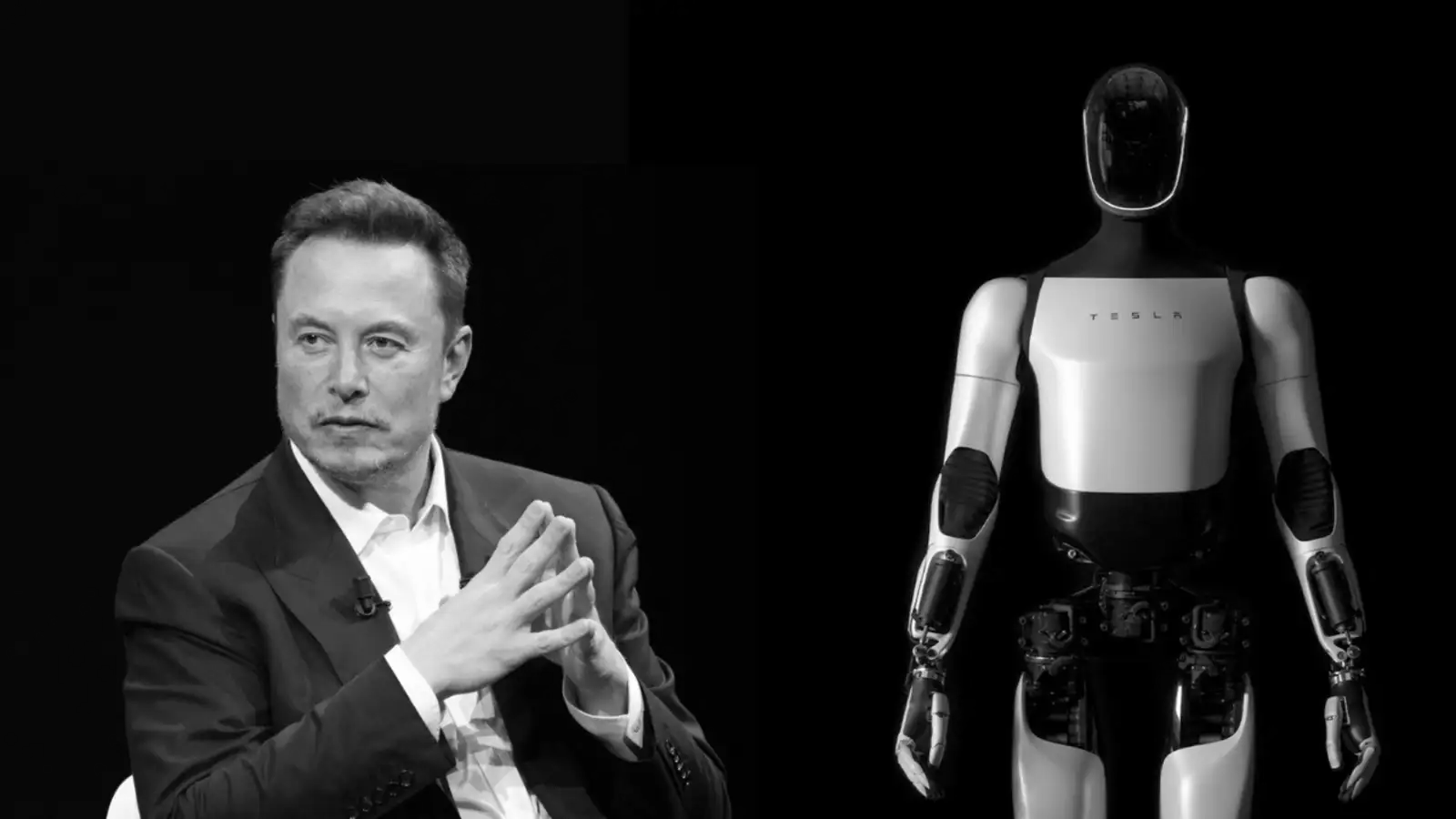
“Humans could upload their minds into robots,” says Elon Musk
Elon Musk, CEO of Tesla, has once again painted a picture of a future that feels like science fiction. At Tesla’s recent shareholder meeting, he suggested that within the next two decades, humans might be able to upload their consciousness into Tesla’s humanoid robot, Optimus. Using his brain-computer interface company, Neuralink, Musk envisions creating a “snapshot” of a person’s mind, capturing memories, personality, and thought patterns, and transferring it into a robotic body. “It’s probably less than 20 years,” he said, adding that while the concept is futuristic, it could eventually become reality.
Musk was careful to clarify that such an uploaded mind would not be an exact replica of the original person. “You won’t quite be the same,” he said. “You’ll be a little different because you’ll be in a robot body, and the mental snapshot will not be precise.” He reflected on human identity, asking, “Are you the same person that you were five years ago? … a lot of things have changed.” His comments prompted many to wonder if this could be a step toward digital immortality.
Optimus itself is Tesla’s vision for a fully autonomous, bipedal robot designed to take over repetitive, dangerous, or physically demanding tasks. Revealed in 2021, it stands about 5 feet 8 inches tall, weighs around 56 kilograms, and is powered by Tesla’s AI, the same neural network system behind the company’s self-driving cars. Musk hopes the robot will evolve from industrial applications to household use, safely interacting with humans and assisting with everyday tasks.
Beyond the technical marvel, Musk believes Optimus could fundamentally reshape society. By handling manual and repetitive labor, these robots could free humans to focus on creativity, education, and innovation. Musk has even suggested that Optimus could help reduce poverty by transforming the way people work. In the long term, he aims to make the robots affordable for every household, describing the project as potentially even more significant than Tesla’s car business.
While the timeline and technical hurdles are enormous, Musk remains optimistic. He has previously discussed the idea of storing a “good approximation” of human memories in the cloud, which could later be downloaded into a robot body. The implications for identity, ethics, and society are profound, raising questions about who can access such technology and what it means to be human.
For now, Optimus is still learning to walk and perform basic tasks. But if Musk’s predictions hold even partially true, the robot could one day redefine human life, labor, and perhaps even what it means to be “alive.” Whether that future excites or unsettles us may depend entirely on perspective, but one thing is clear: Musk’s vision continues to challenge the boundary between imagination and reality.