
How Do You Shut Down a Protest? Start With the Lights as CJP Protests Grow, Modi Finally Tweets
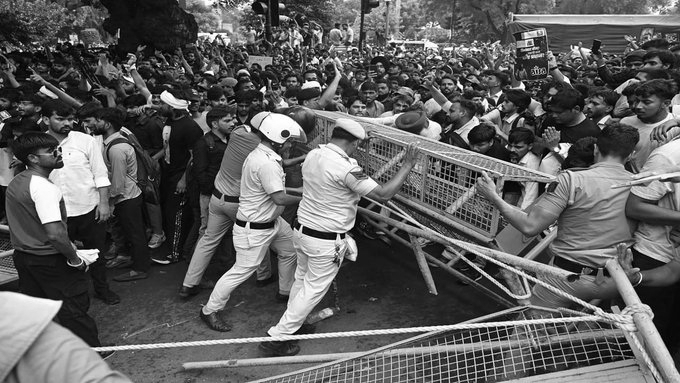
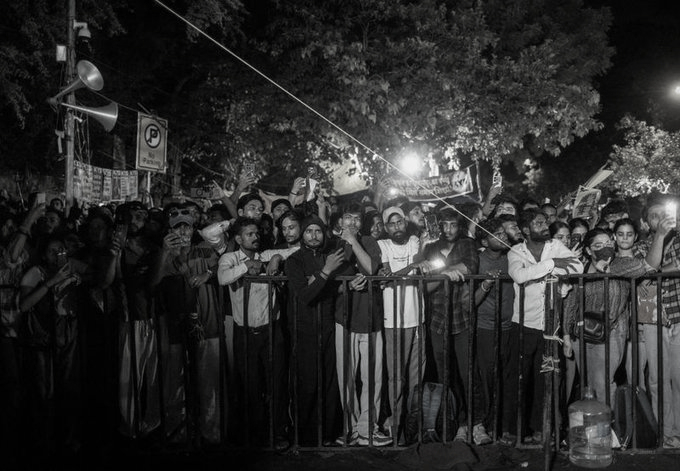
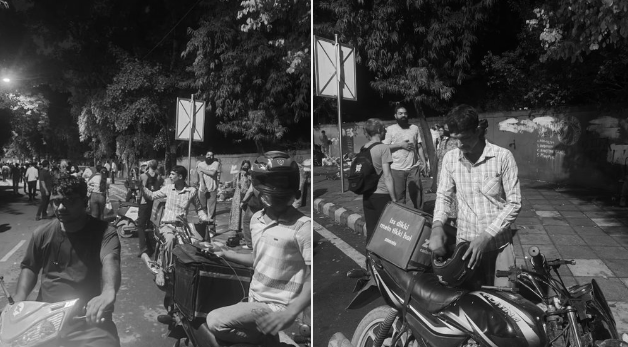
Day four, and the government's answer to a month of protest is to switch off the lights. Telecom providers were ordered to suspend internet within 1.5 km of Jantar Mantar overnight, the second blackout in three days, prompting CJP founder Abhijeet Dipke to ask if darkness was the warm-up for another crackdown. By morning, 16 Delhi Metro stations sat shuttered "till further instructions," among them Rajiv Chowk, Central Secretariat, ITO, Mandi House, Khan Market, and the Supreme Court station itself. It took the country's top court, of all places, to point out the obvious cost of that decision: lawyers, litigants and Registry staff simply couldn't get to the building where the law is supposed to be dispensed. CJI Surya Kant, hearing the plea from SCBA president Vikas Singh, said plainly that if the station wasn't reopened by lunchtime, the Court would intervene, and in the meantime directed that no lawyer be penalised with an adverse order simply for being unable to reach the building. It's a strange kind of protest management when even the judiciary has to remind the executive that a functioning court needs functioning access.
Overnight, fresh clashes broke out near Connaught Place, leaving two ACPs among the injured after alleged stone-pelting. CJP says "outsiders" are being planted by the BJP to manufacture exactly this kind of chaos, true or not, the timing keeps being convenient: every time the story is about a minister who hasn't resigned, a stone gets thrown. And this time the footage cut both ways. A Delhi Police officer was filmed slapping a woman protester as she was being removed from Jantar Mantar, and the clip went viral fast enough that the officer was pulled off the ground; TMC's Saket Gokhale has filed a formal complaint over it. In Mumbai, a police officer was suspended after his own viral moment, a threat, caught on camera, to plant drugs on NEET protesters to make charges stick. Two cities, two officers, one pattern: when the pressure to show results outweighs the instruction to behave, students and their allies pay for it on camera.
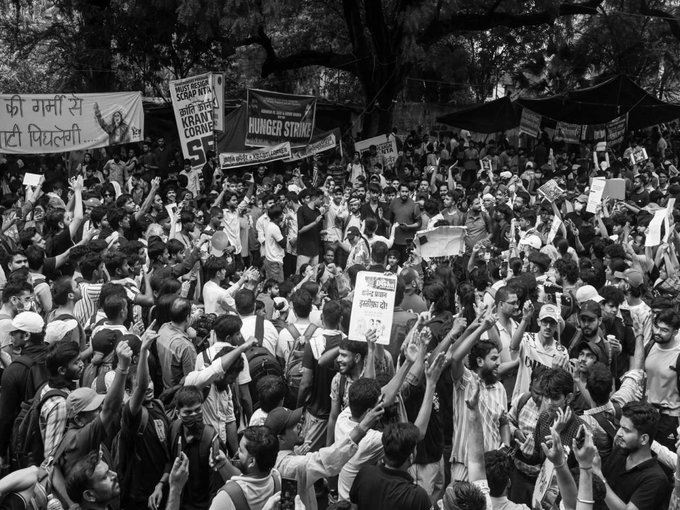
It's worth being precise about what's actually being asked for, because two separate demands are getting flattened into one in the coverage. CJP's core demand hasn't moved: Dharmendra Pradhan's resignation, accountability for the paper leak, and reform of an exam system that has failed 24 lakh students. Sonam Wangchuk's hunger strike, 25 days in and 11 kilograms lighter, run from a Gurugram hospital bed, is narrower and, frankly, more modest: not the minister's resignation, but a written guarantee that no student who marched on July 20 will face force, an FIR, or retaliation. Fifteen Opposition MPs couldn't even get past police to see him and left a letter with his wife, Gitanjali Angmo, instead. The government has answered neither ask.
Into that vacuum, the Prime Minister tweeted again: " Nothing is more important than the welfare and future of our youth," unveiling fast-track courts for paper-leak convictions. CJP's reply came within the hour, and it wasn't gentle: fulfil the demands first, then talk about courts. Arvind Kejriwal made the same point in blunter terms, an announcement typed into a phone does not answer a month-long siege of the capital. JP Nadda, meanwhile, took a swing of his own at Rahul Gandhi's claim of 152 paper leaks in a decade, calling it "selective outrage" and asking why the Congress leader never raises the issue in states run by his own alliance partners, even as he said the Centre was ready to discuss the whole matter, and the leak claim, at length in Parliament. Whether that's a genuine olive branch or a debating point dressed up as one is something Parliament will presumably test soon enough.
Outside Delhi, the crackdown kept widening: a lathi-charge in Rajasthan's Banswara, over 100 detained in Nagpur, 3,500 VBA workers picked up ahead of a Maharashtra bandh, and in Mumbai, five days in, 400 people booked and 13 FIRs filed for the crime of assembling without permission, a toll serious enough that police have now imposed citywide prohibitory orders running all the way till August 6. Bihar's Katihar saw a baton-charge on protesting students, and somewhere in the numbers is a teenager hit by a pellet who may lose sight in one eye, a detail that should stop a news cycle cold and instead sits under the day's gold rates. Akhilesh Yadav called the Centre's posture "arrogance"; Delhi Police are reportedly weighing passport cancellations for those involved in this week's violence, an odd threat to level at a movement the government otherwise insists is mostly frightened, grieving students.
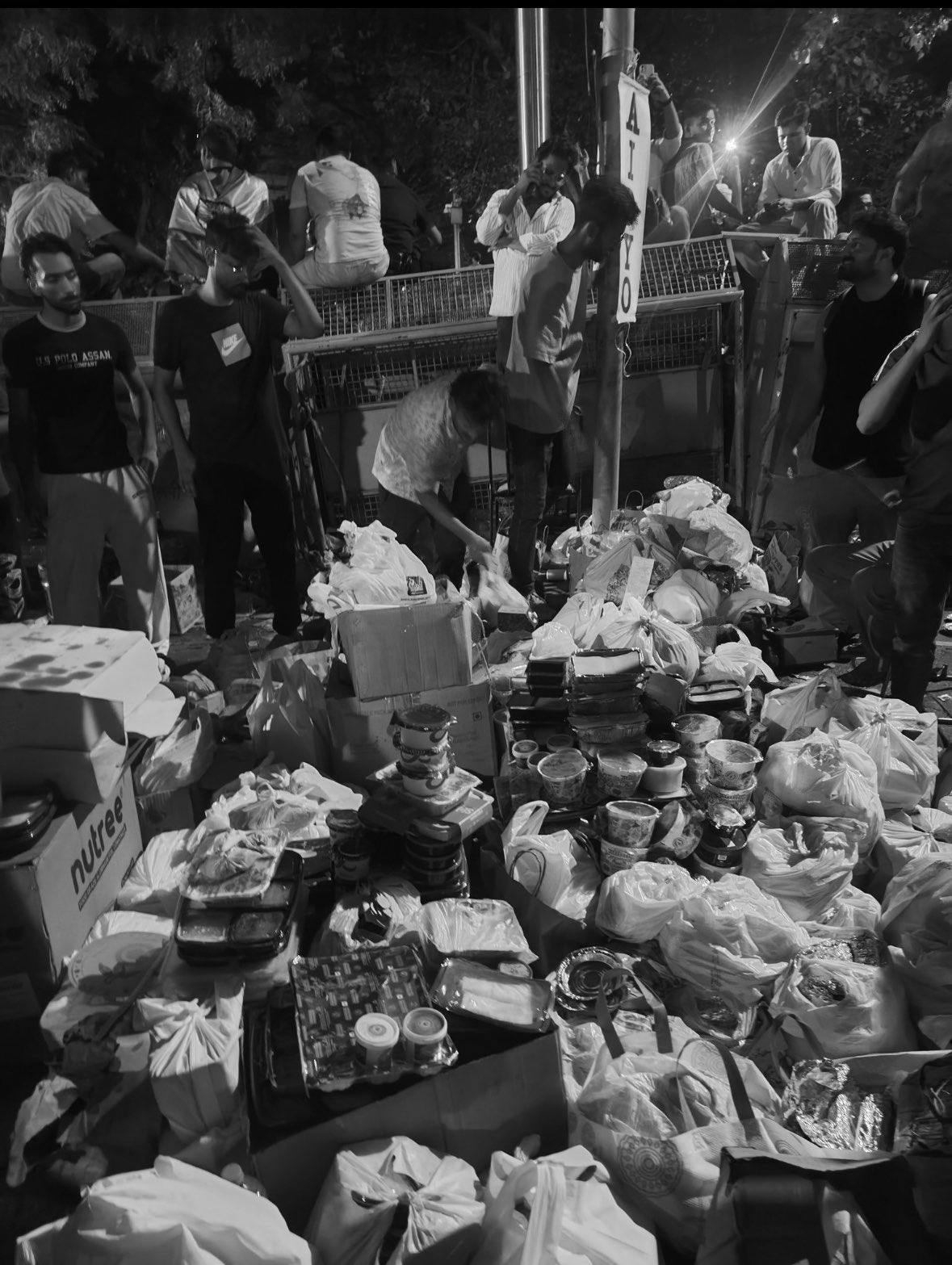
And still, somehow, the site keeps finding room for joy. Spider-Man and Hulk masks bob through the crowd between speeches, pizzas and golgappas pass hand to hand, and Naseeruddin Shah, Pa Ranjith and Arijit Singh have joined a list that already runs through Salman Khan, Kareena Kapoor, Alia Bhatt and Kamal Haasan, hardly the "sponsored" mob one Maharashtra BJP leader keeps insisting this is. Anna Hazare began a silent protest of his own. Supreme Court advocates recited the Preamble outside a bench that, a day earlier, wouldn't watch footage of alleged police brutality, though today that same bench found time to worry about its own commute. The Delhi High Court will hear a PIL on Friday. And by evening, even Abhijeet Dipke, the man who's been at the centre of all of it, admitted he needed " a few hours of rest " and stepped away from Jantar Mantar, a small, human reminder that a month-long protest runs on people, not just principle.
None of it is about one minister's chair or one leader's ambition. It's about a government one tweet, one locked hospital gate, and one blackout away from answering either demand it's been handed, so distracted managing its own optics that even its judges had to ask it to mind the metro.