
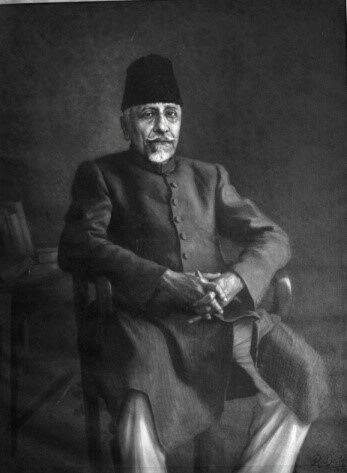
Honouring Maulana Azad and India’s Educational Journey
Every year on November 11, India observes National Education Day to commemorate the birth anniversary of Maulana Abul Kalam Azad, the nation’s first Education Minister. The day celebrates his monumental contributions to shaping modern India’s educational system and emphasizes the importance of literacy, learning, and inclusive development.
The Ministry of Education (formerly Ministry of Human Resource Development) officially declared in September 2008 that November 11 would be observed as National Education Day. Since then, schools, colleges, and educational institutions across the country conduct seminars, workshops, essay competitions, and awareness rallies to promote education and highlight the government’s commitment to accessible learning for all.
Significance of National Education Day
National Education Day serves as a platform to discuss reforms, address contemporary challenges in education, and reaffirm the constitutional right to education. It underlines that education is essential not only for academic success but also for critical thinking, innovation, and social progress.
Maulana Azad: A Visionary Leader
Born on November 11, 1888, in Mecca, Maulana Azad later settled in Calcutta (now Kolkata), where he received early education in Arabic, Persian, and Islamic theology. He also developed a deep interest in Western philosophy, science, and literature, which shaped his progressive worldview.
As a journalist, Azad founded influential Urdu weekly newspapers, Al-Hilal (1912) and Al-Balagh, which became platforms for anti-colonial ideas. Actively participating in India’s independence movement, he became one of the youngest presidents of the Indian National Congress in 1923 and worked closely with Mahatma Gandhi.
After independence, Azad served as India’s first Education Minister, implementing reforms that laid the foundation of modern Indian education. He emphasized universal primary education, adult literacy, technical training, and the role of education in social transformation. His belief in education as a tool for national development earned him the Bharat Ratna in 1992.
Legacy and Contributions to Indian Education
Maulana Azad was instrumental in establishing key institutions such as the University Grants Commission (UGC), Indian Institutes of Technology (IITs), and Indian Institute of Science (IISc), Bangalore. He also strengthened the All India Council for Technical Education (AICTE) and promoted research, science, and innovation.
Beyond formal education, he championed Indian languages, literature, and arts, helping establish Sahitya Akademi, Lalit Kala Akademi, and Sangeet Natak Akademi, which continue to preserve India’s rich cultural heritage. His vision was clear: education should empower citizens, promote equality, and foster national progress.
Evolution of Indian Education: From Azad’s Time to Today
India’s education system has undergone a remarkable transformation since Maulana Azad’s tenure as the first Education Minister. In the early years (1947–1958), foundational reforms focused on universal primary education, adult literacy, technical and vocational training, and the establishment of key institutions such as the UGC, IITs, and IISc. Between the late 1950s and 1980s, the system expanded further with the growth of primary and secondary schools, including in rural areas, and the establishment of AICTE to standardize technical education nationwide. The 1990s and 2000s brought significant reforms, including the expansion of IITs, NITs, and central universities, curriculum modernization, and the Right to Education movement culminating in the RTE Act of 2009, with a focus on inclusivity for SC/ST/OBC students and girls. In the past decade, modern developments such as digital learning platforms, AI-based education tools, and the National Education Policy 2020 have reshaped learning to be multidisciplinary, skill-oriented, and research-focused. Today, literacy has increased to around 77%, higher education opportunities have expanded dramatically, and education is more inclusive, technology-enabled, and globally competitive, fulfilling much of Azad’s vision for a progressive and empowered nation.
Key Comparison: Then vs Today
From Maulana Azad’s time to today, India’s education system has transformed remarkably. In Azad’s era, the literacy rate was around 12%, primary education was limited and largely urban-focused, and technical and higher education opportunities were scarce, with only a few IITs, IISc, and universities in existence. Women’s participation in education was low, and the curriculum was largely traditional and colonial-influenced. Today, literacy has risen to approximately 77%, primary education is nearly universal with improved rural coverage, and higher education has expanded to include hundreds of universities, IITs, IIMs, and professional colleges. Female enrollment is close to parity, and the curriculum has become multidisciplinary, skill-oriented, and aligned with the National Education Policy 2020. Education is now legally guaranteed, digitally supported, and more inclusive, reflecting the realization of Azad’s vision on a national scale.
International Perspective
While India observes National Education Day on November 11, the International Day of Education is celebrated globally on January 24, as designated by the United Nations. The 2025 theme, “AI and education: Preserving human agency in a world of automation”, highlights education’s role in preparing individuals and communities for technological change.
From Maulana Azad’s foundational reforms to today’s technology-enabled, inclusive education system, India has made remarkable progress in ensuring access to learning, promoting scientific research, and fostering social equity. National Education Day not only honours his legacy but also encourages ongoing efforts to make quality education a reality for all citizens.