
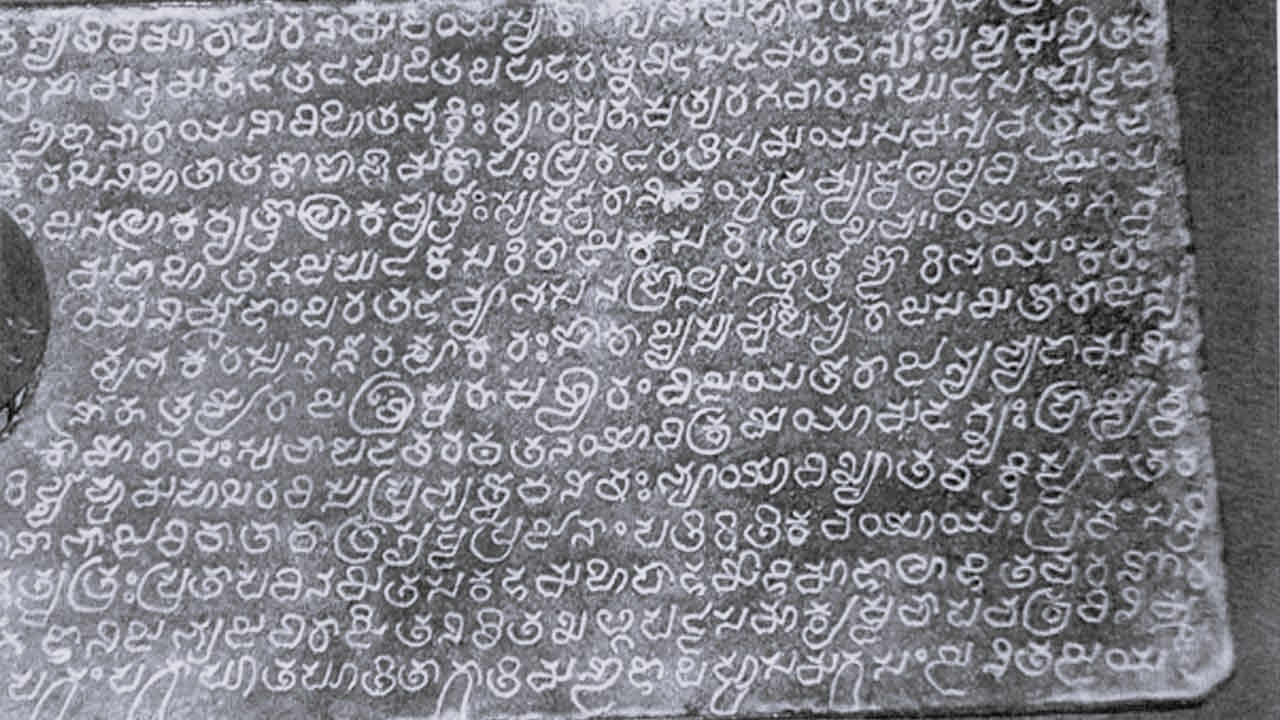
History as told by inscriptions
Inscriptions are the most authentic sources for understanding the history and culture of India. Inscriptions can be broadly classified into two main types based on their nature, the material they are inscribed on, and the subject matter they contain. These are written records carved on rocks, metals, or other hard surfaces, which provide historical understanding to the present generation about the political, social, religious, and economic conditions of the past. Let's learn about them...
Classification based on the surface material
Inscriptions can be categorized based on the surface they are carved upon. They are:
Rock Inscriptions (Shila Shashanalu): These are carved on large stone slabs, pillars, temple walls, or cave walls. They are the most robust and have survived intact for long periods. Examples include the inscriptions detailing Ashoka's Dharma policy and records of donations made by kings on temple walls.
Copper Plate Inscriptions (Tamra Shashanalu): These were inscribed on copper sheets or plates. These copper plates were usually bound together by a ring and secured with the king's seal. They were frequently used to record details of land grants made by kings or wealthy individuals to Brahmins, temples, or educational institutions.
Metal Inscriptions (Loha Shashanalu) : These are carved on other metal objects, pillars, statues, or coins made of materials like brass, iron, or gold. The inscription on the Iron Pillar of Mehrauli in Delhi is a famous example.
Clay Inscriptions (Mrunmaya Shashanalu): These are inscriptions carved on objects like pottery, bricks, or clay tablets (terracotta). They are found during archaeological excavations and help in understanding the lifestyle of the common people of that era.
Classification Based on Subject Matter
This classification is based on the important information or the purpose recorded in the inscriptions:
Donation Inscriptions (Dana Shashanalu): These inscriptions clearly record the details of gifts of land, villages, money, or other items made by kings, queens, or high-ranking officials to temples, Brahmins, or religious institutions. These copper plate inscriptions also specify the boundaries of the donated place and the recipient.
Eulogical Inscriptions (Prashasti Shashanalu): Also known as Inscriptions of Glory. These describe the dynastic history, genealogy, great victories, valor, titles, and administrative efficiency of kings, often with exaggeration. The Prayaga Prashasti detailing the Gupta king Samudragupta is an example.
Edict Inscriptions (Aadesha Shashanalu) : These convey orders, rules, laws, religious principles, or administrative guidelines issued by the kings to the public or officials. For example, Ashoka's rock edicts contain orders concerning Dharma and public welfare.
Commemorative Inscriptions (Smaraka Shashanalu) : These are carved in memory of heroes who died in battle or to mark any important event or person. Examples include Hero Stones (Viragallulu) found on the graves of soldiers who died bravely in war, and Sati Inscriptions erected in memory of women who performed Sati Sahagamanam (self-immolation).
Trade Inscriptions (Vyapara Shashanalu): These inscriptions record details of taxes, duties, or donations made by trade guilds, merchants, sculptors, or professional groups to religious institutions. They shed light on the economic conditions of that period.
Study of Inscriptions
The study of inscriptions is called Epigraphy (Shilashasana Shastram). For any historian, these inscriptions serve as accurate evidence to confirm specific dates, events, and boundaries of kingdoms. Through them, the cultural, religious, economic, and political history of ancient India can be comprehensively understood.
This field of inscription research (Epigraphy) is a most crucial and rich area in reconstructing the history, culture, and polity of a region. Especially copper plate inscriptions (Tamra Shashanalu) are invaluable primary sources. These inscriptions provide direct evidence of royal administration, social structure, land distribution, and religious practices spanning centuries.
Inscriptions in Andhra Pradesh
The study of inscriptions is called Epigraphy. Due to Andhra Pradesh's geographical background and the long rule of various powerful dynasties, a vast treasure trove of rock and copper plate inscriptions has been found here. While some rock inscriptions are found on temples, rocks, and pillars, the kings of the time primarily used copper plates to preserve legal and administrative documents. The inscriptions are available in many languages, including Prakrit, Sanskrit, and Telugu (Kannada, Tamil, and Odia are also found in the context of boundary issues or later dynastic incursions). The scripts changed chronologically and dynastically, ranging from the Brahmi script in the earliest records to early Telugu-Kannada, Nandi-Nagari, and finally the modern Telugu script.
The main dynasties that recorded inscriptions in this region include the Satavahanas (mostly rock inscriptions), Ikshvakus, Early Pallavas, Vishnukundinas, Vengi Eastern Chalukyas, Kakatiyas, Kondaveeti Reddy Kings, and the Vijayanagara Empire.
Copper Plate Inscriptions (Tamra Shashanalu)
Copper plate inscriptions primarily served as legal documents recording royal grants and charities. Therefore, they are very important. They were typically preserved by the beneficiaries (such as Brahmins or religious institutions) as a permanent title deed.
Copper plates differ from rock inscriptions in their function. They usually record:
Land Grants (Agraharas/Brahmadeyas ): The most common purpose of the rulers of that time was to donate villages, land, or revenue rights to Brahmins (Brahmadeyam) or to temples and religious institutions. These grants often exempted the land from various taxes, duties, and obligations payable to royal officials.
Royal Charters (Rajapatralu): These detail the genealogy, titles, heroic deeds of the ruling king, and the specific circumstances surrounding the grant. This information is crucial for establishing the chronology and history of the dynasties.
Socio-Economic Details: They provide precise details about the boundaries of the donated land, the names and gotras (lineage) of the beneficiaries, the types of taxes remitted, and the local administrative structure.
Commemoration: These grants were often issued to acquire religious merit on auspicious occasions such as eclipses, royal coronations, or religious festivals.
Composition and Structure
A typical copper plate inscription consists of one or more copper sheets (Tamra-Pattika), often bound together by a copper ring, which is secured at the ends by the king's royal seal (e.g., Varaha/Bull or other dynastic emblem). The inscription usually follows this sequence:
Invocation (Prarthana): Begins with a verse or phrase invoking the blessing of a deity (Shiva, Vishnu, or the royal family's tutelary deity).
Genealogy and Praise (Prashasti) : A detailed, often exaggerated, description of the donor king's ancestors and his own achievements.
Declaration of the Grant: A specific description of the village, land, or rights being donated.
Beneficiaries: Details of the recipients (name, father's name, gotra, Vedic branch, etc.).
Imprecatory Verses (Shapa Vakyalu) : Severe warnings, usually in Sanskrit, invoking curses upon anyone who dares to confiscate or annul the grant in the future.
Important Copper Plate Records
Andhra Pradesh is very rich in terms of early copper plate records. These copper plate records in Andhra Pradesh are a must-have for historians, linguists, and archaeologists, serving as a strong foundation for the history of the Deccan.
Let's learn about the key copper plate inscriptions in detail:
• Early Copper Plate Inscriptions: The earliest inscriptions found in the Andhra region are very important in the history of copper plate inscriptions. Some of them are...
• Pallava Vishnugopa's Copper Plate Inscription (4th-5th Century): This inscription from the reign of the Pallava king Vishnugopa, written in Prakrit (in the Southern script of the 4th-5th century CE), was found in the village of Alavakonda in Kurnool district. It records the donation of the village Khandanappakanuru to a Brahmin named Shivandajja.
• Andhra Ikshvakus' Pataganti Gandigudem Inscription (3rd Century): The Pataganti Gandigudem inscription of the Andhra Ikshvaku king Ehuvala Chantamula, belonging to the 3rd century CE, is considered one of the earliest authentic copper plate donation inscriptions found in the Indian subcontinent.
• Eastern Chalukya Copper Plate Inscriptions: The Eastern Chalukya period is important in the history of copper plate inscriptions.
• Mangallu Grant (Danarnava, 956 CE): This inscription records the donation of the Mangallu village to a Brahmin by the Eastern Chalukya king Danarnava at the request of Kakatiya Gundyana. This inscription indicates the relationship between the Kakatiyas and the Eastern Chalukyas.
• Copper Plate Inscriptions Found in Munich: Three copper plates belonging to the 9th-10th centuries were found in the Bavarian State Library in Munich, Germany. They are believed to belong to the Eluru-Pithapuram region of Andhra Pradesh. They are inscribed in the Telugu script in the Sanskrit language and record the donation of a village by a king belonging to the Eastern Chalukya dynasty.
• Kakatiya Copper Plate Inscriptions: Copper plate inscriptions also helped in understanding the administrative history of the Kakatiya Empire.
• Mogalutla Grant (Ganapatideva, 1219 CE): This inscription, issued by Kota Ganapamba, daughter of Kakatiya Ganapatideva, records the donation of the Mogalutla village to a Brahmin.
• Kolavennu Grant (Ganapatideva, 1250 CE): This inscription records the donation of the Kolavennu village by Ganapatideva to some Brahmins.
Srisailam Copper Plate Inscriptions :
The copper plate inscriptions found at Srisailam are very valuable, not just among the recently discovered ones, but throughout history in Andhra Pradesh. They were discovered in 2021 during the renovation work of the Ghanta Matham in the Srisailam Temple complex in Nandyal district. Approximately 21 sets of copper plate inscriptions and 72 written documents were found here. These inscriptions relate to the Vijayanagara, Kondaveeti Reddy Kings, Gajapati, Recherla Nayakas, Rajamahendravaram Reddy Kings, Chengalva dynasties, and the Nawabs of Kurnool.
The content of these inscriptions is in Sanskrit, Telugu, Kannada, and Odia languages, and the scripts are Telugu, Odia, Nagara, and Nandinagari.
Gajapati Kapilendra Deva's Inscription (15th Century) : This records the extensive donations made by the Gajapati king to Srisailam Mallikarjuna Swamy. It is a Telugu-Odia bilingual inscription, which suggests that the Gajapati Empire extended to Karnataka, Dravida (Tamil Nadu), Gauda (Bengal), and Simhalam (Sri Lanka), along with Odisha.
Restoration of Swarajya (14th Century): One inscription records that the Recherla king Lingama Nayaka regained territories under Turushka (Muslim) occupation and restored the villages, donating eight Agraharas to Brahmins. The term 'Swarajya Punaruddharana' (Restoration of Swarajya) is noted as being used for the first time in this inscription.
Astronomical Details: Some copper plates contain details related to comets and meteor showers, the rituals and yajnas performed by the kings to mitigate their effects, and the donations made to Vedic scholars.
All these inscriptions are primary sources that reveal the genealogy, titles, victories, and administrative policies of the kings. Copper plate inscriptions primarily record the details of land or revenue grants (including land taxes and boundaries) made by kings, queens, or feudatories to Brahmins, temples, or educational centers. Cultural and Linguistic Development: These inscriptions, in various scripts and languages (Sanskrit, Prakrit, Telugu), reflect the cultural fusion, religious practices, and linguistic evolution of that period. They provide valuable information about the social, economic, and religious conditions of the time.