
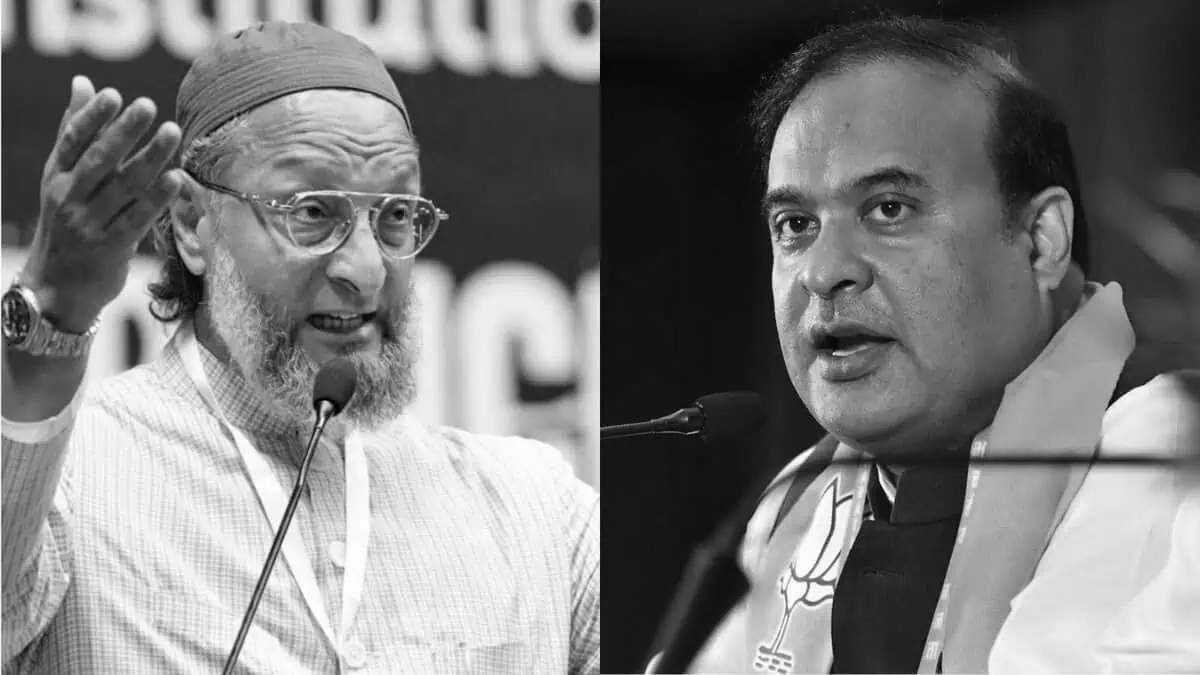
Himanta Biswa Sarma vs Owaisi: ‘Miya’ Controversy Intensifies Assam Poll Polarisation
As Assam heads into a crucial assembly election on April 9 , political temperatures have surged following a sharp exchange between Chief Minister Himanta Biswa Sarma and AIMIM chief Asaduddin Owaisi. The controversy erupted after Sarma’s remarks targeting the “Miya community” triggered outrage, drawing a strong and direct response from Owaisi and intensifying debates around identity politics, electoral strategy, and leadership accountability .
The row stems from Sarma’s campaign speeches in which he used aggressive and provocative language , claiming that his government had already taken tough action in the past and warning of even harsher measures in the future. His remarks, which included references to “breaking the backbone” of the community and making life difficult, have been widely criticised for crossing the line of political decorum . The Chief Minister has, however, defended his broader stance by framing it within issues of illegal immigration, demographic change, and law-and-order concerns , themes that have long been central to Assam’s political discourse.
Responding at an election rally in Chenga, Owaisi mounted a forceful counterattack , reminding Sarma of the dignity attached to the Chief Minister’s office and urging him to use language befitting his position. He asserted that Muslims have lived in Assam for over 150 years , dismissing any notion that they could be erased or intimidated. Rejecting the threats outright, Owaisi declared that neither he nor members of the community would be silenced, and challenged the government to point out any place in the state where they were being targeted.
At the heart of the controversy lies the term “Miya” , historically used as a pejorative label for Bengali-speaking Muslims in Assam . While sections of society continue to associate the term with debates around migration, many within the community have reclaimed it in recent years as a symbol of identity and resistance . This layered meaning makes the current political rhetoric particularly sensitive, as it touches upon both historical belonging and contemporary anxieties .
The confrontation also reflects contrasting political strategies ahead of the polls. For Sarma and the BJP, the narrative emphasises security, cultural identity, and demographic protection , aimed at consolidating majority voters. On the other hand, Owaisi who is campaigning in support of the All India United Democratic Front has positioned himself as a defender of minority rights, constitutional protections, and political representation , urging voters to rally behind AIUDF candidates.
Beyond the immediate exchange, the episode has sparked wider concern about the increasing use of polarising rhetoric in election campaigns . Critics argue that such language risks deepening social divides and shifting focus away from governance and development issues. At the same time, the political significance of the Muslim vote particularly in parts of Lower Assam has made identity-driven narratives a decisive electoral tool .
As the state prepares to vote, the Sarma–Owaisi clash underscores a larger reality: Assam’s politics continues to be shaped by the complex interplay of history, migration, identity, and power . Whether this confrontation translates into electoral gains for either side will become clear when votes are counted on May 4, but it has already ensured that the campaign remains sharply contested and intensely polarised.