
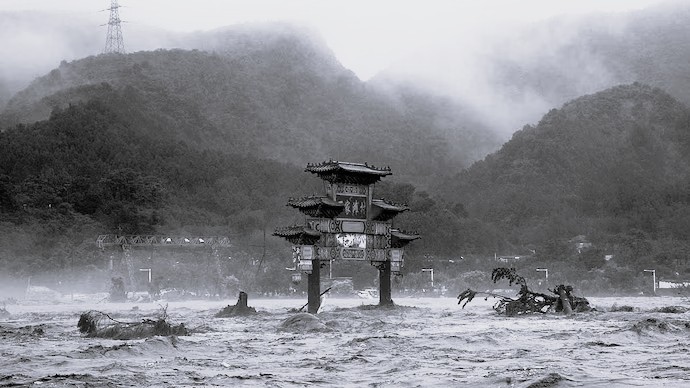
Himalayas Under Threat
The Himalayas, often seen as serene giants, are facing a hidden crisis. Beneath their calm exterior, instability is growing. Once a symbol of cool tranquility, these mountains are now warming, with melting glaciers and raging rivers signaling trouble. Torrential rains unleash chaos, cloudbursts devastate villages, and landslides disrupt lives. Known as the "roof of the world," this region is becoming a hotspot for disasters. Each peak struggles under new pressures, and every valley faces the threat of a new calamity. Human activity is accelerating the problem, with roads, tunnels, and buildings carving into the mountains’ core. Nature is buckling under this strain, leading to crumbling slopes, flooding waters, and falling rocks.
These disasters are not solely nature’s doing. human actions share the blame. Construction projects, including roads and tunnels, have disrupted the delicate balance of the Himalayas. In Uttarakhand, road networks have expanded dramatically, from 1,000 kilometers in 2003 to 3,600 kilometers by 2024. While this signals development, it has destabilized the mountains. Altered water flows and unchecked rainwater now trigger landslides and floods with a single downpour, submerging villages and roads.
Recent incidents highlight the crisis. In Uttarakhand’s Dharali village, once lush with greenery, a cloudburst last monsoon wiped out homes and livelihoods. In 2023, a glacial lake burst in Sikkim, destroying a hydropower project. In Kashmir, landslides blocked pilgrimage routes. These events are not just news. they are warnings of a changing Himalayan landscape. With each disaster, land vanishes, and hope fades.
A new report offers a solution: a multi-hazard early warning system for the Himalayas. This system would unite disaster management efforts, ensuring every village and valley receives timely alerts. Before rains strike, information must reach residents; as soil dampens, communities need to be on high alert. Affordable tools like rain gauges and water-level sensors could deliver real-time data, sent as mobile alerts to save lives. This isn’t just a technological fix. it’s a shield for communities.
Other nations provide models to follow. Japan, prone to storms and earthquakes, uses a nationwide warning system to alert local governments and citizens instantly. Switzerland equips its mountains with sensors to monitor snow movements. Norway’s water authorities issue flood warnings, while Bhutan manages glacial lake risks with drainage systems and alerts. These examples show that combining technology, governance, and community action can make even the most vulnerable regions safer. In one word, early warning systems are a lifeline for the future.
The Himalayas are pleading for attention: “Listen to me, protect me, or I will melt away.” The question remains. Will humanity act? Will governments respond? Only time will tell.