
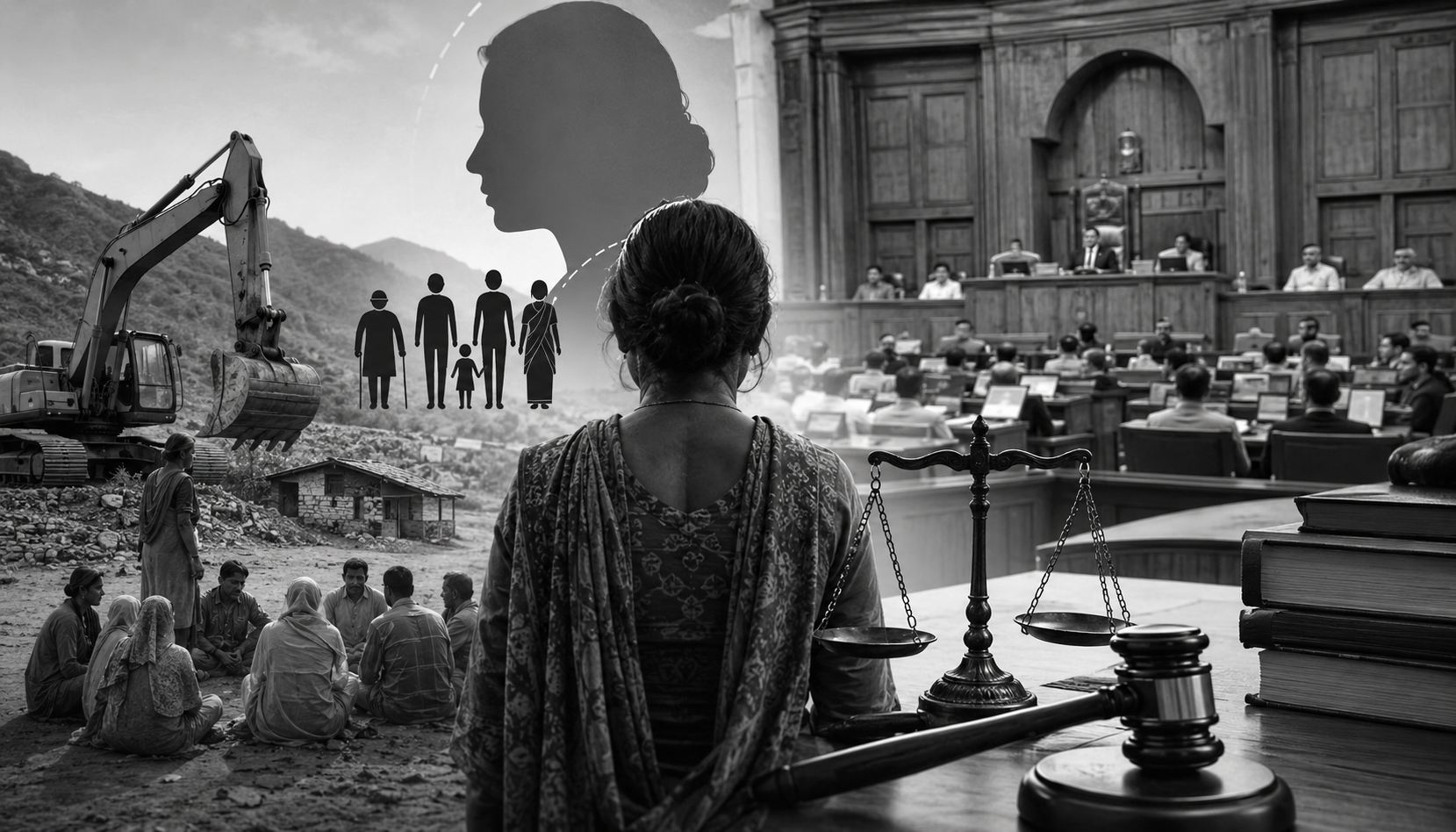
Himachal Passes Panchayat Bill: Encroachers’ Families Face Six-Year Election Bar
The Himachal Pradesh Legislative Assembly has passed the Himachal Pradesh Panchayati Raj (Second Amendment) Bill, 2026, tightening eligibility rules for Panchayati Raj elections by expanding the definition of people who can be treated as beneficiaries of government-land encroachment. The amendment specifically brings a daughter-in-law within the definition of a beneficiary, potentially preventing her from contesting Panchayat elections if a prescribed family member has encroached upon protected public land. The Bill was passed amid strong opposition from the BJP.
The amendment changes Section 122 of the Himachal Pradesh Panchayati Raj Act, 1994, covering encroachment on land belonging to the State Government, municipalities, Panchayats, cooperative societies and village common land. The law provides for a six-year disqualification from the date of eviction or removal of the encroachment. The expanded definition of “beneficiary” includes the encroacher’s grandfather, grandmother, father, mother, spouse, son, unmarried daughter and daughter-in-law.
The government says the change is intended to close an electoral loophole, citing instances where persons disqualified over encroachment attempted to field daughters-in-law instead. The provision was first introduced through an Ordinance promulgated by the Governor on May 6, 2026, when the Assembly was not in session, and has now been given legislative backing.
The provision has triggered a debate over women’s political participation. BJP leaders argue that a woman should not lose her electoral opportunity because of an in-law’s encroachment. The issue is particularly significant in Himachal, where 50% of Panchayati Raj seats are reserved for women, compared with the constitutional minimum of one-third under Article 243D. The amendment does not reduce that reservation; rather, it could affect which women are eligible to contest reserved seats.
The government counters that the provision is aimed at preventing proxy politics, where a disqualified individual could retain influence through a relative. However, the legal question is significant. In a 2017 case, the Supreme Court held that a family member could not automatically be disqualified from Panchayat office merely because another family member had encroached on government land. Himachal’s new “beneficiary” formulation could therefore face scrutiny over whether family relationship alone is sufficient.
The amendment comes amid a wider encroachment crisis. The Himachal Pradesh High Court recorded approximately 57,549 government-land encroachment cases covering 1,23,835 bighas, or about 10,320 hectares, while striking down a provision that enabled regularisation of such encroachments.
For other states, Himachal offers a potential policy template: using electoral eligibility to strengthen enforcement against public-land encroachment. But any state considering such a model would need to address due process, proof of actual benefit, individual electoral rights and gender implications. The Himachal experiment therefore extends beyond a daughter-in-law clause; it tests how far anti-encroachment policy can be carried into grassroots democracy.