
HILT Policy: Opposition alleges massive scam
The Telangana government’s newly announced Hyderabad Industrial Lands Transformation Policy (HILT) has drawn sharp criticism from opposition parties, with leaders of the Bharat Rashtra Samithi (BRS) and Bharatiya Janata Party (BJP) alleging that the policy is a massive scam that could hand over vast public land to a few private individuals at undervalued rates.
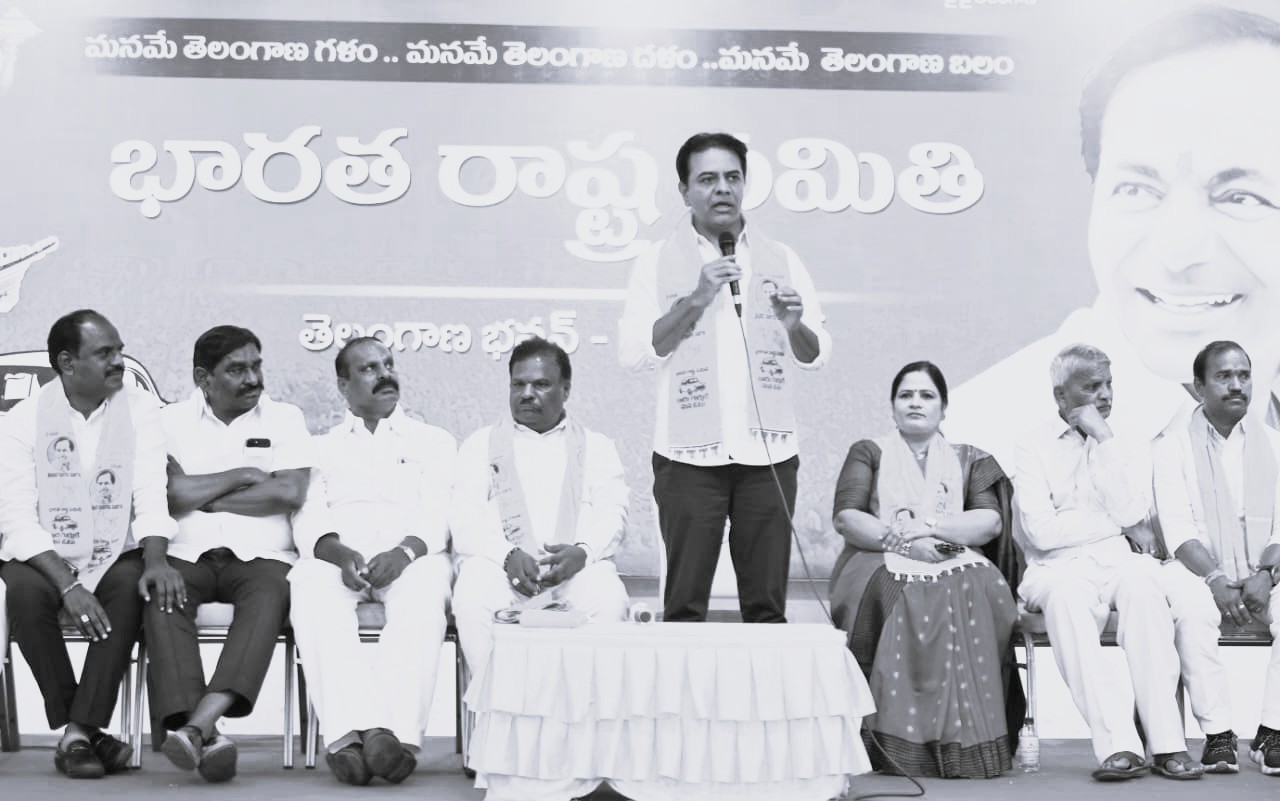
BRS Working President K. T. Rama Rao (KTR) accused Chief Minister Revanth Reddy of behaving like a “real-estate agent,” claiming that under HILT, about 9,292 acres of prime industrial land within the Outer Ring Road including estates at Balanagar, Jeedimetla, Sanathnagar, and Azamabad would be converted into multi-use zones and effectively transferred into the hands of politically connected beneficiaries. According to KTR, although the market value of these lands could reach ₹40–50 crore per acre, the policy allows conversion at roughly 30% of outdated sub-registrar office rates, resulting in a potential loss of public assets estimated at ₹5 lakh crore. Opposition leaders also raised concerns about the unusually rapid approval timeline, suggesting that pre-arranged deals could be underway. The BJP has joined the chorus, alleging that the policy could lead to a staggering ₹6.29 lakh crore of wealth being diverted from public ownership to private pockets.
The Telangana government, however, has defended HILT as a policy designed to modernize Hyderabad, relocate under-utilized industries beyond the ORR, and convert idle industrial land into mixed-use zones including residential, commercial, institutional, and recreational developments. Ministers argued that the policy would generate revenue through conversion and impact fees, estimated at ₹4,000–5,000 crore, while critics’ claims of multi-lakh-crore losses were exaggerated. Officials emphasized that of the total land cited, only about 4,740 acres were plotted as industrial estates; the rest were infrastructure or non-plotted land under the Telangana Industrial Infrastructure Corporation (TGIIC), which is the nodal agency for HILT implementation.
Industry experts have highlighted both potential benefits and risks. While converting idle or obsolete industrial land could unlock resources, reduce pollution, and support urban renewal, critics warn that a rapid shift to real estate development may undermine industrial growth, displace workers, and strain urban infrastructure. The lack of transparency in identifying beneficiaries, limited public consultation, and short application and approval windows further fuel suspicion that the policy favors a few well-connected developers.
BRS has demanded the immediate withdrawal of HILT and a public audit of all lands earmarked and potential beneficiaries. The BJP has echoed these calls, seeking disclosure of the cabinet subcommittee report that guided the policy. Meanwhile, the government maintains that the policy was well-consulted, legally sound, and in the public interest, while investigating alleged leaks of cabinet decisions prior to the formal issuance of the order.
The HILT policy thus represents a major transformation of Hyderabad’s industrial land use, with high stakes for public assets, jobs, and urban planning. While it could modernize the city and generate revenue if implemented transparently, mishandling or favoritism could convert the policy into one of the largest land scams in the state’s history, affecting thousands of industrial workers and reshaping Hyderabad’s industrial and residential landscape.