
Highest Turnout Since 1947: Bengal Sees 92.25%, Tamil Nadu 85.03%, But Democracy Came With Drama
Two of India's most politically charged states woke up and did something extraordinary, they voted in numbers their people had never seen since Independence. By the time the ink dried on the last inked finger, West Bengal had recorded a staggering 91.78% voter turnout in its first phase, while Tamil Nadu shattered its own all-time record with figures surging past 84%, prompting the Chief Election Commissioner to declare both figures the highest in their respective histories since 1947 . Democracy, it turned out, was not short of takers. But the day on which history was made was also a day of crude bombs, battered cars, clashing mobs, malfunctioning machines and one deeply surreal man who ran a polling station he wasn't even allowed to vote in.
Before a single ballot was cast, Bengal's election was already steeped in controversy. Over 91 lakh names had been erased from the state's voter rolls through the Election Commission's Special Intensive Revision (SIR) exercise, shrinking the electorate by nearly 12 percent in one stroke. Murshidabad alone lost 7.48 lakh voters , followed by Nadia at 4.85 lakh and Malda at 4.59 lakh . Of the 27 lakh voters flagged for "logical discrepancies," approximately 17 lakh were Muslims and 10 lakh were Hindus , with the overwhelming bulk of Muslim deletions concentrated in the very constituencies voting in Phase 1. The TMC called it "invisible rigging." The BJP insisted it was a long-overdue cleansing of fake voters and undocumented migrants.
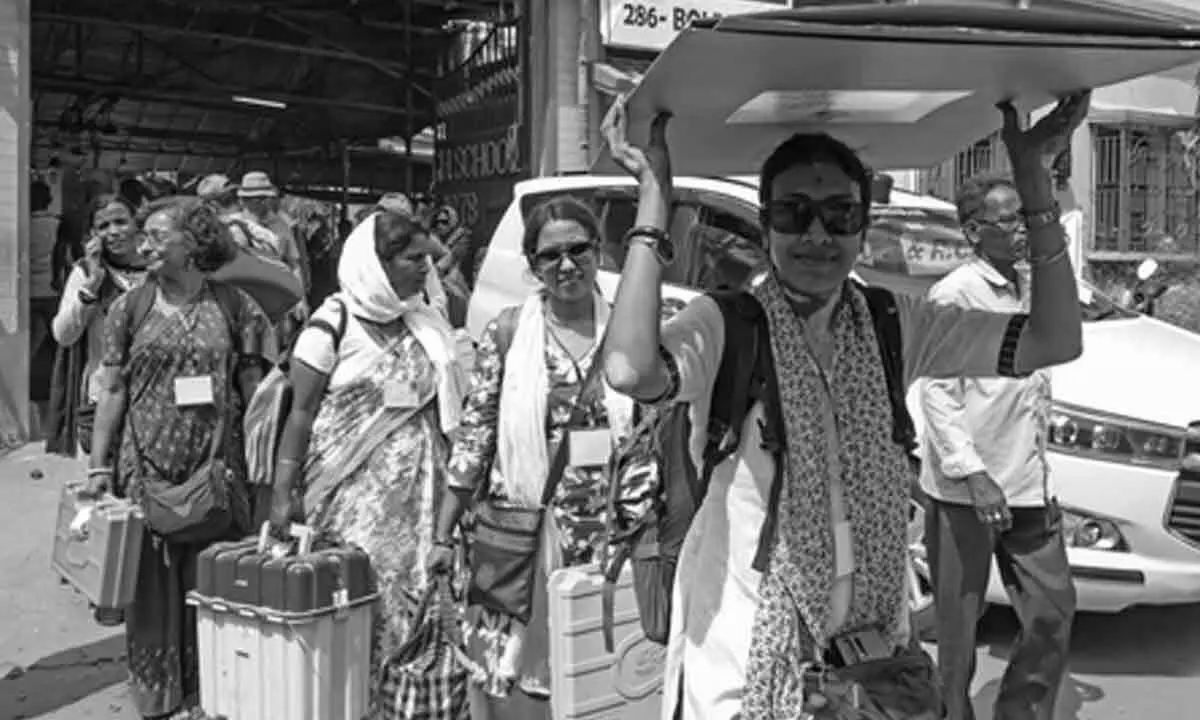
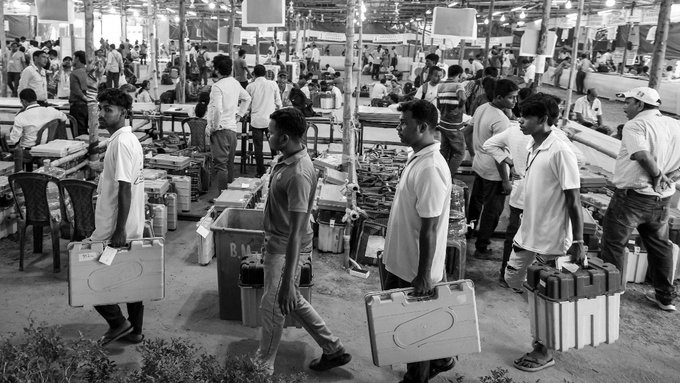
Nowhere was this absurdity more perfectly crystallised than in the story of Akhtar Ali of Murshidabad. A high school teacher, Ali had been assigned the official duty of presiding officer at a polling station , the man legally responsible for ensuring others exercised their democratic right. His own name, however, had been struck from the voter rolls. He could run the election. He could not vote in it. When he raised the matter with authorities, he was told to stop thinking and just carry out the duties assigned to him. "Does anyone even consider the emotional toll of conducting an election while having my own rights suspended?" he asked. It was, in equal measure, a tragedy and a farce and it captured the contradictions of April 23 better than any statistic could.
Yet despite all of this, the deletions, the doubts, the shadow of disenfranchisement, the people turned out in breathtaking numbers. Voters queued up in large numbers across both states despite hot and humid conditions , with participation building steadily through the day. In Bengal, the turnout climbed from 18.76% in the first two hours to 41.11% by 11 AM and 62.18% by 1 PM . By 5 PM it had hit 89.93% , with queues still snaking outside booths. Dakshin Dinajpur district led the state with a remarkable 93.12% turnout , and Raghunathganj constituency recorded a jaw-dropping 95.64% . Analysts, however, noted a sharp statistical caveat: with 91 lakh names removed from the rolls, the percentage figures were calculated on a smaller denominator , meaning the record-breaking numbers were also partly a mathematical consequence of the SIR purge itself. A historic turnout, yes, but one with an asterisk that will fuel debate long after May 4.
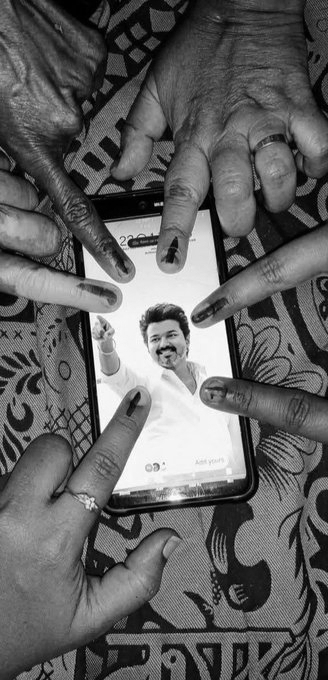
In Tamil Nadu, the mood was electric from dawn. The state surpassed its previous all-time high of 78.29% , set during the AIADMK landslide of 2011, crossing 84% by close of polls. Tamil Nadu's 5.73 crore-strong electorate , including nearly 2.93 crore women and over 14.59 lakh first-time voters , was chosen from a field of 4,023 candidates across 234 constituencies. Tiruppur recorded the highest district turnout at 62.97% by afternoon, with Namakkal and Erode close behind, while Chennai and Madurai trailed at around 54%. And in a moment that was quintessentially Tamil Nadu, TVK General Secretary N. Anand formally wrote to the Election Commission requesting a two-hour extension of voting time , because so many of the party's supporters were stuck in massive traffic jams while trying to travel back to their hometowns to vote. Vijay's electoral debut was, even before a single result, generating gridlock.
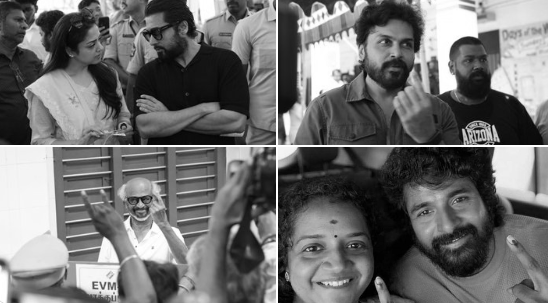
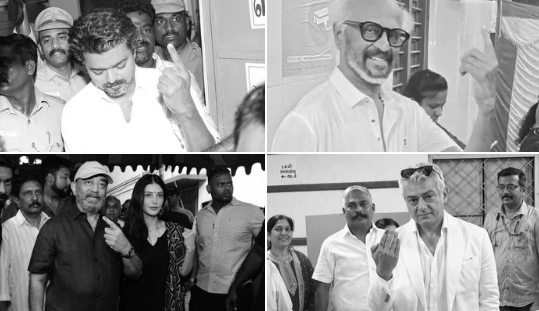
Tamil Nadu's celebrity culture was on full, luminous display. Rajinikanth, Thalapathy Vijay, Kamal Haasan, Ajith, and Dhanush were among the early voters, their images flooding social media within minutes. Actors Trisha, Vijay Sethupathi, Sivakarthikeyan, and Arvind Swamy also stepped out and publicly urged fans to do the same. In the traditional colour-coded world of Tamil Nadu's Dravidian politics, black-red for DMK, white-bordered for AIADMK, saffron for BJP, Vijay's TVK arrived in red-yellow-red , and sharp-eyed observers noted a conspicuous number of people in white shirts and khaki pants at booths across Chennai, widely read as a signal of TVK allegiance. The contest pitted Chief Minister MK Stalin's DMK-led alliance seeking a second consecutive term against AIADMK chief Edappadi K Palaniswami's opposition charge, with Vijay inserting himself into a political landscape that had been, for decades, a two-party fortress.
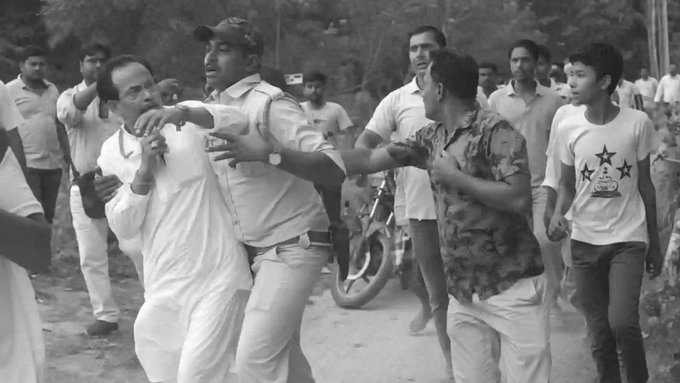
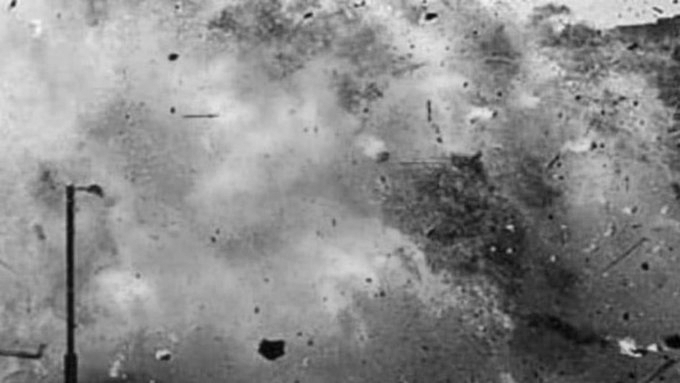
Back in Bengal, the day descended into unmistakable turbulence. Crude bombs were hurled near a polling station in Murshidabad's Nowda , injuring several people and sending shockwaves through the area. In Birbhum, a mob attacked central forces near a polling booth , leaving three CAPF personnel, one policeman, and a driver injured . Clashes broke out across Birbhum's Labhpur, Malda, and Murarai , while in Murshidabad's Domkal, locals alleged they were actively prevented from reaching polling booths . At Birbhum's Dubrajpur, voters alleged that EVMs were recording votes for the wrong party , bringing polling to a halt for nearly 30 minutes as protests erupted outside. By the day's end, at least three candidates had been physically assaulted , a grim tally even by Bengal's combative electoral standards. BJP candidate Agnimitra Paul had the rear window of her car shattered by stones near Asansol, while a BJP candidate in South Dinajpur was manhandled on camera.
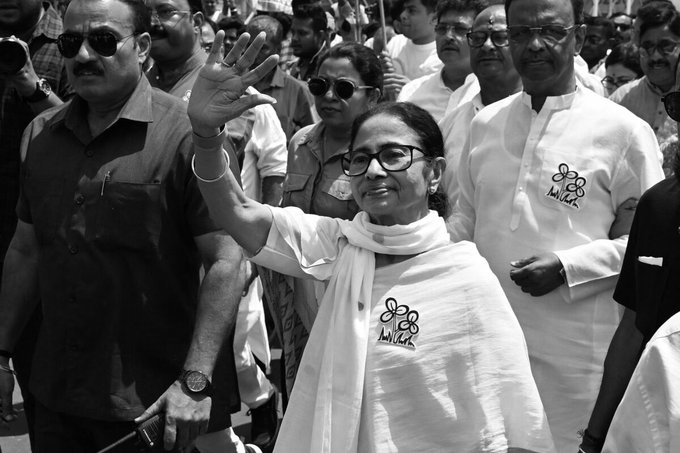
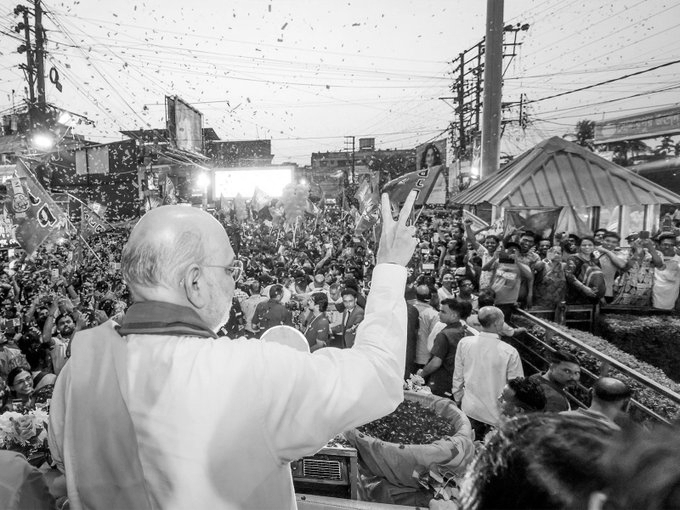
The political rhetoric matched the temperature on the ground. Home Minister Amit Shah , addressing a rally in Balagarh, issued a blunt warning: "If you touch any voter, you will find yourself in the Bay of Bengal." Meanwhile, Prime Minister Modi visited Belur Math , the serene headquarters of the Ramakrishna Mission in Kolkata, on the very day of polling. At a separate rally, Modi declared that May 4, counting day, would mark the "expiry" of TMC's "15-year-old syndicate system and maha jungle raj." Chief Minister Mamata Banerjee , holding a roadshow in Bhabanipur, countered that the high turnout was proof that her people stood firmly behind her and added that she had no interest in any post beyond ending BJP's rule at the Centre.
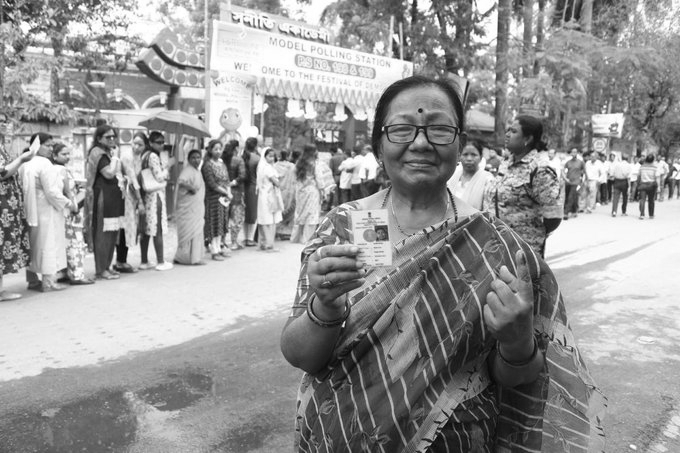
What, then, does April 23, 2026 mean? It means an 85-year-old woman standing in a Jalpaiguri queue to cast her vote. It means millions of first-time voters marking a ballot for the very first time. It also means Akhtar Ali sitting at his presiding officer's desk in Murshidabad , managing the democratic rights of hundreds while his own remains suspended in a legal void. It means a turnout record that carries both the pride of participation and the shadow of a voter roll that was stripped of nearly a crore names before the first booth opened. The second phase in Bengal is scheduled for April 29 , and votes will be counted across both states on May 4 .
Whatever the verdict, Democracy spoke loudly. Whether it was heard fairly is another question entirely.