
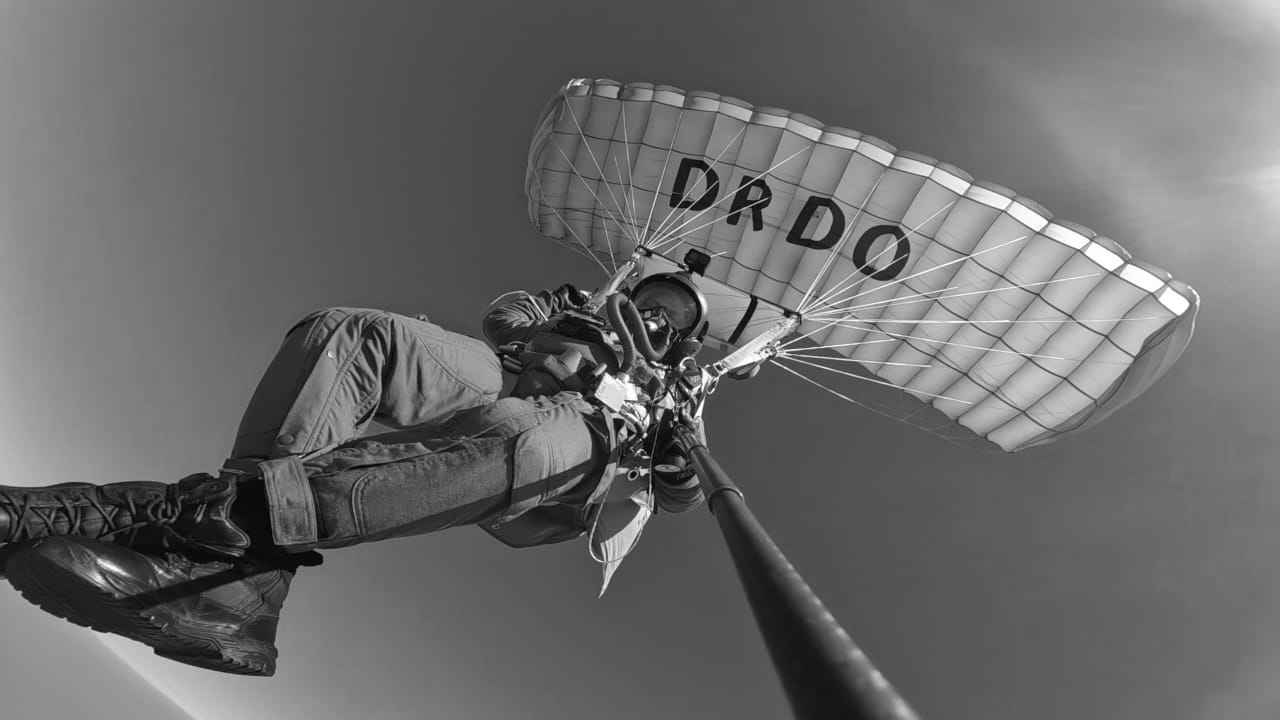
High-Altitude breakthrough: DRDO parachute operates at 32,000 ft
India has successfully developed its own Military Combat Parachute System (MCPS), capable of operating safely at altitudes above 32,000 feet, marking a significant step towards self-reliance in defence technology. The indigenous parachute system, created by Defence Research and Development Organisation (DRDO) laboratories: Aerial Delivery Research and Development Establishment (ADRDE), Agra, and Defence Bioengineering and Electromedical Laboratory (DEBEL), Bengaluru, is designed to enhance the operational capabilities of Indian special forces, enabling missions that were previously difficult or risky with older, imported parachutes. Defence Minister Rajnath Singh hailed the achievement and said it marks a remarkable milestone towards self-reliance in critical defence technologies.
The Role of Military Parachutes In modern military operations, parachutes are essential for safely delivering soldiers, equipment, and supplies to the ground. They allow troops to perform controlled jumps from aircraft, land accurately in designated zones, and operate in areas that are otherwise difficult to reach by land. Military parachutes are particularly crucial for special forces, who often need to insert quietly and rapidly into hostile or remote locations.
Why MCPS Was Developed Previously, India relied on parachutes imported from other countries for high-altitude military operations. While these foreign systems were effective, they were often expensive, difficult to maintain locally, and not fully optimized for India’s diverse terrains, including high mountains, deserts, and coastal regions. The MCPS was developed to reduce dependence on foreign equipment, simplify maintenance, and provide a system specifically tailored to Indian operational needs. A key feature of MCPS is its integration with India’s Navigation with Indian Constellation (NavIC) system. NavIC provides secure and accurate positioning within the region, ensuring that paratroopers can navigate precisely even if foreign satellite navigation systems are jammed, denied, or unavailable. This enhances operational autonomy and reliability in contested or challenging environments.
Key Features of MCPS MCPS is proven to operate safely at altitudes above 32,000 feet, allowing aircraft to remain well away from hostile airspace. It offers enhanced steering and navigation, ensuring paratroopers land precisely at designated zones.
Missions Enabled by MCPS MCPS expands and refines parachute capabilities beyond what imported systems offer. It allows troops to glide tens of kilometres from aircraft to target with precise steerability, reducing detection risk. Controlled canopy opening minimizes exposure to enemy fire, improving survivability. Teams can land on rooftops or in small courtyards for hostage rescues or counterterror operations, while high-altitude and rugged terrains no longer block mountain or plateau insertions. Maritime missions are also possible, with navigation and sea-state tolerant design allowing coastal or shipboard pick-ups. Predictable landings enable multiple teams to strike simultaneously, and supplies can be delivered directly to troops in inaccessible terrain. Being an indigenous system, MCPS also offers operational advantages such as equipment tailored to local doctrine, easier maintenance, faster field upgrades, lower lifecycle costs, and reduced dependence on foreign vendors, all vital for sustained operations and force readiness.
Strategic Importance MCPS strengthens India’s defence independence, reduces reliance on foreign suppliers, and makes high-risk missions safer and more effective. It transforms theoretical plans into actionable operations, providing Indian special forces with greater options, safety, and effectiveness in modern warfare. MCPS is not just a parachute; it is a critical tool that enhances India’s strategic and operational capabilities in multiple terrains and mission scenarios. Rajnath Singh’s tweet underscores the national pride and significance of this milestone in India’s pursuit of indigenous defence technology.