
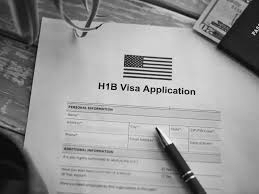
High salary, higher odds: New H1B lottery plan revealed
The U.S. Department of Homeland Security has published a Notice of Proposed Rulemaking (NPRM) in the Federal Register to change how H-1B visas are awarded. Under the plan, the annual lottery will no longer be purely random. Instead, applications will be weighted by the wage level of the offered job.
DHS proposes using the Department of Labor’s four wage levels. Jobs at Level IV wages would get four “tickets” in the lottery, Level III three tickets, Level II two tickets, and Level I just one. The stated aim is to give higher priority to better-paid, higher-skilled roles while still maintaining an element of chance.
This move follows a Presidential Proclamation last week that set a $100,000 filing fee for new H-1B petitions , already in force for applications submitted after September 21. That order and the new NPRM together signal the most dramatic shift in H-1B policy in years.
It is important to note that the wage levels are not fixed national figures but are determined by both occupation and location. For example, in tech hubs like the Bay Area, Level IV software developer roles can exceed $170,000–$200,000 , whereas in cities such as Dallas or Phoenix, the same level might fall in the $130,000–150,000 range. As a rough guide, Level I wages may start near $90,000 , with Level II around $115,000–125,000 and Level III around $140,000–150,000 in high-cost markets. These numbers vary widely, and DHS has emphasized that the system ties eligibility to the Department of Labor’s local benchmarks, not a flat national salary.
With the NPRM now open for public comment, the process will take several months before any final rule is adopted. Based on past rulemaking timelines, clarity is unlikely before early or mid-2026 , potentially in time for the 2026 H-1B filing season. Until then, the existing lottery remains in place, except for the new $100,000 filing fee requirement.