
‘Heavy Rain Cannot Be an Excuse’: NDMC Apologises for Waterlogging in Delhi
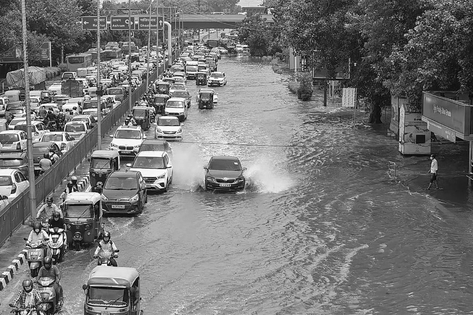
Heavy rain that battered Delhi over two days and left several prominent roads and neighbourhoods waterlogged has prompted the New Delhi Municipal Council (NDMC) to apologise to residents, with its chairman admitting that the civic body's response fell short and promising stronger measures to prevent a repeat.
NDMC chairman Manoj Kumar Dwivedi said the intensity of Tuesday's rainfall was extraordinary, with more than 72 mm of rain recorded in less than two hours. While the civic body normally clears waterlogged stretches within 15-20 minutes, water took more than an hour to drain at three to four locations despite efforts by officials.
But Dwivedi made it clear that the exceptional rainfall could not be used to justify the disruption.
“This cannot be an excuse,” he said, adding that the NDMC would have to strengthen its systems to deal more effectively with such extreme weather events in the future.
The disruption was felt across the heart of the national capital. Waterlogging was reported at major locations including Connaught Place, Ashoka Road, Raisina Road, Parliament Street, Baba Kharak Singh Marg and areas near RML Hospital. Even the Parliament complex witnessed water accumulation as intense rain overwhelmed parts of the city's drainage network.
The NDMC received dozens of complaints over the two days, ranging from waterlogging and fallen trees to power outages. On August 24 alone, seven waterlogging complaints were recorded from areas including Gol Dak Khana, Lodhi Estate, Sarojini Nagar, the DIZ Area near Gole Market and outside Lady Hardinge Medical College.
The rain also caused damage beyond flooded roads. On Wednesday morning, a large tree fell inside Vitthal Bhai Patel House in Lutyens' Delhi, damaging at least four parked vehicles.
Several weather stations recorded heavy rainfall, with Safdarjung logging 99.1 mm of cumulative rain till 8:30 am on Tuesday. Dwivedi said the NDMC would now pursue both short- and long-term measures aimed at making its jurisdiction fully waterlogging-free, while also inviting residents to suggest ways to improve the system.
The apology marks a significant acknowledgement that increasingly intense spells of rain are testing Delhi's civic infrastructure, and that simply blaming the weather will no longer be enough.