
HASTPA Cyclists Plant 50 Saplings Along Kamyana Trail to Promote Green Tourism
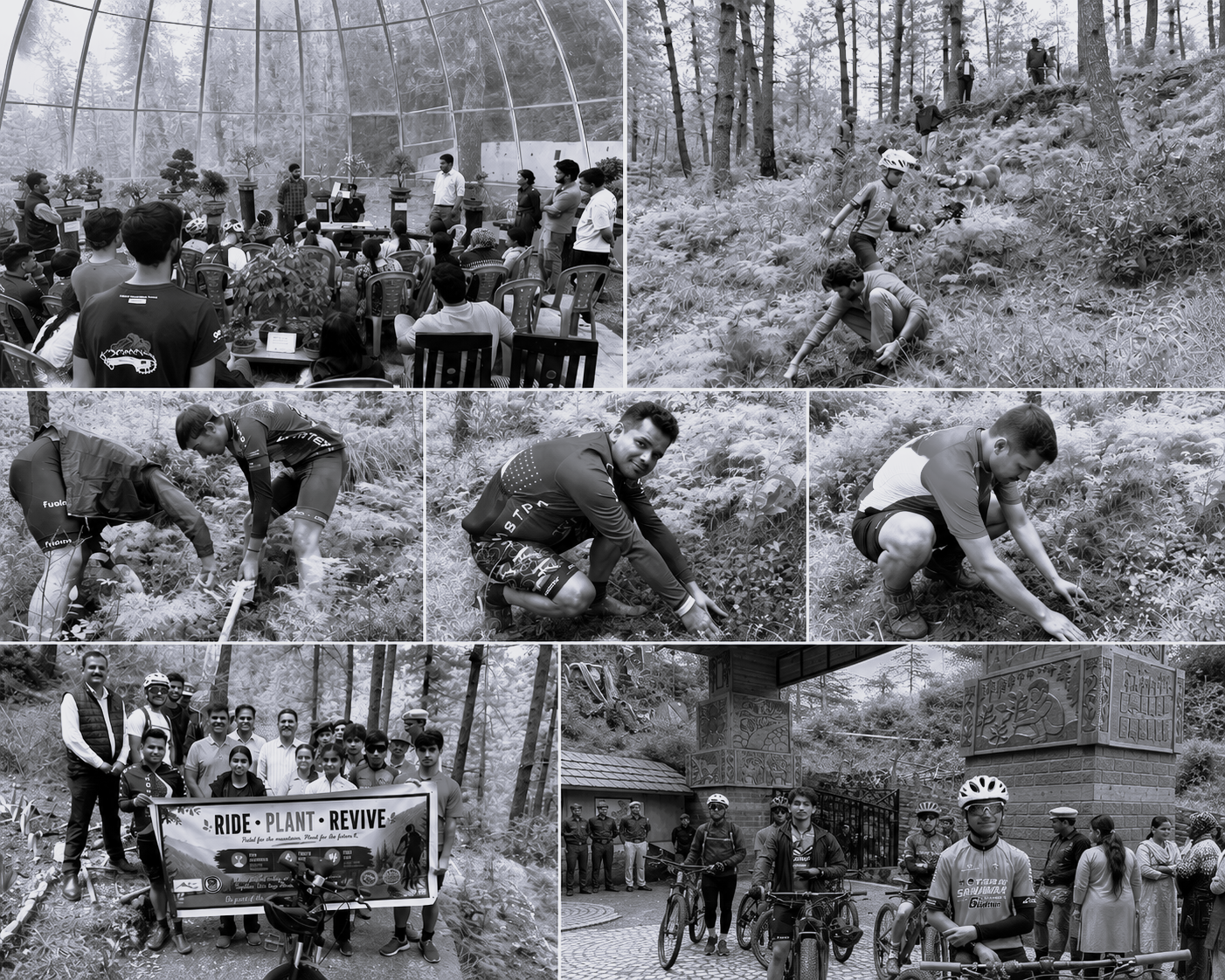
A cycling expedition in the hills of Shimla took on a distinctly environmental purpose on Sunday as cyclists from the Himalayan Adventure Sports and Tourism Promotion Association (HASTPA) planted around 50 saplings along the Kamyana Hill Trail, bringing together outdoor sport, forest conservation and community participation.
The initiative brought together cyclists, Forest Department officials and nature enthusiasts around a simple message: those who enjoy the mountains must also help protect them. Around 15 HASTPA cyclists, including HASTPA founder and president Mohit Sood, national cycling champion Akshit Gaur and national cyclist Gaurav Negi, participated in the drive. Chief Conservator of Forests K. Thirumal and Shimla DFO Aniket were also present.
The cyclists rode to the Kamyana hills before planting the saplings along the trail, demonstrating how cycling and outdoor recreation can become platforms for environmental stewardship, responsible tourism and public participation. Sood said those who use the mountains for recreation also have a responsibility to leave them better for future generations, reflecting HASTPA's wider effort to make cyclists custodians rather than merely users of Himalayan landscapes.
The plantation was followed by a Bonsai Workshop, where participants explored the art and science of nurturing miniature trees. The activity added a nature-education element to the drive, highlighting the patience and care required to cultivate trees and strengthening the connection between people and the environment.
The plantation also gains significance from Kamyana's emergence as an eco-tourism and biodiversity destination. Located in Poabo, around eight kilometres from Shimla, the Forest Department's project was developed at a cost of about ₹5 crore across nearly eight hectares and includes a 2.5-km nature trail designed to promote environmental awareness, biodiversity conservation and sustainable tourism.
The trail has been designed with a gentle gradient for visitors across age groups and offers views of Shali Peak, Mahasu Peak, Mashobra and Naldehra. Its attractions include a bonsai garden with about 40 plants representing nearly 15 species, while additional facilities include information displays on Himachal's biodiversity, watchtowers and planned cactus, orchidarium and mushroom gardens. Local youth are also being trained as nature guides, linking conservation with livelihood opportunities.
For HASTPA, which has promoted Himalayan mountain biking and sustainable outdoor activities for more than two decades, the initiative fits into a broader philosophy of linking adventure sports with environmental conservation, community development and responsible tourism. Its previous environmental programmes have also used cycling to encourage awareness among young people and communities.
The Kamyana drive therefore goes beyond planting 50 trees. It represents an effort to bring sports, conservation, nature education and sustainable tourism together, while reinforcing the idea that people who enjoy the Himalayan environment must also play a role in protecting and restoring it.