
Handloom Hackathon 2.0 Showcases Tech Innovations to Transform India’s Textile Sector
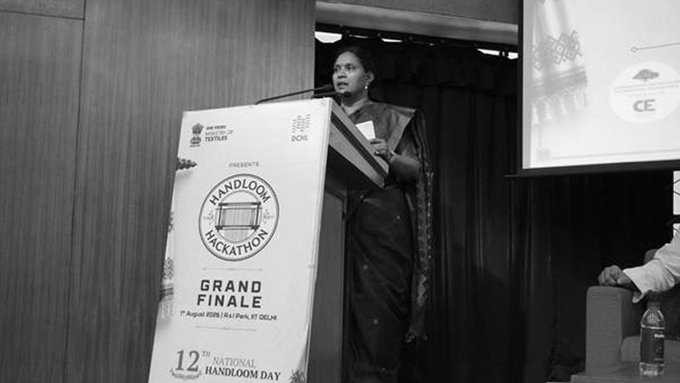
The second edition of Handloom Hackathon 2.0 – “Weaving Innovations” concluded at the Foundation for Innovation and Technology Transfer (FITT), IIT Delhi, highlighting technology-based solutions to strengthen India’s handloom sector. Organised in collaboration with the Ministry of Textiles, the initiative focused on promoting innovation, sustainability and improved livelihoods for weavers.
The hackathon attracted more than 2,500 participants, with 280 innovators from 100 shortlisted teams developing solutions to address challenges related to loom modernisation, design innovation, sustainability, digital market access and productivity enhancement. The objective of Handloom Hackathon 2.0 was to connect India’s traditional weaving heritage with modern technology by encouraging innovators to develop practical solutions that can reduce manual effort, improve efficiency and enhance the global competitiveness of handmade textiles. The initiative provided a platform for students, researchers, startups and industry experts to collaborate on technology-driven interventions for the sector.
Speaking at the event, Dr. M. Beena, Development Commissioner (Handlooms), Ministry of Textiles, emphasised the need to combine India’s rich handloom legacy with technological advancements. She highlighted the importance of innovation in weaving processes, sustainable practices, design development and digital marketing to improve the economic prospects of weavers.
The event also showcased the significance of government-academia-industry collaboration in developing advanced solutions for the textile sector. IIT Delhi’s upcoming Centre of Excellence for Handloom Technology is expected to further support research, standardisation and technology adoption in traditional weaving practices.
The successful conclusion of the hackathon reflects the Ministry of Textiles’ efforts to create a technology-enabled, sustainable and globally competitive handloom ecosystem. By encouraging innovation and collaboration, the initiative aims to empower weavers, expand market opportunities and preserve India’s traditional textile heritage while adapting it to future needs.