
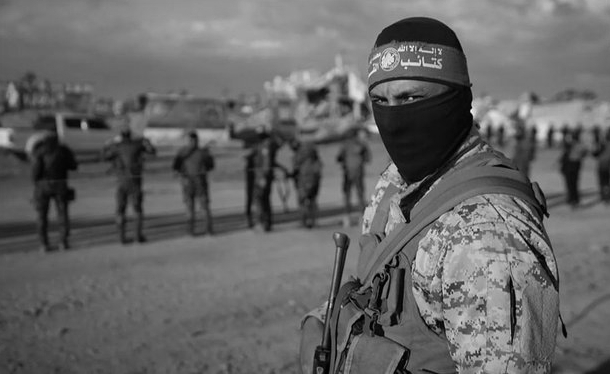
Hamas Ends Nearly 20 Years of Governing Gaza. Will It Also Give Up Its Weapons?
For nearly two decades, Hamas has been more than an armed movement. Since seizing Gaza in 2007, it has run ministries, schools, hospitals and municipal services while maintaining one of the region's most powerful militant organisations. Now, in what could become its biggest political decision in 20 years , Hamas has announced it is dissolving its government and transferring civilian authority to a UN-backed technocratic committee under a US-brokered ceasefire . Yet one critical question remains unanswered: Will Hamas also give up its weapons?
Hamas said only technical and professional civil servants would remain to ensure essential services continue, with all government employees ready to work under the National Committee for the Administration of Gaza , a Cairo-based body chaired by Ali Shaath , a Gaza-born engineer and former Palestinian Authority official. Hamas spokesperson Hazem Qassem described the move as "a positive step forward" towards implementing the ceasefire agreement.
The newly created Board of Peace , led by US President Donald Trump and tasked with governing and rebuilding Gaza, welcomed the announcement cautiously, saying it would judge Hamas by "actions, not promises." The board stressed that the technocratic committee must ultimately control all weapons in Gaza , a key condition of the ceasefire. Shaath echoed that view, saying the committee could function only under a single governing authority backed by a unified security apparatus accountable to civilian leadership.
That is where the transition becomes far more complicated.
Hamas has deliberately avoided saying whether it will disarm or hand security responsibilities to an international force. Israel dismissed the announcement as political theatre, arguing Hamas members remain in place and no meaningful change has occurred. For Israel, reconstruction cannot move forward unless Hamas relinquishes its military capabilities. Hamas insists discussions over its arsenal belong in later phases of negotiations rather than as a precondition for rebuilding Gaza.
Regional powers will heavily influence whether the transition succeeds. Iran remains Hamas's principal strategic backer despite balancing regional crises and renewed diplomacy with Washington. Hamas representatives recently attended ceremonies honouring Ayatollah Ali Khamenei , underscoring those ties. Qatar continues to play the leading mediation role by maintaining contacts with Hamas, while Egypt , which controls Gaza's southern border, remains central to ceasefire negotiations.
Another challenge is the long-running rivalry between Hamas and the Palestinian Authority in the West Bank . A technocratic administration could temporarily bridge that divide without resolving it, but its long-term success depends on political cooperation that has repeatedly proved elusive.