
Haj 2026: Smart Wristbands Enable Real-Time Tracking for Pilgrim Safety
India’s Haj pilgrimage for 2026 is set to begin on April 18, with approximately 1,75,025 pilgrims scheduled to travel to Saudi Arabia, marking one of the largest contingents globally. The scale of participation underscores the complexity of managing logistics, safety, and coordination for such a massive religious gathering, prompting the Government of India to significantly expand its use of technology this year.
Union Minister for Minority Affairs, Kiren Rijiju, extended his wishes to pilgrims and emphasized the government’s focus on delivering a safe, efficient, and comfortable Haj experience . He noted that Haj 2026 reflects a major shift toward a technology-driven pilgrimage , with digital tools and smart systems playing a central role in operations.
At the forefront of these efforts is the Haj Suvidha App , which has evolved into a comprehensive digital platform offering end-to-end services . From application and travel details to accommodation updates, baggage tracking, and grievance redressal, the app enables pilgrims to access essential information in real time. It also allows authorities to monitor situations on the ground and respond swiftly to any issues.
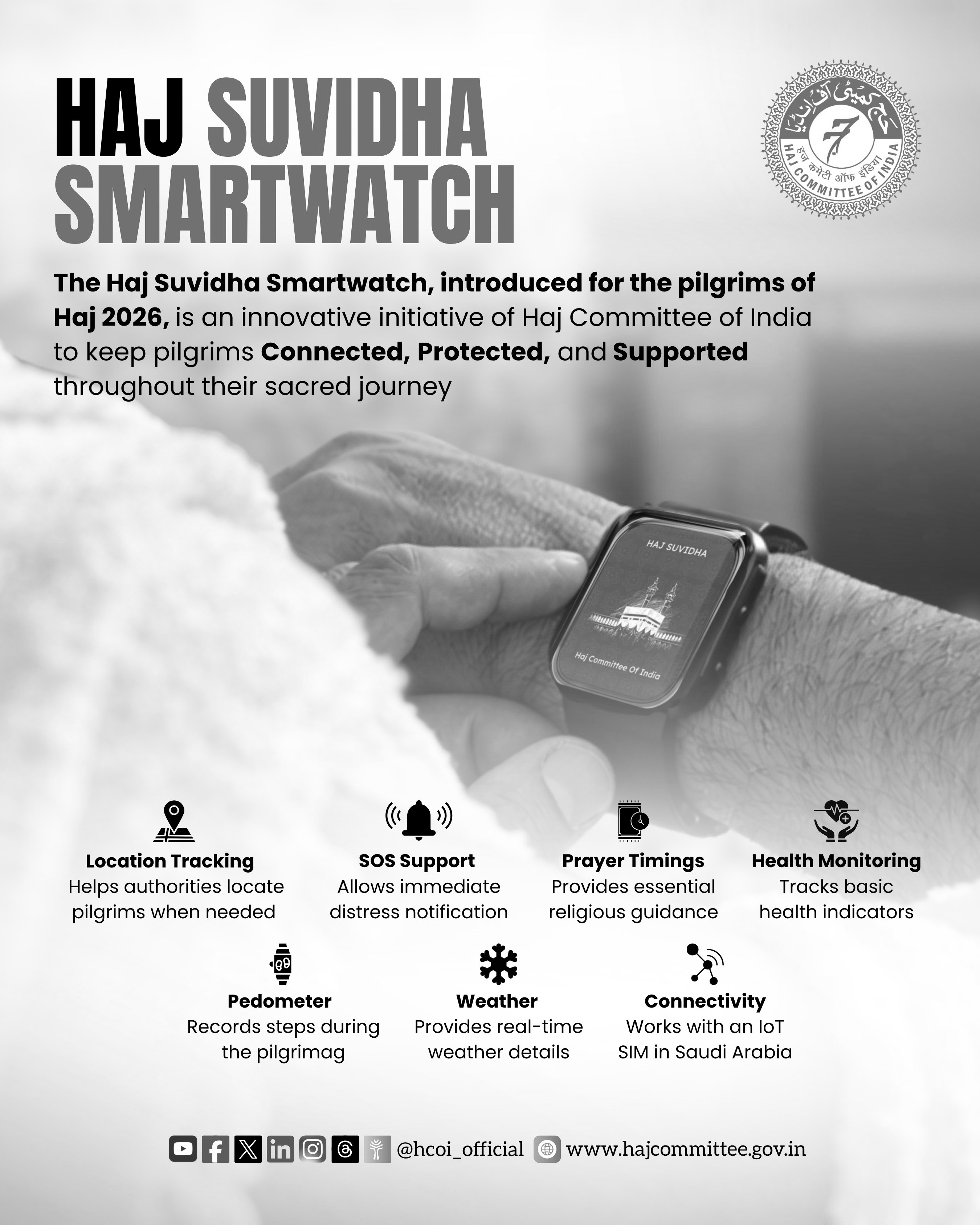
A standout innovation this year is the rollout of Haj Suvidha Smart Wristbands , a wearable technology designed to enhance pilgrim safety and assistance . Equipped with GPS tracking, SOS alerts, health monitoring, prayer timings, and Qibla direction , these devices are especially useful for elderly pilgrims and those unfamiliar with smartphones. The wristbands are integrated with central systems, enabling officials to locate missing pilgrims quickly and provide immediate help during emergencies, particularly in high-density areas during peak rituals.
The digitization of the Haj process extends beyond pilgrim-facing services. The entire system from application and selection (Qurrah) to payments and documentation has been streamlined online, improving transparency and reducing paperwork. Authorities have also deployed real-time monitoring systems , data-driven coordination mechanisms, and digital tools for medical support and logistics management , ensuring better preparedness throughout the pilgrimage.
In addition to digital advancements, physical infrastructure has also been strengthened. Around 60,000 pilgrims are expected to benefit from high-speed train connectivity between Makkah and Madinah , ensuring faster and more comfortable inter-city travel. Enhanced insurance coverage of ₹6,25,000 per pilgrim , improved healthcare screening , and upgraded hotel-style accommodations in Madinah further reflect the government’s focus on pilgrim welfare.
Haj operations will be conducted through 17 embarkation points across India, including major cities such as Delhi, Mumbai, Hyderabad, and Bengaluru, ensuring wider accessibility and smoother departures. Authorities have also streamlined airport processes to minimize inconvenience and delays.
With close coordination between the Government of India and Saudi authorities, Haj 2026 is being positioned as a “smart pilgrimage model” , combining scale with innovation. As lakhs of pilgrims prepare for this spiritual journey, the integration of digital platforms, wearable technology, and real-time systems is expected to set new benchmarks in managing one of the world’s largest annual religious gatherings.