
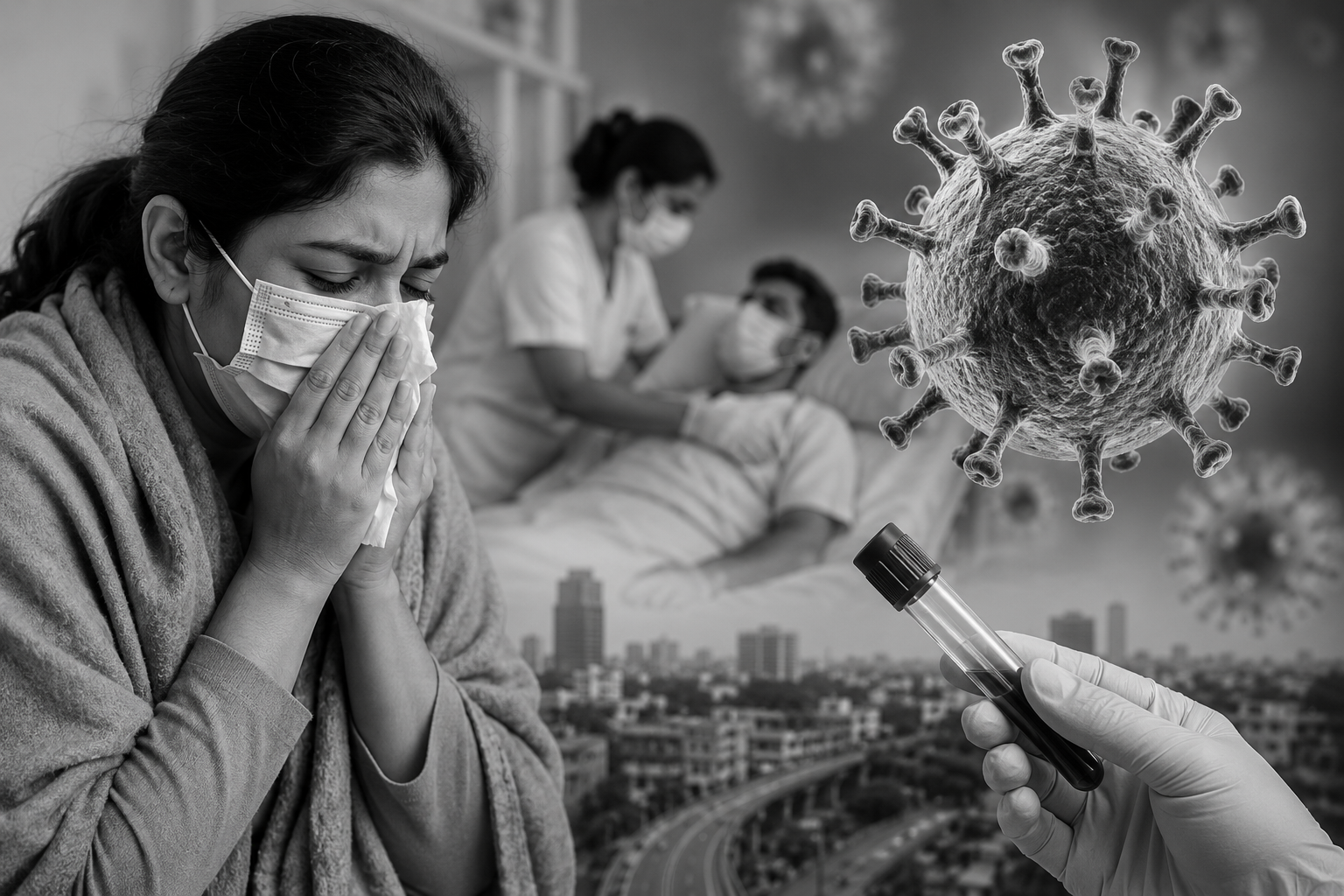
H1N1 Cases Surge in Delhi and Karnataka, ICMR Says No New Strain
India is witnessing a noticeable rise in H1N1 influenza cases, particularly in Delhi and Karnataka, but the increase is not being driven by a newly emerged strain, according to scientists at the Indian Council of Medical Research (ICMR). The clarification comes amid growing public concern over the rising number of cases and renewed references to H1N1 as “swine flu”.
ICMR sources said no new H1N1 strain has been identified and there is no cause for panic. The Influenza A (H1N1)pdm09 viruses circulating in India belong to the A/Missouri/11/2025-like strain, under clade 6B.1A.5a2a and subclade D.3.1.1, and have been circulating since 2025. The circulating strains are also described as well matched with vaccine strains recommended for the Northern Hemisphere.
The clarification is significant because a rise in infections does not automatically mean a new virus has emerged. H1N1pdm09, which was responsible for the 2009 pandemic, has continued to circulate as seasonal influenza and naturally evolves over time. Importantly, the World Health Organization (WHO) included A/Missouri/11/2025 (H1N1)pdm09-like virus in its recommended 2026–27 Northern Hemisphere influenza vaccine composition.
Delhi has recorded a substantial increase in influenza activity. Government data showed 2,392 Influenza-A cases, including 1,777 H1N1 cases, while 114 H1N1 infections were reported on August 20 alone. The increase is significant, but case numbers indicate transmission levels rather than the emergence of a novel strain.
The rise is not restricted to Delhi. Karnataka reported 4,212 laboratory-confirmed influenza cases across 32 districts up to August 22. Greater Bengaluru accounted for 2,070 cases, Bengaluru Urban 1,011, Udupi 300 and Mysuru 187. Karnataka's total is approaching its full-year 2025 figure of 4,583, while Greater Bengaluru's tally is already nearly 80% of its 2025 total of 2,587. State authorities have described the increase as part of the expected January - March and July - September seasonal peaks.
Despite the rise, authorities are maintaining vigilance. Union Health Minister J P Nadda reviewed surveillance, ILI and SARI trends, testing, laboratory monitoring and hospital preparedness, including beds, critical care, oxygen-supported beds, ventilators, medicines and diagnostics. Pankaj Kumar Singh also attended the meeting.
ICMR said seasonal influenza is generally self-limiting, with fever, cough, headache and body ache among common symptoms. However, children, elderly people and those with underlying conditions face greater risks. Delhi has advised respiratory hygiene, avoiding crowded places and timely medical consultation.
The current picture therefore points to increased seasonal H1N1 activity, not a new strain, with authorities urging vigilance rather than panic.