
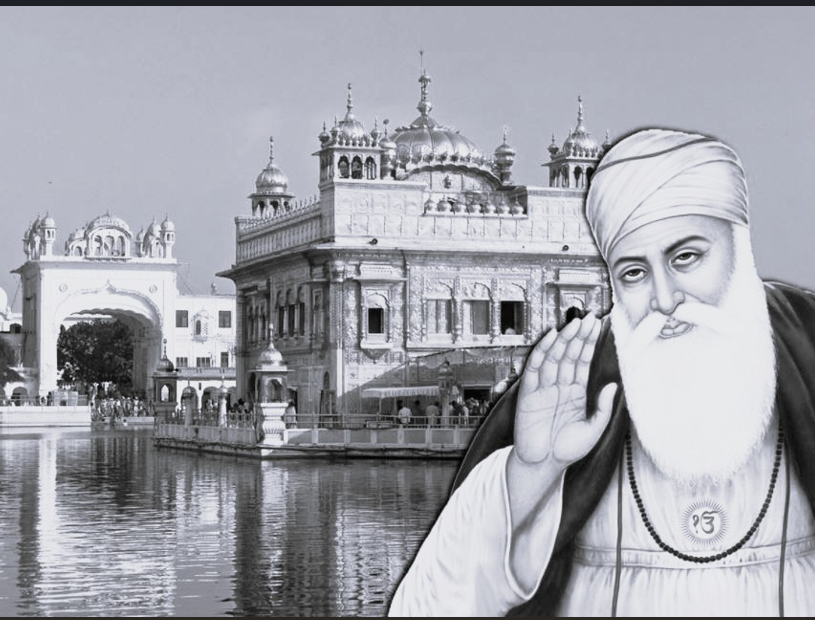
Guru Nanak Jayanti – The light that awakened humanity
As the luminous glow of Kartik Purnima graces the night sky and the fragrance of langar fills the air from the resounding gurbani in Sikh temples, devotees around the world come together to celebrate Guru Nanak Jayanti a festival that reminds us of the eternal values of humanity, equality, and compassion.
Gurpurab: A Global Celebration of Faith
Guru Nanak Gurpurab, one of the most significant Sikh festivals, marks the birth anniversary of Guru Nanak Dev Ji, the founder and first Guru of Sikhism. The festival is celebrated with great devotion across Punjab, Haryana, Chandigarh, Hyderabad, Pakistan, and several parts of the UK and beyond. Devotees gather in gurdwaras to offer prayers, sing hymns, and participate in community service.
The Light of Humanity
Guru Nanak was born in 1469 in Rai Bhoi di Talwandi, now known as Nankana Sahib in Pakistan, near Lahore. Though there is some debate over his exact date of birth, most Sikh traditions celebrate it on Kartik Purnima . Born into a Khatri merchant family, Nanak showed deep spiritual curiosity even as a child, questioning the role of religion and the meaning of life.
He grew up reflecting on whether “man exists for religion, or religion exists for man.” His thoughts transcended boundaries; he believed God is One and that all humans are His creation. Traveling widely with his companion Mardana, Guru Nanak studied the core philosophies of Hinduism, Islam, Buddhism, and Jainism, ultimately teaching a path of unity, equality, and devotion.
A Spiritual Calling
At about thirty, Guru Nanak had a divine revelation while meditating in a river. He disappeared for three days, and when he re-emerged, he proclaimed, “There is no Hindu, there is no Muslim” declaring the oneness of humanity. Thereafter, he began his spiritual journey across India and beyond, spreading the message of universal brotherhood.
He later settled in Kartarpur, where he founded the first Sikh community and established Guru ka Langar — the free community kitchen symbolizing equality and service.
Teachings and Philosophy
Guru Nanak’s teachings form the bedrock of Sikhism and continue to guide millions across the world. His core principles include:
• Naam Japo: Meditate on the divine name.
• Kirat Karo: Earn an honest living through hard work.
• Vand Chhako: Share what you have with others.
• Seva: Serve selflessly.
• Sarbat da Bhala: Wish well for all.
One of his earliest lessons came from the Sacha Sauda (True Bargain) story when his father gave him money for trade, young Nanak instead used it to feed hungry ascetics, saying, “This is the true business.”
The Eternal Flame of Equality
Guru Nanak’s message was revolutionary in 15th-century India, a society divided by caste, religion, and gender. He envisioned a world where every person, rich or poor, Hindu or Muslim, man or woman sat together as equals. The Langar tradition in gurdwaras continues to uphold this spirit of oneness.
The Celebration of Gurpurab
The festival begins two days prior to the main day with the Akhand Path , a continuous 48-hour recitation of the Guru Granth Sahib . On the eve of Gurpurab, devotees organize Nagar Kirtan , a procession led by the Panj Pyare (Five Beloved Ones), carrying the holy scripture in a beautifully decorated palanquin. On the main day, early morning prayers, hymns ( Shabad Kirtan ), and spiritual discourses are held, followed by Langar a shared meal that embodies humility, service, and equality.
Legacy and Sacred Sites
Guru Nanak spent his final years in Kartarpur Sahib, now in Pakistan, where he established the foundations of Sikhism. Today, the Kartarpur Sahib Gurdwara, accessible to Indian devotees via the Kartarpur Corridor , stands as a symbol of faith that transcends borders. The Golden Temple (Harmandir Sahib) in Amritsar remains the holiest shrine of Sikhism, where the Guru Granth Sahib revered as the living Guru is enshrined.
Relevance in the Modern World
In today’s world of rising divisions, inequality, and self-centeredness, Guru Nanak’s words resonate more than ever. His message of oneness of God , honest living , and sharing with others offers a timeless path to peace and unity. In a society torn by conflict, his teachings light the way toward harmony and compassion.
A Beacon for Humanity
Just as Diwali lamps brighten homes, let us light a lamp within our hearts this Guru Nanak Jayanti a lamp of love, truth, and service. Feed someone hungry. Comfort someone in distress. Replace hatred with kindness.
For Guru Nanak, religion was not about rituals, but about humanity.
His words “Naam Japo, Kirat Karo, Vand Chhako” remain not just spiritual guidance but a universal code for a life of purpose and compassion.
Guru Nanak Jayanti is not just a festival — it is a celebration of humanity itself.
Satnam, Waheguru.