
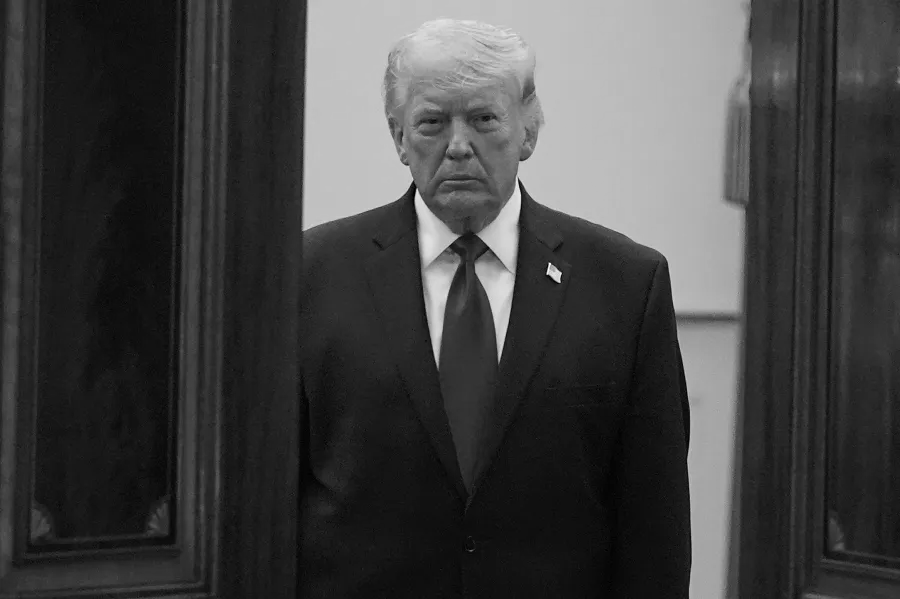
Guns over groceries: Trump's $1.5 trillion war budget puts Pentagon first, everything else last
In a nation at war, money follows the guns. And on Friday, the White House made that philosophy official.
President Donald Trump's fiscal year 2027 budget blueprint landed on Capitol Hill, a document that could push Pentagon spending to a staggering $1.5 trillion , the largest military budget of its kind in decades, even as millions of Americans who rely on federal healthcare and social support programs brace for sharp cutbacks.
The timing is no accident. The budget arrives against the backdrop of the ongoing U.S.-led war against Iran , with Trump having already signaled he wanted to modernize the military to meet 21st-century threats. The Pentagon separately put forward a proposal last month for an additional $200 billion to cover war costs and replenish depleted munitions and supplies.
Trump left little room for ambiguity at a private White House event on Wednesday. "We're fighting wars. We can't take care of day care," he said. "It's not possible for us to take care of Medicaid, Medicare , all these individual things. They can do it on a state basis . You can't do it on a federal." The remarks previewed a collision course with Congress , where lawmakers on both sides guard domestic spending programs fiercely.
The scale of the proposal is breathtaking. Fiscal watchdog the Committee for a Responsible Federal Budget estimates the plan would add $5.8 trillion in defense spending over a decade and balloon the national debt by $6.9 trillion once interest costs are included, describing it as the largest single-year defense increase since World War II. The national debt has already crossed $39 trillion , with net interest payments projected to exceed $1 trillion in fiscal year 2026 alone.
Presidential budgets do not carry the force of law, and Congress routinely rewrites them. Last year, Trump sought roughly a one-fifth reduction in non-defense spending , but Congress largely kept such funding flat. That battle is set to repeat, complicated further by a 49-day partial government shutdown with lawmakers still deadlocked over Homeland Security funding .
With U.S. forces in active combat against Iran , opposing a wartime defense budget is a harder vote to cast. The real question before Congress is how much of the domestic safety net America is willing to trade for it.