
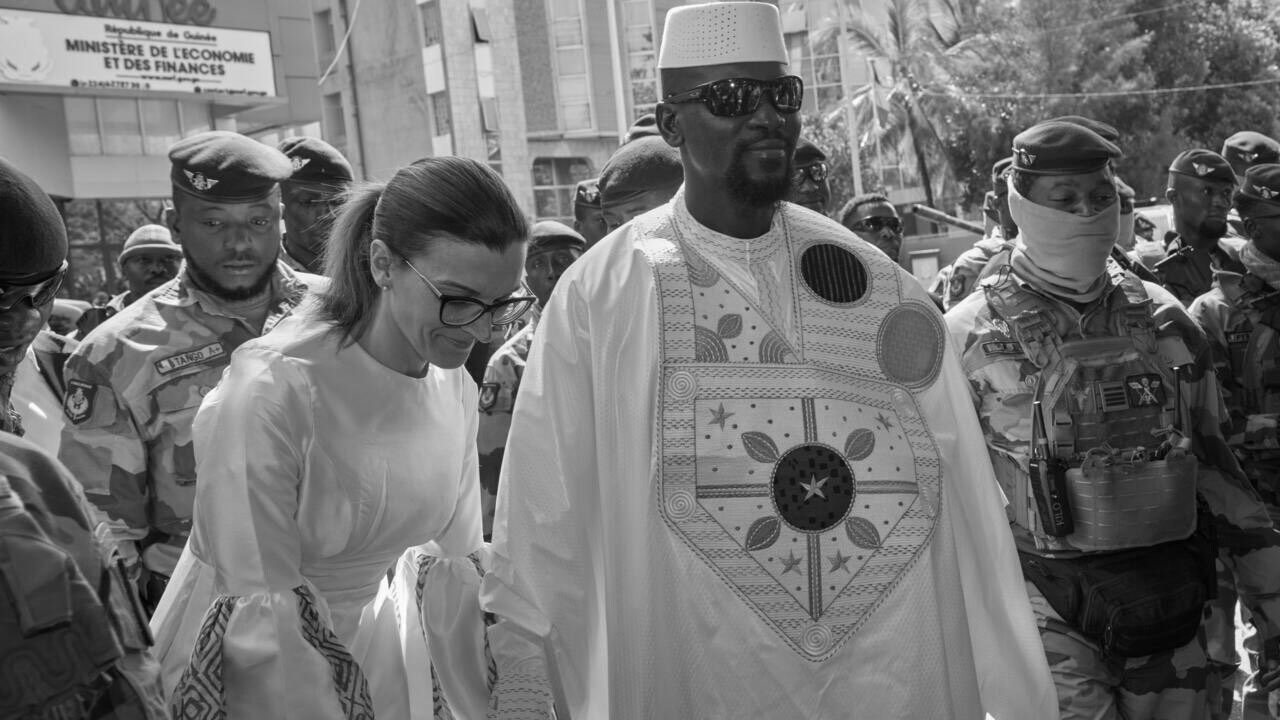
Guinea coup leader Doumbouya secures landslide victory four years after seizing power
Guinea’s junta leader Gen. Mamady Doumbouya has been provisionally declared the winner of the presidential election held over the weekend, according to results released late Tuesday by the General Directorate of Elections. Doumbouya secured 86.72 per cent of the votes counted so far, an outcome widely anticipated by analysts given the political environment in the run-up to the poll.
Reacting to the announcement, Doumbouya said the vote marked “ a victory for the Guinean people ” and called for calm and unity, declaring that he would be “the president of all Guineans, without exclusion.” He said his priority would be to “restore stability, strengthen institutions and ensure that Guinea’s wealth benefits every citizen.”
Sunday’s vote was Guinea’s first national election since the September 2021 military coup in which Doumbouya, then commander of the country’s elite special forces, overthrew President Alpha Condé . The coup led to the suspension of the constitution , the dissolution of parliament and the installation of a military-led transitional government . In the years that followed, Guinea experienced prolonged political uncertainty, sanctions and strained relations with regional bodies , while protests against military rule were frequently suppressed. Human rights groups say dozens were killed during demonstrations and civil liberties were sharply curtailed.
The election was presented by the authorities as the culmination of a four-year transition back to constitutional rule. Earlier this year, a new constitution was adopted that removed barriers preventing military leaders from running for office and extended the presidential term, clearing the way for Doumbouya’s candidacy despite his earlier pledge that members of the junta would not contest elections. Addressing supporters, Doumbouya said the new mandate would allow Guinea to “ turn the page on years of instability ” and “ build a strong and sovereign state .”
The opposition entered the race in a severely weakened position. Major political parties that have traditionally dominated Guinean politics, including Alpha Condé’s Rally of the Guinean People, the Union of Democratic Forces of Guinea led by Cellou Dalein Diallo and the Union of Republican Forces, were sidelined, internally divided or chose not to mount a full challenge. Several prominent opposition leaders remained in exile or were barred from running, and dozens of political parties were dissolved during the transition. Although Doumbouya faced eight other candidates, none was seen as posing a serious challenge. Authorities reported voter turnout of more than 80 per cent, figures that opposition groups disputed, alleging irregularities and intimidation.
Guinea’s political trajectory matters beyond its borders because of its vast natural resources. The country holds the world’s largest known reserves of bauxite , a key raw material for aluminium , and is home to major iron ore deposits , notably the Simandou range, one of the largest untapped iron ore resources globally. Guinea also has significant gold and diamond reserves and enormous hydropower potential, earning it the label of the “ water tower of West Africa .” Doumbouya has said his government will ensure that “ Guinea’s natural riches are managed transparently and used for development, not for the benefit of a few .”
The provisional results are expected to be reviewed by the Supreme Court, but Doumbouya’s victory is widely seen as consolidating his grip on power. While supporters argue the result brings continuity and stability after years of upheaval, critics say it raises fresh questions about the depth of Guinea’s return to democratic rule and whether the post-coup transition has genuinely come to an end.