
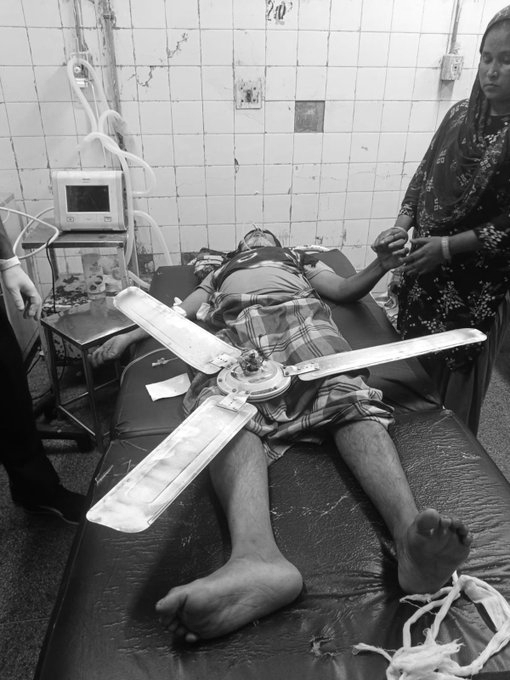
GTB Hospital Fan Collapse Sparks Outrage After Patient Dies, Family Alleges Negligence
A 42-year-old patient died hours after a ceiling fan allegedly fell on him inside Ward 27 of Delhi's Guru Teg Bahadur (GTB) Hospital, prompting his family to demand an inquiry into the incident. The hospital, however, maintained that the patient died due to his pre-existing medical condition and not because of the fan accident.
The incident occurred around 9.30 pm on Saturday, when the ceiling fan reportedly detached and fell onto the patient's bed. Eyewitnesses claimed the fan struck the patient in the abdomen before hospital staff attended to him. The patient died on Sunday afternoon, sparking allegations of poor maintenance and inadequate patient safety.
Advocate Aslam Qureshi, who claimed to have witnessed the incident, alleged that the fan fell directly on the patient and disputed suggestions that it had struck a nurse. He also accused the hospital administration of negligence, claiming there was a delay in medical response and that several air-conditioners in the ward were non-functional, forcing patients to rely on ceiling fans. Family members and other attendants demanded a thorough investigation into the incident.
In its official statement, GTB Hospital said the patient had been admitted in an unconscious condition with uncontrolled hypertension, stroke or encephalopathy, aspiration pneumonia and respiratory failure. It stated that doctors immediately examined the patient after the incident and found no external injuries, adding that no major injury was sustained by anyone due to the falling fan. The hospital maintained that the patient's death resulted from his underlying medical condition.
A preliminary inspection found that the fan shaft had fractured, causing the ceiling fan to fall. The damaged fan was replaced, and the hospital has ordered a detailed inquiry.
The case is likely to hinge on post-mortem and forensic findings, which can determine whether internal injuries contributed to the death and whether infrastructure failure or negligence played a role. The incident has also renewed calls for regular infrastructure safety audits, timely maintenance and greater accountability in public hospitals to ensure patient safety.