
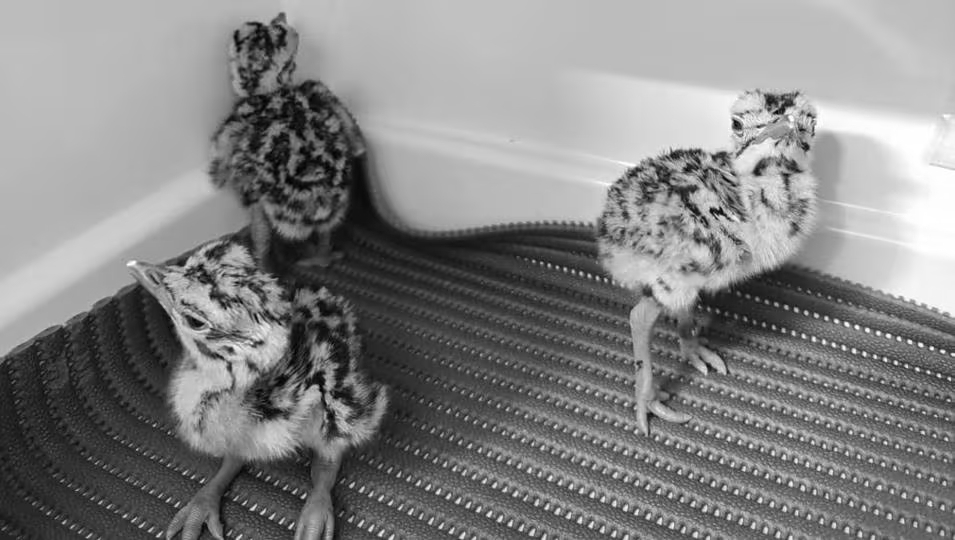
Great Indian Bustard captive count rises to 76 after 3 chicks hatched using artificial insemination
The critically endangered Great Indian Bustard , locally known as Godawan and Rajasthan’s state bird , has reached a captive population of 76 following the successful hatching of three chicks through artificial insemination technology , officials said. Two chicks were hatched at the Sudashri Godawan Breeding Centre and one at the Ramdevra Godawan Breeding Centre in Jaisalmer district , where long-term conservation efforts are showing encouraging results .
With these additions, the Ramdevra facility now hosts 52 birds, while Sudashri houses 24. Brijmohan Gupta , Divisional Forest Officer at the Desert National Park, described artificial insemination as a lifeline for the species , allowing breeding even where natural reproduction is limited.
Once widespread across Rajasthan, Gujarat, and parts of Pakistan, the Great Indian Bustard is now among the rarest birds in the world , with fewer than 150 individuals estimated in the wild. Unlike eagles, these large ground-dwelling birds are vulnerable because they are slow-moving, fly short distances, and rely on open grasslands for nesting . Their sharp decline is mainly caused by collisions with power lines, habitat loss, low reproductive rates, and human disturbance , rather than hunting.
The newly hatched chicks are under careful monitoring to ensure proper nutrition, health, and behavioural development , with preparations underway for eventual release into natural habitats . The program combines the efforts of state and central governments , wildlife experts, and modern technology.
Officials said the rising number of captive-bred bustards provides renewed hope for species revival , marking a significant milestone in India’s wildlife conservation initiatives.