
GRAP tackles symptoms, not root causes of Delhi’s air pollution, experts warn
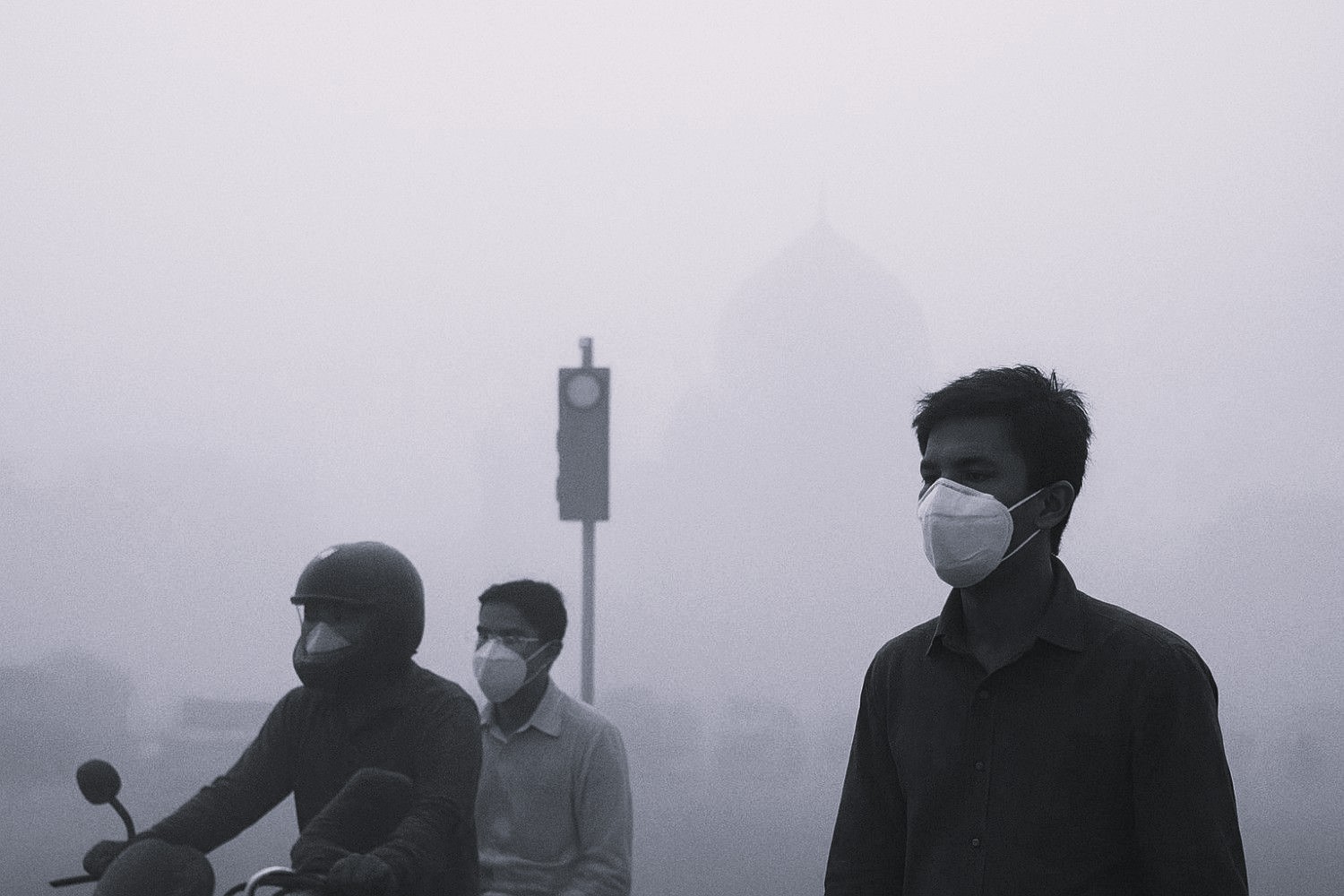
As Delhi once again slipped into the ‘very poor’ air quality category on Wednesday, environmental experts warned that the Graded Response Action Plan (GRAP), the city’s primary emergency pollution framework, offers only temporary relief and fails to address the root causes of air pollution. According to the Central Pollution Control Board, Delhi’s Air Quality Index (AQI) hovered around 357 early Wednesday, indicating “very poor” conditions that pose health risks for residents, particularly children, the elderly, and those with respiratory issues. City skies were shrouded in dense fog, further trapping pollutants near ground level.
Experts told PTI that while GRAP is a structured and coordinated emergency response mechanism, it has not resulted in a sustained reduction in pollution levels across Delhi-NCR. Environmentalist Sunil Dahiya said the framework relies on an outdated emission inventory and lacks a mechanism to assess whether the restrictions imposed actually reduce the overall pollution load. He also flagged the absence of effective integration between tools such as the Decision Support System and R-AASMAN , which limits authorities’ ability to evaluate the real-world impact of GRAP measures.
Bharati Chaturvedi , Director of the Chintan Environmental Research and Action Group, said GRAP was introduced as a stop-gap arrangement and should not become a substitute for long-term solutions. Comparing it to applying an ointment to a fracture, she warned that unless Delhi addresses traffic congestion, biomass and waste burning, and weak monitoring systems, the city will continue to face the same crisis every year. She also stressed the need to strengthen pollution control institutions and create clearer growth pathways for scientists working in the sector.
The criticism comes even as the Commission for Air Quality Management (CAQM) tightened GRAP norms in November 2025 by advancing several pollution control measures to earlier stages. Under the revised framework, restrictions are now triggered sooner as air quality deteriorates, including curbs on diesel generator use, enhanced public transport services, traffic management at congestion points, pollution alerts, staggered office timings, and work-from-home provisions during severe pollution episodes.
GRAP itself is a set of pre-defined emergency measures linked to the Air Quality Index (AQI) , designed to replace ad-hoc responses with automatic, stage-wise action. As pollution worsens from ‘poor’ to ‘severe’, increasingly stringent restrictions are enforced to prevent further deterioration.
The GRAP plan, first notified in 2017 by the Ministry of Environment following Supreme Court interventions, was introduced to bring a predictable, coordinated response to Delhi’s worsening air pollution. Previously, pollution control actions were reactive and fragmented. Overseen by the Commission for Air Quality Management (CAQM) , GRAP has helped streamline emergency measures, such as construction bans, diesel generator restrictions, and enhanced public transport, providing temporary relief during peak pollution periods.
However, experts note that GRAP remains inherently reactive, activating only after air quality becomes hazardous and failing to address year-round pollution sources like vehicle growth, industrial emissions, fossil fuel use, and urban planning gaps. The lack of measurable outcomes, uneven enforcement, and limited integration of monitoring tools further reduce its effectiveness. CAQM says measures are periodically reviewed, with stronger enforcement being planned, but long-term solutions remain necessary.
Delhi’s AQI has recently approached the maximum value of 500 during smog episodes, while occasional dips below 100 in favorable conditions offer only brief relief. Experts agree that while GRAP is essential for short-term health protection, sustainable improvement requires tackling the root causes of pollution , not just emergency management.