
Grand Revival: Mahalakha Chandabai Stepwell Reopens at Osmania University
Osmania University recently witnessed the grand reopening of the historic ‘Mahalakha Chandabai’ stepwell , a heritage structure of immense historical significance and a legacy of the Nizam era. Over time, the stepwell had fallen into neglect, losing its former glory, until a student, Nazeer , brought it to the attention of the university administration. The authorities undertook a restoration, reviving its architectural splendor.
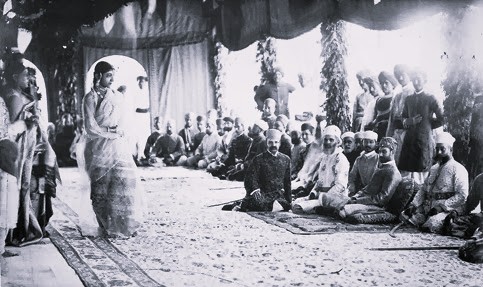
The reopening ceremony, organized under the auspices of Infosys Foundation , saw the district collector, Harichandan , as chief guest. The event was attended by the Principal of the College of Education, Ravindranath Murthy , faculty members, university officials, and students in large numbers. The occasion was further enlivened by a dance performance by the Sharma-Biswas arts troupe , named Murtha-Maheshwar . The stepwell was officially reopened at 6:15 PM , regaining its historical grandeur.
The Legacy of Mahalakha Chandabai
Few are aware that the revered Mahalakha Chandabai played a pivotal role in shaping the educational and cultural landscape of Telangana. Once, her jagirs stretched from Maulali and Adikmet (present-day Osmania University) to Bag Lingampally. She generously donated land that now hosts Osmania University, the College of Foreign Languages (SIFEL), Andhra Mahila College, and Sundarayya Knowledge Centre in Bag Lingampally.
India’s First Urdu Poetess
Mahalakha Chandabai, also known as Chandabibi , was a celebrated Urdu poetess during the Nizam era , recognized as India’s first Urdu poetess. Hailing from a family originally from Gujarat, Chandabai’s mother, Raj Kanwar Bai, was Hindu, and her brother served as a high-ranking officer in the Nizam’s army. Chandabai’s husband, Taj Ali Shah Alisha , was a multi-talented artist and historian. She inherited her love for dance from her mother, artistic sensibilities from her father, and courage and valor from her maternal uncle.
Chandabai’s birth is steeped in legend: while her mother was pregnant, she visited a Sufi shrine on Maulali hill. Facing complications during the climb, her husband rushed to fetch the shrine’s prasad, averting disaster. She was born on 4 April 1764 , named Chanda Bibi . Recognized early for her talent, she was introduced to the Second Nizam and appointed as a permanent court dancer and trusted advisor , receiving extensive lands as gifts, which now form parts of the old city and Osmania University campus.
Throughout her life, Chandabai hosted grand urs celebrations at Maulali hill and built a flower garden containing her mother’s tomb. She passed away in 1824 at around 60 years of age , and her mausoleum still stands on Maulali hill.
Chandabai Stepwell
The Chandabai stepwell , located at the College of Education (B.Ed) campus at Osmania University, is architecturally significant for its unique stepwell design, earning it the name ‘Mahalakha Bavi’ . It is believed to have been commissioned by the Nizam in her memory. The restored stepwell now stands as a testament to her legacy.
Literary Contributions
Under the pen name ‘Chanda’ , she wrote numerous poems and ghazals in Deccani Urdu , performing her own compositions. Chandabai was celebrated as a tawaif (performer) in the Deccan, mesmerizing Nizam rulers with her art. Her works were later compiled and published posthumously as ‘Gulzar-i-Mahalakha’ . Her mausoleum remains a prominent site in Maulali, Hyderabad.