
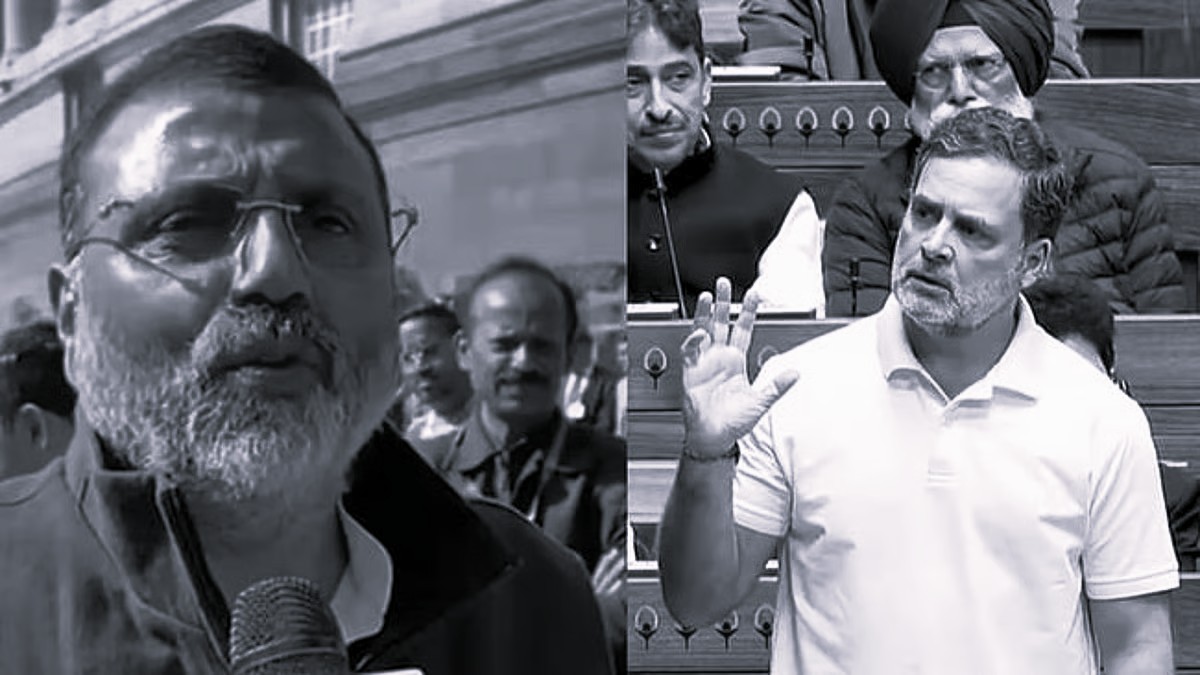
Govt drops plan, BJP MP’s motion against Rahul Gandhi may trigger House action
The government has decided not to initiate its own motion against Leader of the Opposition Rahul Gandhi over alleged unparliamentary remarks, with Union Parliamentary Affairs Minister Kiren Rijiju stating that a notice already submitted by BJP MP Nishikant Dubey will be allowed to proceed.
Rijiju said consultations would now take place with the Speaker of the Lok Sabha to decide whether the issue should be examined by the Privileges Committee, the Ethics Committee, or taken up directly in the House. The minister clarified that once a private member has formally moved a proposal, the government typically refrains from filing a parallel motion on the same matter.
Dubey’s notice seeks a substantive motion against Gandhi a parliamentary device that allows a member to place an independent, self-contained proposal before the House seeking a clear decision or expression of opinion. Unlike procedural motions tied to debates, a substantive motion can potentially lead to disciplinary or political consequences if adopted by the House.
What the committees can do
If admitted, the Speaker may refer the matter to parliamentary panels with different jurisdictions:
• Privileges Committee: Examines whether an MP’s conduct has breached parliamentary privilege or obstructed the functioning of the House. Its recommendations may include admonition, suspension, or other corrective steps.
• Ethics Committee: Focuses on members’ conduct and standards of behaviour, including allegations of impropriety or actions deemed unbecoming of an MP. It can recommend reprimand, suspension, or even expulsion in serious cases.
The choice between these bodies will shape the nature of the inquiry whether it is treated as a question of parliamentary rights or one of ethical conduct and decorum.
Political context
Dubey has alleged in his notice that Gandhi’s remarks and foreign engagements undermine national interests, and has demanded cancellation of his membership and a lifetime ban from contesting elections. The Congress has rejected such allegations, calling them politically motivated and part of a broader attempt to silence opposition voices. The episode reflects continuing friction between the ruling Bharatiya Janata Party and the opposition Indian National Congress during the ongoing session.
A comparable precedent
Parliament has previously acted on committee recommendations in high-profile cases. In 2023, TMC MP Mahua Moitra was expelled from the Lok Sabha following an Ethics Committee probe into allegations in the “cash-for-query ” controversy. That case demonstrated how committee findings, once endorsed by the House, can result in the termination of a member’s tenure.
What happens next
The Speaker’s ruling on admissibility will determine whether the motion proceeds to committee scrutiny or debate in the House. Either route could trigger a prolonged political confrontation, as disciplinary proceedings against a sitting Leader of the Opposition would be rare and highly contentious.