
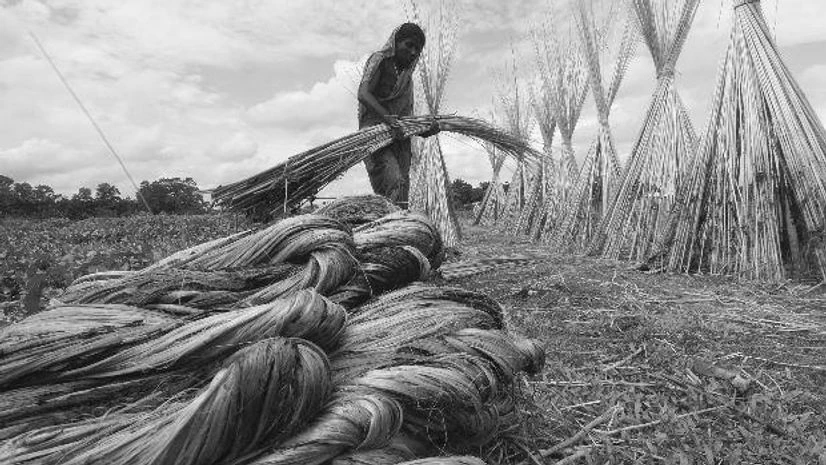
Government unveils measures to stabilise raw jute amid rising prices
Union Minister for Textiles Giriraj Singh on Wednesday reviewed the availability of raw jute and announced measures to support the jute industry, mills, small traders, and farmers amid tight supply and rising prices. Singh assessed market conditions and directed steps to improve supply for foodgrain packaging.
In a meeting with senior officials, the government decided to raise stock limits for jute mills while tightening caps for traders and balers, ensuring adequate raw material for MSMEs. Authorities noted the ongoing dehoarding drive will be intensified, with violators identified.
Under revised rules, registered balers can hold 1,200 quintals, other registered stockists capped at 25 quintals, and unregistered traders limited to 5 quintals. Jute mills allowed 45-day stock . Entities holding excess must liquidate within ten days, with enforcement authorised to inspect and seize stock.
The measures come amid a sharp price surge to Rs 13,000 per quintal.
To offset costs, B-twill jute bag prices rose from Rs 58–60 in 2024 to Rs 87.20 in 2026. Nearly 80% of jute workers are in West Bengal.
Singh also directed subsidised jute seeds distribution under the Jute ICARE Scheme and continued support for Jute Corporation of India MSP operations.
The Jute Balers’ Association (JBA) called claims of scarcity “misleading” and warned of potential trading bans disrupting livelihoods. They urged compassionate enforcement for small traders and a detailed crop assessment, noting 30% higher arrivals July-December 2025.
Analysts highlighted mill disruptions in West Bengal due to scarcity, some forced to halt operations, stressing urgency of stabilising supplies.