
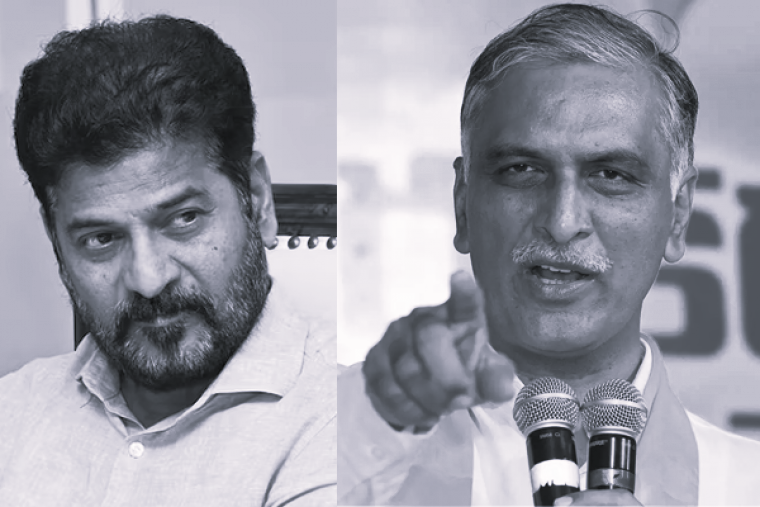
Governance or Circus? Harish Rao Slams Govt Over Film Ticket Hike Chaos
Former minister T. Harish Rao launched a sharp attack on the Telangana government, alleging that the Secretariat is witnessing a “ bigger suspense thriller than a cinema itself ” over the ongoing controversy surrounding movie ticket price hike approvals . He said the situation has left people wondering whether the state is being run by a government at all and if so, who is actually in control . His remarks come amid rising political heat and legal scrutiny over ticket-rate hike permissions granted to select films during the peak Sankranti release season .
Raising serious concerns over administrative accountability, Harish Rao questioned how Home Department memos/Government Orders allowing ticket-rate hikes are being issued even as the Minister in charge of Cinematography, Komatireddy Venkat Reddy , has reportedly stated that he is unaware of these approvals and that no file reached him . Rao mocked the situation, saying it is shocking that the minister who also holds key portfolios like IT and Civil Aviation —does not appear to know what is happening in his own department. He alleged that the minister’s public distancing indirectly confirms that these decisions are being driven at a higher level, and asked whether Telangana has a minister for the film department only on paper, while real control lies elsewhere.
Harish Rao intensified his criticism by suggesting that the episode points to “shadow governance” or extra-constitutional influence , asking who is pushing such decisions if the concerned minister is not authorising them. He demanded clarity on the chain of command behind ticket-hike permissions and why orders are being issued overnight without transparent accountability. According to him, this raises troubling doubts about who is steering key decisions in the state.
Taking aim at Chief Minister Revanth Reddy , Harish Rao accused the government of violating promises made on the floor of the Assembly. He recalled that Revanth had earlier declared that as long as he remained in office, there would be no ticket price hikes and no benefit shows , yet permissions are now being granted through fresh memos. Rao alleged that ticket rates were increased excessively for three films , and that certain producers were being given “red-carpet treatment” with approvals reportedly allowing ticket prices to go up to ₹600 , while others are denied similar relaxations.
The controversy has also gained further momentum due to developments in the Telangana High Court , which has been examining petitions challenging ticket price hike memos. Reports say the High Court suspended a memo linked to Prabhas’ ‘The Raja Saab’ , raising questions over repeated permissions and the government’s approach. In another case related to Chiranjeevi’s Sankranti release ‘Mana Shankara Vara Prasad Garu’ , the court deferred further hearing until after the festival vacation period. The issue has highlighted a larger debate on whether the state is relying on case-by-case memos rather than establishing a clear and consistent policy for the film industry.
Harish Rao strongly objected to what he described as the ruling party’s attempt to turn the film industry into a political weapon , instead of treating it like a legitimate economic sector. He said that under the previous BRS government led by KCR , the film industry was treated equally and protected, while the current administration is allegedly destabilising the environment through ego-driven decisions, political vendetta, and selective permissions . He warned that such an approach could harm the reputation of the government and disrupt an industry that provides employment to thousands.
Seeking intervention, Harish Rao appealed to the Governor for a comprehensive inquiry into the alleged “commission racket” behind ticket approvals and demanded that the truth be revealed about how permissions are being granted without the cinematography minister’s role. Stressing the need for fairness, he said governance must be based on equal treatment , and the government should not play favourites by treating one group as allies and another as enemies. He concluded by urging the administration not to drag cinema professionals into politics and to ensure transparency and accountability in all decisions impacting the film industry.