
Glacier Collapse Suspected Behind Deadly Nepal Floods, Satellite Images Reveal
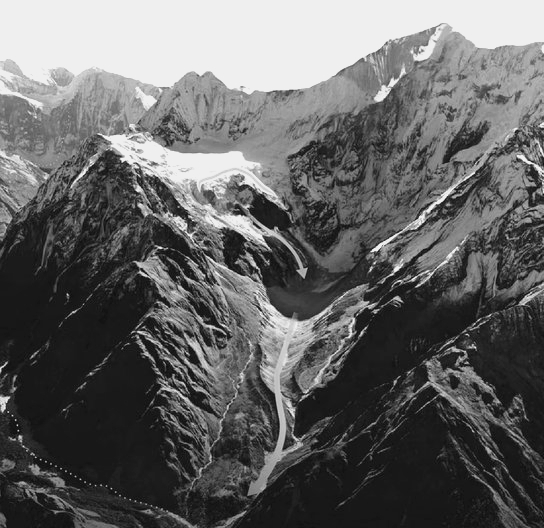
Scientists investigating the catastrophic floods along Nepal’s Bhote Koshi River increasingly believe a massive glacier and bedrock collapse triggered the disaster, with satellite imagery indicating that falling ice and rock may have temporarily blocked the Lhende River before the natural dam burst.
The floods struck on Wednesday near the Nepal-China border, killing hundreds and leaving many others missing, including foreign nationals and pilgrims. The torrent swept through several districts, destroying bridges, buildings and other infrastructure.
Initial theories included a glacial lake outburst flood (GLOF) and an avalanche. However, geomorphologists Kristen Cook and Dan Shugar said clearer satellite images showed that part of the Langtang Lirung glacier had broken away along with a much larger section of underlying bedrock. The collapse sent huge quantities of ice, rocks and boulders into the valley.
Scientists at the International Centre for Integrated Mountain Development (ICIMOD) said the debris likely entered the Lhende River, temporarily blocking its flow. When the blockage failed, a powerful surge of water, mud and debris swept into the Bhote Koshi.
The US Geological Survey initially recorded a magnitude 4.4 earthquake in Tibet but later revised its assessment, saying seismic energy was generated by a glacial collapse and debris flow. The event was subsequently classified as a magnitude 5.2 seismic event.
The flooding caused dramatic rises in water levels, with the Trishuli River climbing nine metres in 30 minutes at Galchhi and about seven metres at Malekhu, according to ICIMOD.
Satellite images show widespread devastation in Syapru Besi, Betrawati and Kolpurtar, with homes and villages buried in mud and debris. Experts have warned that warming temperatures and melting permafrost could increase mountain instability, although scientists caution that a direct link between climate change and this specific collapse has not yet been established.
Authorities are also monitoring a newly formed barrier lake downstream, amid fears that another natural-dam failure could trigger additional flooding.