
Giriraj Singh Pushes Tech Upgrade, GI Branding to Boost Bengal Handlooms
Union Textiles Minister Giriraj Singh ’s recent visit to West Bengal signalled a calibrated push to modernise India’s traditional textile base while safeguarding the livelihoods that sustain it. Beginning in Shantipur , one of the country’s oldest handloom hubs, the minister interacted directly with weavers and sector officials, outlining a strategy that blends policy protection , market reform and technology integration to make handlooms globally competitive without eroding their artisanal identity.
A key announcement was the proposal to source school uniforms exclusively from handwoven fabric , a move aimed at creating assured domestic demand for lakhs of artisans. The minister also stressed protection of the handloom sector from distortions caused by power-loom competition , an issue long raised by traditional weaving clusters. By reinforcing demand through institutional procurement and fair-market safeguards, the Centre hopes to stabilise incomes in a segment that remains culturally rich but economically vulnerable.
Singh highlighted the export potential of GI-tagged Bengal sarees such as Shantipuri , Baluchari , and Tangail , which command premium recognition for craftsmanship and heritage value. With India exploring deeper trade engagement with the United States and the European Union , such niche handloom products could benefit from improved market access if quality, compliance, and branding standards are met. GI labelling, digital traceability, and stronger marketing linkages are expected to play a crucial role in turning heritage value into export earnings.
Technology adoption formed another pillar of the discussions. The minister spoke about AI-based quality sampling and digital tools that can help maintain consistency in weaving patterns, reduce rejection rates in export consignments, and build buyer confidence. Such interventions, when combined with cluster-level training and design support, could allow small producers to meet global benchmarks without losing the handcrafted uniqueness that defines Indian handlooms.
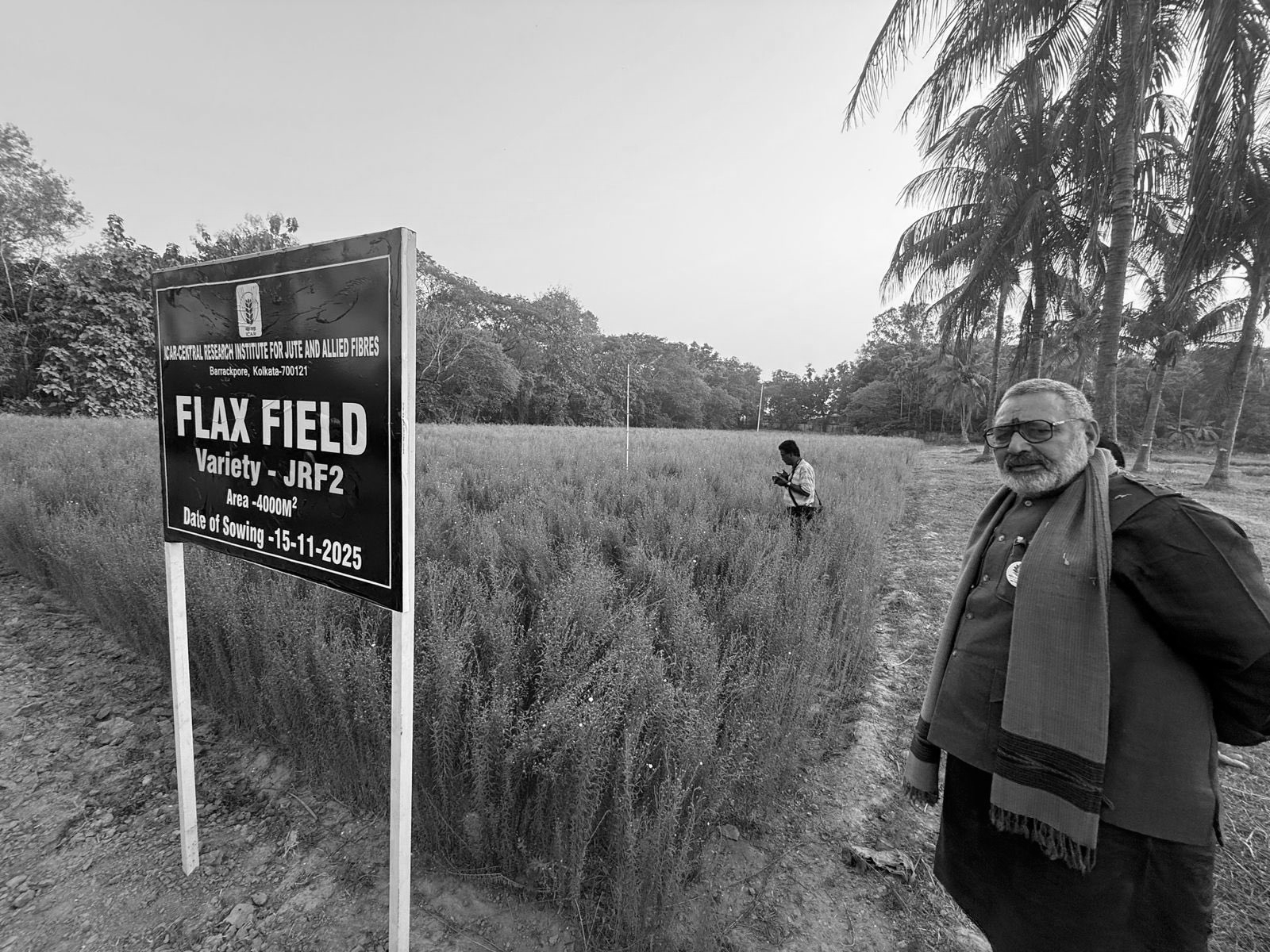
Later in Barrackpore, Singh reviewed research initiatives at ICAR-CRIJAF , NINFET , and IJIRA , institutions working across jute , handloom, and allied fibre ecosystems. Scientists and trainers presented work on fibre innovation , improved varieties, design development, and sustainability-focused production methods. Their research supports climate-resilient fibres, eco-friendly processing, and value-added applications that align with rising global demand for sustainable textiles.
The visit reinforced the idea that the future of Indian textiles lies in a hybrid model preserving heritage weaving while embedding scientific research, digital systems, and structured market access. With West Bengal home to nearly seven lakh weavers and a dense network of traditional looms, even incremental gains in productivity, branding, and export connectivity could translate into large-scale livelihood growth.
By linking institutional research, GI branding, public procurement, and emerging trade opportunities, the Centre’s approach seeks to reposition handlooms not as relics of the past, but as high-value, sustainable products for modern markets.