

Gig Worker Welfare Law Passed, Telangana Calls for Nationwide Paraquat Ban
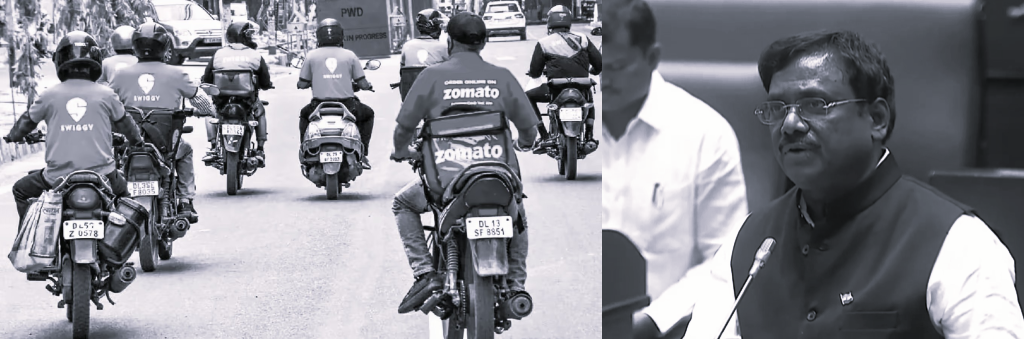
In a move reflecting the evolving needs of both the digital economy and public health , Telangana has taken two major policy decisions introducing a law to protect gig workers and urging a ban on the hazardous herbicide Paraquat . The newly passed legislation aims to provide social security , legal recognition, and welfare support to nearly four lakh platform-based workers such as delivery partners and cab drivers, who have long operated without job security , stable income, or access to basic benefits.
The law mandates registration of workers and issuance of a unique ID , enabling access to government schemes, while also proposing a Gig Workers Welfare Board to oversee implementation and resolve disputes. A dedicated welfare fund will be created, and companies will be required to establish grievance redressal mechanisms, especially where large numbers of workers are employed. The initiative gained momentum following Rahul Gandhi’s interactions with gig workers, which highlighted concerns around income instability , lack of healthcare, and absence of protections in this rapidly growing workforce.
Despite being a significant reform, concerns remain over the absence of a minimum wage guarantee and the continued classification of workers as independent contractors. However, the law is seen as a crucial step toward formalising a sector driven by platforms like food delivery and ride-hailing services, where workers often face uncertain earnings and long working hours without traditional employment benefits.
In the same session, the Assembly unanimously passed a resolution calling for a nationwide ban on Paraquat , citing its severe impact on public health and the environment. The chemical, widely used in agriculture, is known for its toxic nature and the absence of any effective antidote, making even small exposure potentially fatal. Farmers and agricultural workers using it without protective gear are at risk of respiratory illnesses and skin disorders, while its misuse in suicide attempts has raised serious concerns.
Although regulations exist, the continued availability of Paraquat, including through online platforms, has exposed enforcement gaps. The Assembly has called for a complete ban on its production, sale, and distribution, emphasising the need to prioritise human safety and sustainable agricultural practices. Together, these decisions underline Telangana’s attempt to balance economic progress with worker welfare and health protection, positioning the state as a potential model for broader policy reforms across India.