
Generative UI by Google Offers Personalized, Interactive Digital Solutions
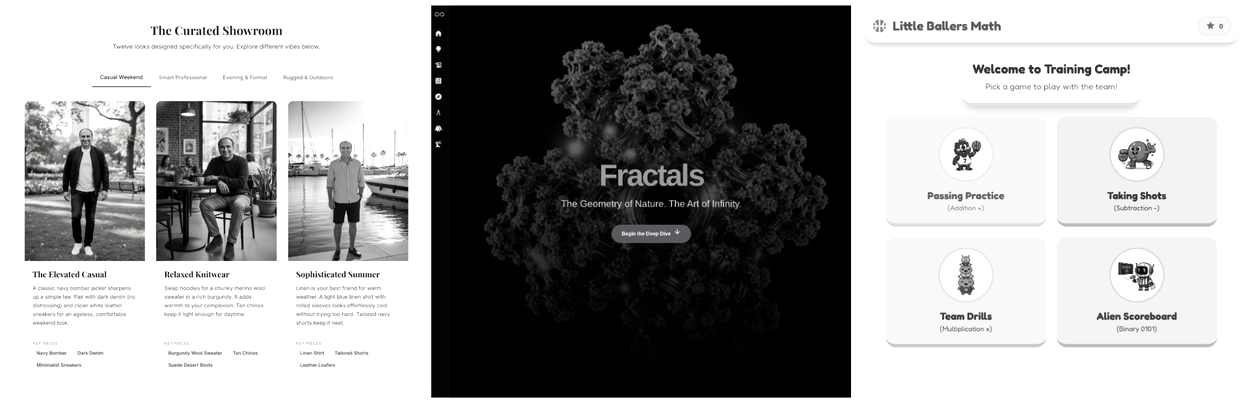
Google has introduced a new technology called Generative UI, which allows artificial intelligence to produce fully interactive, customized user interfaces in response to any prompt. Unlike traditional AI models that provide static text or predefined visuals, this system can generate dynamic web pages, tools, simulations, games, and applications, all automatically tailored to a user’s query or needs.
The technology is being rolled out in the Gemini app through experiments known as Dynamic View and Visual Layout, and in AI Mode within Google Search. In these implementations, the Gemini 3 Pro model interprets user prompts to design and code interfaces on the fly. These interfaces can adjust content and features depending on the audience. For example, complex scientific concepts can be explained in a simple way for children, while advanced users receive detailed and technical explanations. Similarly, interfaces for event planning, learning, or fashion advice are generated according to the task, optimizing usability and engagement.
The Generative UI system works through a combination of tool access, carefully designed system instructions, and post-processing. Tool access allows the AI to use image generation, web search, and other resources, improving the quality and relevance of outputs. System instructions guide the model to follow goals, technical specifications, and formatting rules, while post-processing addresses common errors before the interface is presented to the user. For some use cases, outputs can be generated in a consistent style, or users can influence the visual design through prompts.
Early evaluations have shown that outputs produced by Generative UI are strongly preferred by human raters compared to standard AI outputs in text or markdown formats, though human-designed websites remain slightly more favored. Users benefit from highly personalized and interactive experiences, which make learning, creativity, and practical tasks easier and more engaging. For instance, students can explore scientific concepts through simulations, while casual users can receive tailored recommendations or creative content. This all-in-one approach reduces the need to switch between multiple apps or tools.
Despite its advantages, challenges remain. Generative UI can sometimes take a minute or longer to generate complex interfaces. Occasional inaccuracies have been observed in outputs, and interface styles may vary without explicit user guidance. Additionally, access is currently limited to the United States for Google AI Pro and Ultra subscribers. Google researchers acknowledge these limitations and continue to work on improvements, including faster generation times, broader service integration, and more accurate content delivery.
Generative UI represents a major step toward fully AI-generated digital experiences, in which users are provided with customized, dynamic interfaces rather than selecting from preexisting applications. The system is expected to enhance accessibility, creativity, and efficiency, offering users interactive tools that adapt to individual needs and contexts. Experts believe that further development will expand the technology’s capabilities, making AI-generated interfaces an increasingly integral part of everyday digital interactions.