
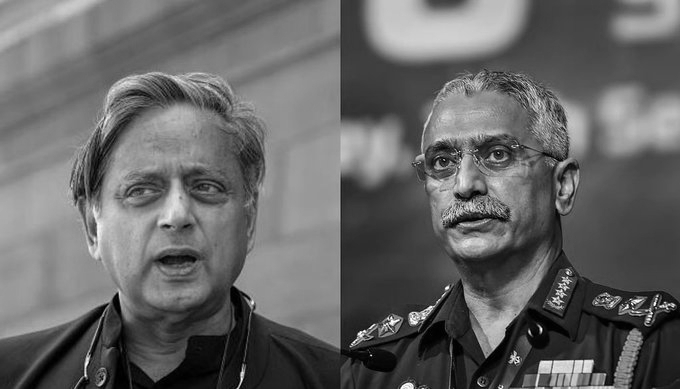
Gen Manoj Naravane’s New Book On Military Myths Inspired By Shashi Tharoor’s Writing Style
Former Army chief Manoj Naravane has authored a new book that explores the myths, traditions and lesser-known stories of India’s armed forces, drawing inspiration from author and parliamentarian Shashi Tharoor.
Titled The Curious and the Classified: Unearthing Military Myths and Mysteries, the book examines underexplored, bizarre and often amusing aspects of military life through anecdotes connected to the Army, Navy and Air Force.
Naravane writes that the idea for the book emerged about two years ago when he noticed Tharoor’s A Wonderland of Words at a friend’s house. Impressed by its essay-style exploration of the quirks of the English language, he began wondering whether a similar concept could be applied to the Indian military.
“If such a captivating book could be written on the quirks and peculiarities of the English language, how about a similar one about the Indian Army,” Naravane writes, adding that the idea first struck him the day he saw the book , though he began working on it seriously only in mid-2025.
Published by Rupa Publications, the work presents anecdotal yet carefully researched accounts of military lore , aiming to reach a wide readership rather than serve as an academic reference. Naravane says the stories were chosen because they were “closer to the surface” and could resonate with readers who might have encountered such traditions without knowing their origins.
Among the stories featured is the origin of the marching song “Badluram ka Badan,” the regimental anthem of the Assam Regiment . The tale traces back to rifleman Badluram, who was killed during the Battle of Kohima in 1944. His name reportedly remained on ration rolls even after his death, creating surplus supplies that later helped sustain soldiers when Japanese forces cut off supply lines during the siege.
The episode moved Major M. T. Proktor to compose the marching song in 1946. The book also recounts the origins of the popular cheer “Chak de phatte,” stories linked to the legend of Baba Harbhajan Singh, the wartime fate of the naval vessel INS Khukri, and unusual anecdotes about airmen and their call signs.
Naravane writes that each story originates from real events later embellished through retelling. “The purpose of each story is to bring to life momentous events or characters and to bridge the gap between the Armed Forces and civilian society,” he notes, emphasising that the book is “supposed to be an entertaining read and not a serious academic endeavour.”
The book comes amid attention on Naravane’s unpublished memoir Four Stars of Destiny. Publisher Penguin Random House India has said it holds exclusive rights and clarified that no authorised copies of the memoir have yet been released , despite reports of unauthorised circulation.