
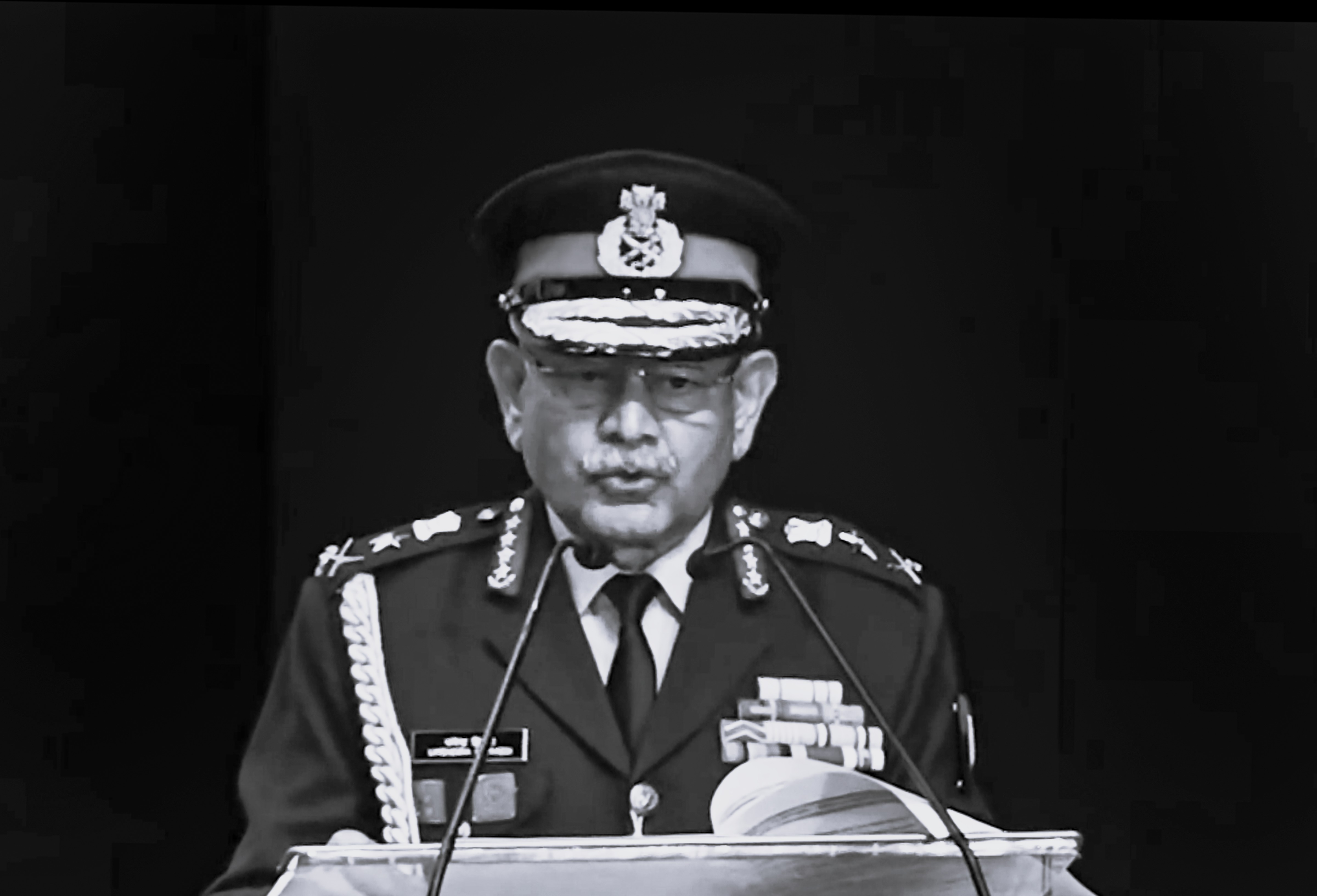
Gen Dwivedi warns of fractured world order, pushes for Atmanirbharta and innovation
In a rapidly changing world where geopolitical tensions are mounting, Army Chief General Upendra Dwivedi has warned that the era of long peace is fading and global conflicts are intensifying. Speaking at the inaugural session of the third edition of the Chanakya Defence Dialogue in New Delhi on Thursday, he said the international order has shifted from the bipolarity of the Cold War to a brief unipolar phase and now into an “uncertain and fractured” era. The event, hosted by the Indian Army, brought together defence experts, senior military officials and strategic thinkers from India and abroad.
Gen Dwivedi stressed that over 50 conflicts are currently raging worldwide, indicating that the global security environment has become more volatile than ever. “To say we live in turbulent times may actually be an understatement,” he remarked, noting that major powers are actively competing in an increasingly multipolar world.
In such a scenario, he posed a critical question: How should the Indian military transform to stay decisive and ready in this dynamic global landscape? The answer, he said, lies first in adopting the vision of Prime Minister Narendra Modi’s ‘5Ss’ approach Samman (respect), Samvad (dialogue), Sahayog (cooperation), Samridhi (prosperity), and Suraksha (security). This framework, he said, guides the nation’s collective approach during the ‘Amrit Kal’ as India progresses toward becoming a ‘Viksit Bharat’.
The theme of this year’s Chanakya Defence Dialogue is “Reform to Transform: Sashakt and Aur Surakshit Bharat”. The two-day conclave is being held at the Manekshaw Centre in Delhi Cantonment, where experts are deliberating on defence reforms, strategic challenges and the future of warfare.
Gen Dwivedi recalled the Army’s previously announced ‘Decade of Transformation’ roadmap for 2023-2032 and outlined a structured three-phase plan aimed at making the force future-ready.
Phase One – ‘Hop’ (until 2032): Sets the agenda for transformation.
Phase Two – 2037 Vision: A consolidation phase to build on earlier gains.
Phase Three – ‘Jump’ (2047 Vision): Envisions an integrated, modern and future-ready force capable of decisive multi-domain operations.
The Army Chief also acknowledged Defence Minister Rajnath Singh’s declaration of 2025 as the ‘Year of Reforms’, adding that the success of Operation Sindoor demonstrated how years of military reforms translated into real results on the battlefield. The focus now, he said, must be on efforts that will propel the next leap in capability.
He identified four major “springboards” that will drive future transformation. The first is ‘atmanirbharta’, or self-reliance through indigenisation, which he said is crucial for strategic autonomy. The second is accelerated innovation, especially in areas like artificial intelligence, cyberspace, quantum technology, autonomous systems, space capabilities and advanced materials. The remaining two pillars are adaptation and military–civil fusion, which he said will ensure flexibility and wider collaboration to meet evolving threats.
Gen Dwivedi expressed confidence that the discussions at the conclave would produce “actionable outcomes” and contribute meaningfully to India’s defence preparedness. President Droupadi Murmu, who attended the inaugural session as the chief guest, was praised by the Army Chief for her presence, which he said acts as a catalyst in the military’s journey toward becoming a decisive and technologically advanced force.
“As the Supreme Commander of the Armed Forces, your presence inspires us,” he said, adding that the armed forces are committed to preparing for the future and securing India’s strategic interests.
The Chanakya Defence Dialogue 2025 aims to shape this vision, one where India is strong (Sashakt), secure (Surakshit) and firmly placed on the path to becoming a developed nation.It is a high-level defence conference to shape the future of India’s military strategy and capabilities.