
Gaza’s medical evacuations resume amid slow Rafah reopening
The Rafah border crossing between Gaza and Egypt reopened on Monday, allowing a very limited number of medical evacuees and returnees to cross after more than a year and a half of closure, in a move seen as a significant yet highly constrained step under the U.S.-brokered ceasefire between Israel and Hamas.
Only a handful of patients — as few as five with life-threatening conditions and their companions — were able to leave Gaza on the first day, far short of earlier promises of larger flows of people. Many more are waiting, with Gaza health officials saying about 20,000 children and adults urgently need medical care abroad.
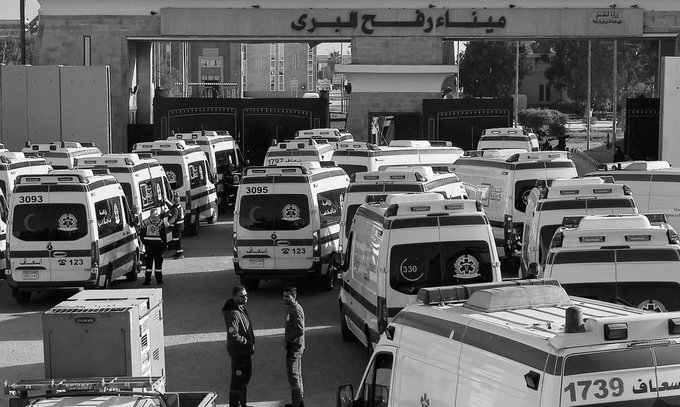
Ambulances queued for hours at the crossing, and those cleared for travel were transferred into Egypt after extensive Israeli and Egyptian security checks . The crossing, closed since Israeli forces seized it in May 2024, is being reopened in a pilot, highly restricted phase that allows only pedestrian travel; goods and humanitarian aid are still not permitted to pass.
Under the new arrangements, up to 50 Palestinians were allowed to exit Gaza and a similar number to enter on Monday. Israeli broadcasters cited slightly larger figures under consideration pending security clearance, but all sides emphasize that passage will be strictly controlled and security-centered .
The crossing’s reopening was coordinated under ceasefire terms that place it under European Union supervision alongside Egyptian and limited Palestinian presence. Israel and Egypt will jointly vet individuals crossing in either direction, with priority given to patients, foreign passport holders and other narrowly defined groups.
The opening has been described by Palestinian officials as a “window of hope” and a first step toward broader mobility for Palestinians who have been trapped for months. However, the reality on the ground reflects deep frustration: many families of patients and students remain unable to secure permits, and thousands more in Egypt — including students and patients who previously left Gaza — are waiting to return home.
Egypt has mobilized medical infrastructure and logistics to receive evacuees, with plans involving around 150 hospitals, hundreds of ambulances, thousands of health workers and emergency response teams to support patients arriving from Gaza. A central coordination center in Cairo is coordinating 24-hour emergency operations with provincial offices and medical points across the country.
Meanwhile, the broader humanitarian situation in Gaza remains dire. The enclave’s healthcare system has collapsed under two years of conflict, with hospitals overwhelmed and shortages of medicines and specialist care widespread. Violence has also continued even as the crossing reopened, with local hospital officials reporting attacks that have killed civilians.
The reopening comes amid international pressure on Israel to ease mobility and humanitarian flows. Political responses are mixed: some Israeli commentators downplay the significance of the reopening, while Palestinian and Egyptian officials stress the importance of the move for implementing the second phase of the ceasefire. Still, analysts and humanitarian groups warn that the symbolic value of reopening Rafah will only translate into meaningful relief if the crossing eventually allows larger numbers of people and goods to pass, especially essential aid and reconstruction materials that Gaza desperately needs.