
From Weak Monsoon to Hot October: The Bigger Crisis Lies Underground
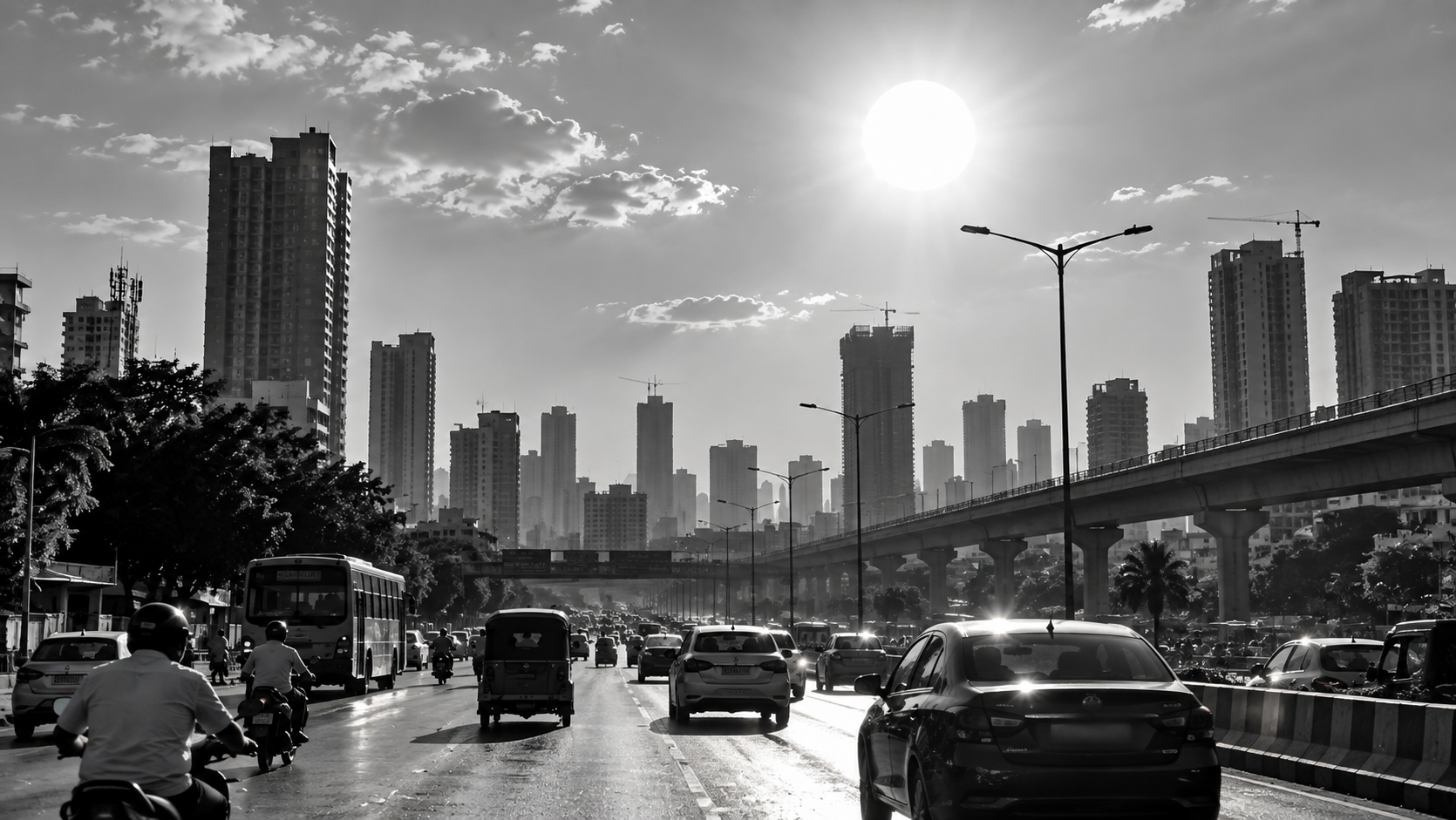
October has arrived, but Hyderabad is still carrying the heat of summer. The city's expected transition from the monsoon towards cooler weather has instead brought hot afternoons, dry spells and growing concern over what is happening beneath the surface. On October 5, Hyderabad recorded a maximum temperature of 34.2°C, 2.4°C above normal, while the city received no rainfall. The minimum temperature was 22.8°C, also 0.7°C above normal. Temperatures in parts of Telangana crossed 35°C, with Mahabubnagar touching 37.6°C and Nizamabad 36.1°C.
A Monsoon That Failed to Refill the Water Reserves
The present heat cannot be viewed in isolation from the 2026 monsoon. India ended the southwest monsoon with rainfall 12.6% below normal, making it the fourth-lowest southwest monsoon total since 2001. South Peninsular India fared worse, recording a deficit of around 24%. Telangana received 615.3 mm against a normal 726.7 mm between June 1 and September 27, leaving the State around 15% deficient. The Hyderabad metropolitan region received about 456.6 mm against a normal 604.7 mm, a deficit of roughly 24%.
The significance goes beyond the rainfall figures. A weak or poorly distributed monsoon means less water reaches reservoirs, lakes, soil and underground aquifers. Hyderabad therefore entered the post-monsoon period without the normal seasonal replenishment of its water reserves.
The Heat Is Only the Surface of the Problem
October is not technically winter in Hyderabad but a post-monsoon transition month, with cooler conditions normally becoming more established during November and December. Yet the IMD's October outlook expects above-normal maximum temperatures across most of India, along with above-normal minimum temperatures over much of the country. The current conditions do not constitute an IMD-classified heatwave, but they indicate a warmer-than-normal transition.
The distinction matters. Hyderabad's October temperature is not unprecedented — the city's historical October maximum is 36°C, recorded on October 6, 2014. What makes the present situation significant is the combination of persistent warmth, deficient rainfall and declining groundwater. A hot afternoon is uncomfortable; a hot and dry season following a deficient monsoon can become a water-security problem.
Beneath Hyderabad, Groundwater Is Sending a Warning
The strongest warning is coming from underground. Ground Water Department data from Ranga Reddy district show that the average groundwater level in September 2026 was 11.74 metres below ground level, compared with 6.31 metres during September 2025. Groundwater levels declined in 26 of the 27 monitored mandals. Thirteen mandals recorded rainfall deficits between 20% and 59%, while the district itself remained around 14.6% deficient.
The department has identified rapidly urbanising areas such as Gandipet and Shamshabad as potential groundwater-stress hotspots. Earlier August monitoring had already shown Hyderabad's average groundwater depth at 11.20 metres, compared with 6.36 metres a year earlier. At Quthbullapur, the depth was reported at nearly 39.9 metres, highlighting how uneven and severe the decline can become in individual locations.
This is particularly worrying because Hyderabad's groundwater problem predates the current monsoon. The Central Ground Water Board has classified Hyderabad district as over-exploited, with groundwater extraction exceeding 100% of its annual extractable groundwater resources.
Why the City Is Getting Hotter
Heat and groundwater are closely connected. Hotter and drier conditions can increase water demand and evaporation, while dry soil has less capacity to cool the surrounding environment through evaporation. Hyderabad's rapid urbanisation adds another layer. A study covering 2001–2020 found that the city's built-up area more than doubled, while grassland and barren areas declined substantially. Researchers also identified a significant urban heat-island effect at night, particularly around the city's central areas.
Concrete, asphalt and buildings absorb heat during the day and release it slowly after sunset, while vegetation, open soil and water bodies provide natural cooling. The expansion of the built environment therefore creates a double challenge: it can increase heat exposure while simultaneously reducing the natural surfaces through which rainwater can infiltrate and recharge groundwater.
A Long-Term Climate Signal
The present conditions also fit into a longer-term climate picture. A 42-year analysis of Hyderabad's climate from 1981 to 2022 found rising maximum temperatures, a smaller increase in minimum temperatures and a declining trend in seasonal monsoon rainfall, along with considerable variability in evapotranspiration and rainfall.
This does not mean that every year will become hotter and drier than the previous one. Climate change does not move in a straight line. But it can raise the temperature baseline and increase the frequency or intensity of extreme conditions, making the city's water and heat management systems more vulnerable.
El Niño Adds Another Layer of Uncertainty
The global climate system is also providing a reason for caution. The World Meteorological Organization says El Niño is firmly established and expected to strengthen, with an exceptionally high likelihood of persisting through February 2027. The IMD has similarly identified strong El Niño conditions in the equatorial Pacific and expects the phenomenon to strengthen towards the end of 2026.
El Niño does not automatically mean Hyderabad will experience drought or a hot winter. India's weather is influenced by several interacting systems, including the Indian Ocean and regional atmospheric circulation. However, El Niño can alter rainfall and temperature patterns and therefore becomes an important background factor when assessing the months ahead.
What Happens When Winter Arrives?
Hyderabad should gradually become cooler during November and December. It would therefore be scientifically premature to predict that the city will experience an unusually hot winter. The IMD's detailed winter temperature outlook for December 2026–February 2027 will provide a clearer picture when it is issued.
But a cooler winter would not automatically solve the city's water problem. If October and November fail to deliver sufficient effective rainfall, groundwater recharge could remain weak even while temperatures fall. The danger could therefore be waiting at the other end of winter.
The Bigger Risk Could Be the Next Summer
The most important projection is not that Hyderabad will remain hot for the next two months. It is that the city could enter March–May 2027 with a weaker water buffer. If groundwater, lakes, reservoirs and soil moisture remain depleted, the return of summer heat could rapidly increase pressure on drinking water, agriculture and borewells.
The next monsoon would then become the critical opportunity for recovery. A well-distributed monsoon could replenish soil moisture, reservoirs and groundwater. A weak or uneven monsoon could prolong the stress. However, rainfall for 2027 cannot responsibly be forecast today.
A Warning Beneath the Weather
Hyderabad is not facing an inevitable water catastrophe, and one hot October does not prove that the city's seasons have permanently changed. But the signals deserve attention: a deficient monsoon, above-normal October temperatures, sharply lower groundwater levels, structural over-exploitation of aquifers, rapid urbanisation, long-term warming trends and a strengthening El Niño are converging at a vulnerable moment.
The real danger is therefore not simply that October feels like summer. It is that Hyderabad could enter its next summer with less water underground, less moisture in the landscape and a warmer climate baseline.
For residents, climate change may not arrive as one dramatic event. It may appear gradually - through a borewell that stops yielding water, a tanker that becomes a regular expense, a lake that fails to fill, a hotter night or a longer period of summer-like heat.
And by the time those changes become impossible to ignore, the warning may already have been there beneath Hyderabad's streets - in the falling water table.