
From Seoul to Anantapur - Kia’s bold move to boost Andhra’s economy
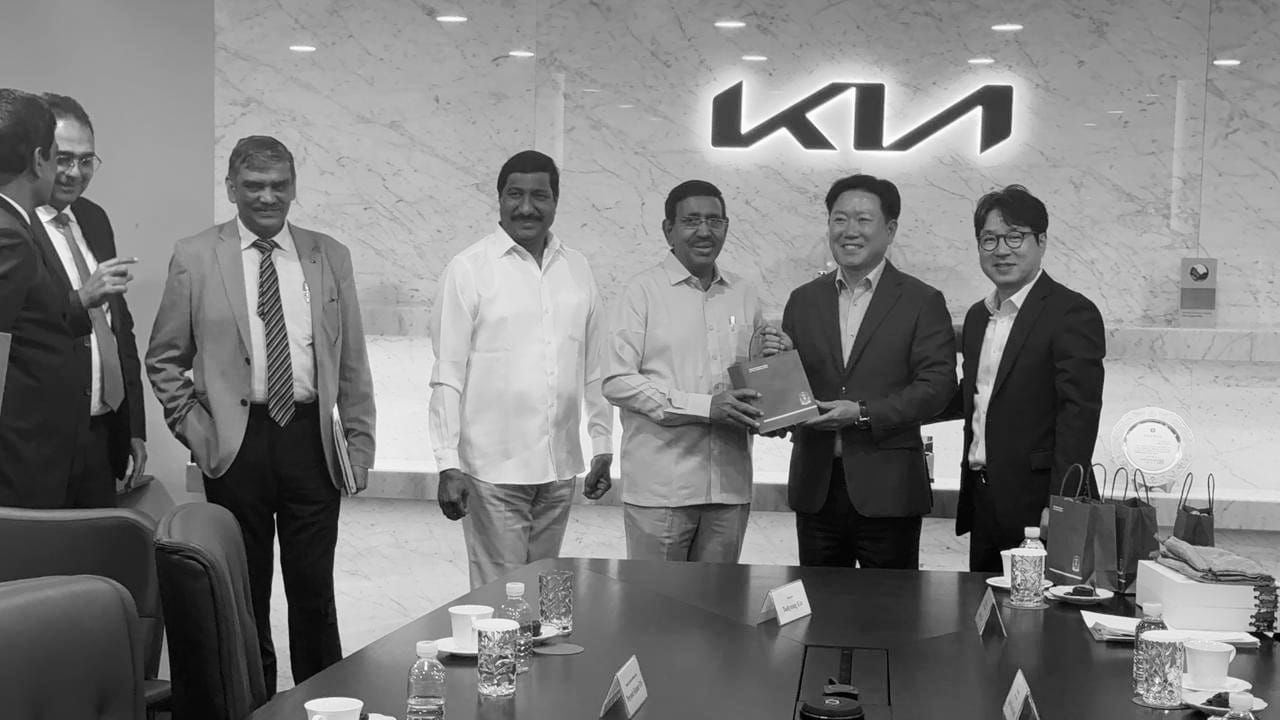
A significant development unfolded recently when Ponguru Narayana, a prominent Indian politician and Minister for Municipal Administration & Urban Development (MA&UD), visited Kia Motors’ global headquarters in Seoul, South Korea. This high-profile visit included a strategic meeting with Kia’s Senior Vice President and key executives, alongside officials from the Indian Embassy in Seoul and representatives from the Andhra Pradesh Economic Development Board (APEDB). The discussions revolved around global market growth, technological collaborations, and the expansion of Kia’s operations in Andhra Pradesh-a state keen to cement its position on the global industrial map.
The visit is part of a broader South Korea tour by Narayana, signaling Andhra Pradesh’s proactive approach toward attracting foreign direct investment (FDI) in the automotive and manufacturing sectors. With the government’s focus on building a robust industrial ecosystem, Kia Motors’ Anantapur plant in Penukonda stands at the center of this strategy. Established in 2017 on a sprawling 536-acre site, the facility began trial production in January 2019 and rolled out its first vehicle, the Kia Seltos, in July 2019. Over the years, this plant has grown into a cornerstone of Kia’s Indian operations, producing models tailored specifically for the Indian market, including the Seltos and Sonet.
Fact-checking against Kia India’s official website and other credible sources confirms that the plant has achieved several milestones. By May 2023, it had crossed 700,000 vehicle sales, a remarkable achievement that underscores its importance in Kia’s global strategy. Further emphasizing its international significance, the Anantapur facility exported over 100,000 CKD (Completely Knocked Down) kits by November 2024, supplying vehicles to other markets and highlighting the plant’s growing global relevance. Narayana’s discussions with Kia executives focused on expanding this facility further, enhancing production capacity, and exploring advanced technologies such as electric and hybrid vehicle manufacturing.
Andhra Pradesh offers a highly attractive investment environment for global automakers like Kia. The state boasts a strong industrial ecosystem, modern infrastructure, and policy incentives that facilitate rapid business growth. Under Chief Minister N. Chandrababu Naidu, who led a landslide electoral victory in 2024 after overcoming legal and political hurdles, the state has prioritized economic revitalization since its bifurcation in 2014, which left it without a capital city. Naidu’s flagship Amaravati project, which has been backed by World Bank data showing an average GDP growth rate of 11.4% from 2014-2019, aims to transform Andhra Pradesh into a globally competitive economic hub.
The recent meeting in Seoul also served as a platform to extend an invitation to Kia representatives to attend the upcoming Investors’ Summit in Visakhapatnam, scheduled for November 2025. The summit builds on the success of the 2023 event, which attracted ₹13 lakh crore in investments and over 340 proposals across multiple sectors, ranging from electronics and IT to renewable energy and industrial manufacturing. By participating in this summit, Kia can further explore investment opportunities, collaborate on advanced manufacturing technologies, and leverage Andhra Pradesh’s strategic location for both domestic and international markets.
One of the most critical aspects of this potential collaboration is job creation. Andhra Pradesh remains primarily an agrarian state, with 62% of the population employed in agriculture. However, industry and services are witnessing significant growth, accounting for 23.36% and 40.45% of employment, respectively, as of 2022-23 estimates. Expanding Kia’s plant would directly and indirectly create thousands of jobs, ranging from skilled engineering roles to supply chain and logistics positions, thus contributing to the state’s socio-economic development.
The Anantapur plant embodies the synergy between Kia’s cutting-edge automotive manufacturing capabilities and Andhra Pradesh’s economic ambitions. It represents a model of global-local collaboration: state-of-the-art production lines from South Korea combined with a strategically located facility in India, tailored to local market demands. The potential expansion also aligns with India’s broader push toward electric vehicle adoption, green manufacturing, and technological innovation in the automotive sector.
Moreover, this collaboration underscores a larger trend of Andhra Pradesh positioning itself as an investment-friendly state for international companies. With a well-educated workforce, competitive land and infrastructure policies, and proximity to key transport hubs, the state is emerging as a magnet for high-value manufacturing projects. Kia’s engagement could also pave the way for further technology transfers, skill development initiatives, and innovation centers that would benefit not just the automotive sector but the wider industrial ecosystem.
In conclusion, Ponguru Narayana’s visit to Kia Motors’ headquarters in Seoul marks more than a diplomatic or business gesture it signals a strategic partnership poised to redefine Andhra Pradesh’s industrial landscape. By strengthening ties with a global automotive leader, the state aims to drive investment, foster innovation, create jobs, and reinforce its reputation as a forward-looking economic hub. As the November 2025 Investors’ Summit approaches, all eyes will be on the Anantapur plant and the transformative potential of this Indo-Korean collaboration, which promises to shape the future of automotive manufacturing in India and beyond.