
From Prisoner to President: How Nelson Mandela Changed South Africa and Inspired the World
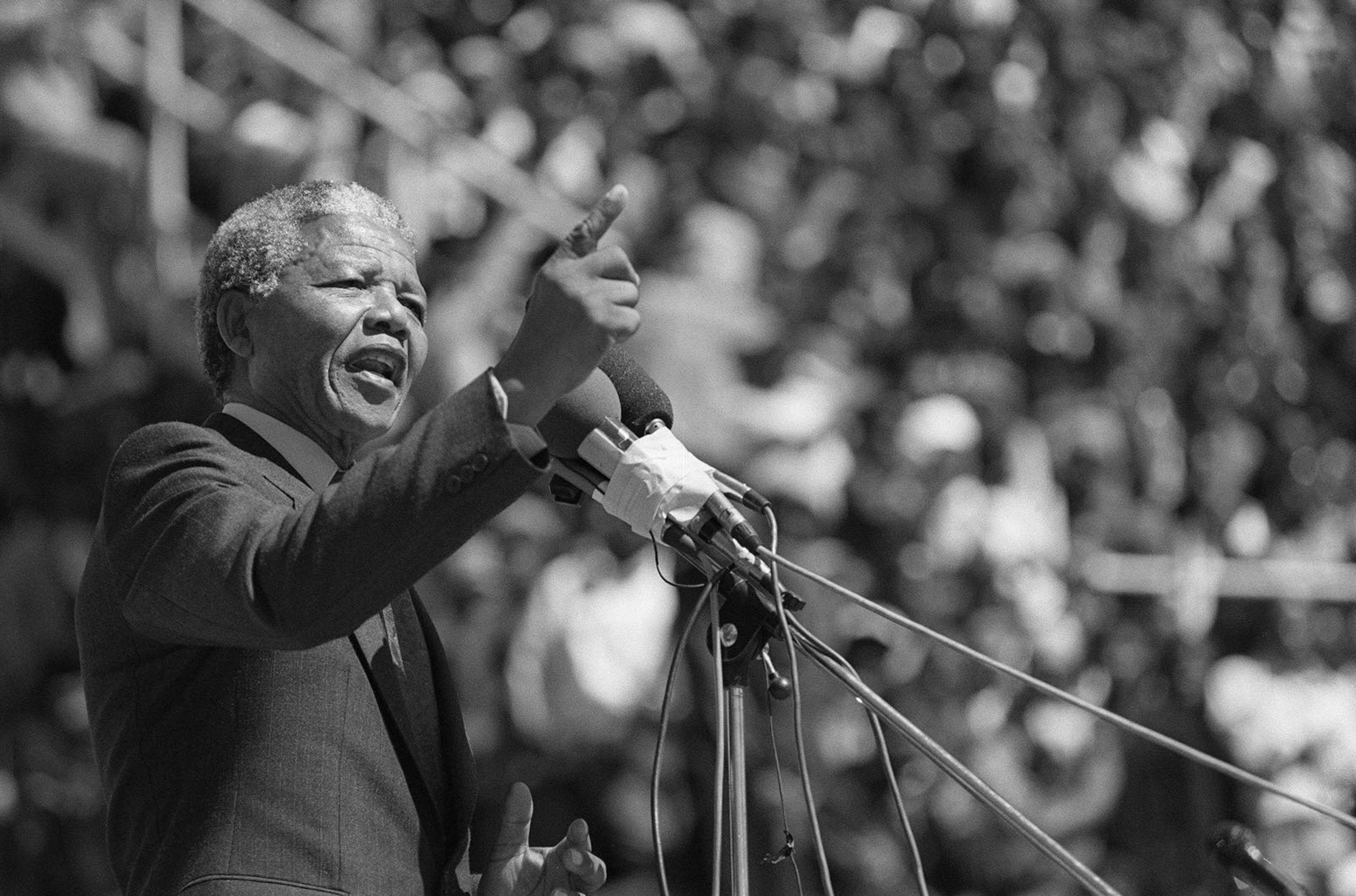
July 18 marks the birth anniversary of Nelson Mandela , one of the most respected leaders of the modern era and a global symbol of the fight against apartheid, racial discrimination and injustice. Observed worldwide as Nelson Mandela International Day , the occasion honours the life and ideals of the South African leader who spent decades fighting for freedom, equality, human rights and reconciliation.
Mandela’s journey from a young activist challenging racial oppression to becoming South Africa’s first democratically elected Black president remains one of the most remarkable stories of political transformation. His message of forgiveness and unity helped a deeply divided nation move away from decades of apartheid rule and toward democracy.
However, as the world remembers Mandela in 2026 , his legacy is also being examined through the challenges South Africa continues to face. More than three decades after apartheid ended, issues such as economic inequality, unemployment, poverty and rising xenophobia have raised questions about how much of Mandela’s vision of an inclusive and equal society has been achieved.
Born on July 18, 1918 , in Mvezo , a small village in South Africa’s Eastern Cape, Mandela was named Rolihlahla Mandela . He belonged to the Thembu royal family , and his early years were influenced by traditional African leadership values and the social realities of colonial South Africa.
His father, Gadla Henry Mphakanyiswa , served as a local chief and adviser to the Thembu royal household. After his father’s death, Mandela was raised under the guidance of Thembu regent Jongintaba Dalindyebo , where he developed an interest in leadership, justice and public service.
During his schooling, he was given the English name “Nelson” by a teacher, a common practice during the colonial period. He later studied at the University of Fort Hare and the University of the Witwatersrand , where he pursued law and developed a deeper understanding of the legal and political systems that enforced racial discrimination.
Mandela entered public life at a time when South Africa’s apartheid system was becoming increasingly powerful. The policy, formally introduced by the National Party government in 1948 , created a system of racial segregation that denied the Black majority equal political rights, restricted movement and access to opportunities, and institutionalised discrimination.
The struggle against racial discrimination in South Africa had a strong connection with India’s freedom movement. Long before Mandela became a global figure, Mahatma Gandhi played an important role in shaping the history of resistance in South Africa.
Gandhi arrived in South Africa in 1893 as a young lawyer and spent over two decades there before returning to India. During his stay, he experienced racial discrimination and developed the philosophy of Satyagraha , or non-violent resistance, while fighting against discriminatory laws targeting the Indian community in South Africa.
Gandhi’s early campaigns against racial injustice in South Africa later influenced his leadership of India’s freedom movement against British rule. His ideas of non-violence, civil disobedience and peaceful protest also inspired several global leaders, including Mandela.
Mandela acknowledged Gandhi’s influence and often referred to him as one of the figures who shaped the struggle for justice. Although Mandela later supported armed resistance through Umkhonto we Sizwe after peaceful protests were violently suppressed, he continued to value reconciliation and dialogue as essential tools for social transformation.
The Indian community in South Africa also played a significant role in the anti-apartheid struggle. Many people of Indian origin faced discrimination under apartheid laws and joined movements demanding equality and democratic rights. Leaders such as Ahmed Kathrada , an Indian-origin South African activist and close associate of Mandela, played important roles in the fight against apartheid.
Kathrada was imprisoned alongside Mandela during the Rivonia Trial and spent years on Robben Island . His contribution reflected the multiracial nature of South Africa’s freedom struggle, where people from different communities united against apartheid.
Mandela’s association with India continued after his release from prison. India was among the earliest countries to support the anti-apartheid movement and strongly opposed South Africa’s racial policies at international forums. After Mandela became president, he shared a close relationship with India and received several honours, including the Bharat Ratna in 1990 , India’s highest civilian award, making him one of the few foreign recipients of the honour.
Mandela joined the African National Congress (ANC) in the 1940s and emerged as one of the organisation’s most influential young leaders. In 1944 , he helped establish the ANC Youth League , which called for stronger action against apartheid policies.
Initially, Mandela supported peaceful resistance through protests, campaigns and civil disobedience. He believed that organised public pressure could force the government to end discriminatory laws. But as the apartheid regime intensified its crackdown on opposition movements, Mandela and other activists concluded that stronger forms of resistance were necessary.
In 1961 , Mandela helped establish Umkhonto we Sizwe (MK) , the armed wing of the ANC. The organisation was created after peaceful protests were repeatedly suppressed by the government, including the violent response to anti-apartheid demonstrations.
Mandela was arrested in 1962 and later sentenced to life imprisonment during the Rivonia Trial in 1964 . He spent 27 years in prison , including 18 years on Robben Island , where he endured harsh conditions but continued to stand for equality and justice.
His imprisonment transformed him into an international symbol of resistance. Across the world, campaigns demanded his release, and Mandela became the face of the global movement against apartheid.
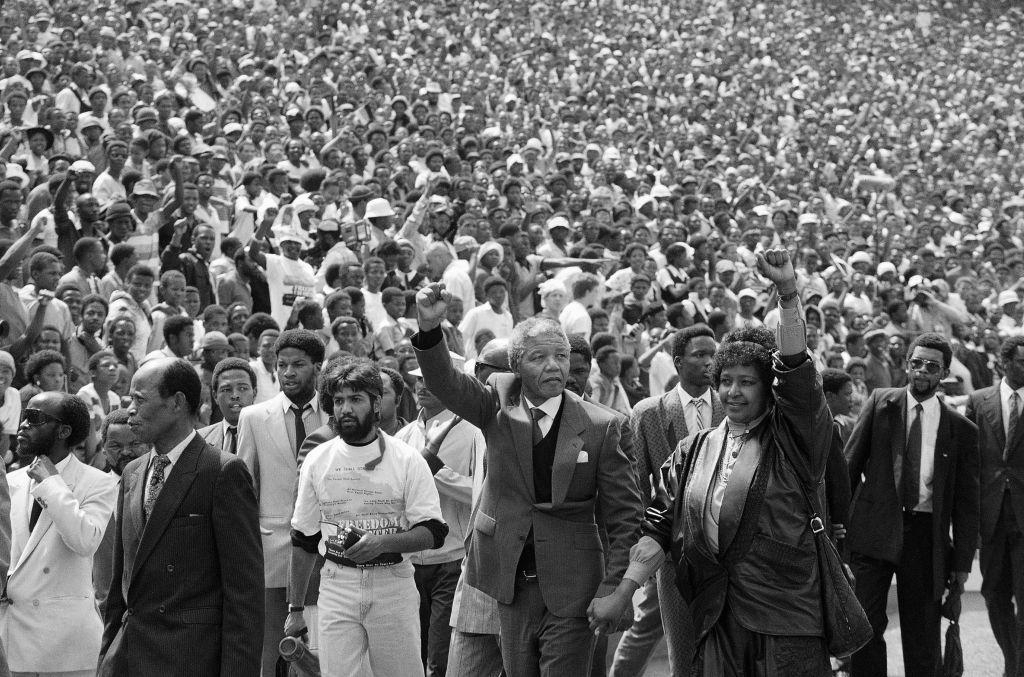
After years of international pressure and internal negotiations, Mandela was released from prison on February 11, 1990 , by then-President F.W. de Klerk . His release marked the beginning of South Africa’s transition from apartheid to democracy.
In 1994 , South Africa held its first democratic elections in which people of all races were allowed to vote. The African National Congress won the election, and Mandela became the country’s first democratically elected president .
As president from 1994 to 1999 , Mandela focused on reconciliation rather than revenge. He worked to unite communities divided by decades of racial conflict and promoted the idea of a “rainbow nation” where people of different backgrounds could live together with equal dignity.
Mandela’s leadership during South Africa’s transition earned worldwide recognition. In 1993 , he and former President F.W. de Klerk received the Nobel Peace Prize for their efforts to peacefully dismantle apartheid and establish democracy.
After leaving office, Mandela continued his humanitarian work through the Nelson Mandela Foundation , focusing on issues such as education, poverty, healthcare and peace. He remained an international advocate for justice and human rights until his death on December 5, 2013 , at the age of 95.
The United Nations declared July 18 as Nelson Mandela International Day in 2009 , with the first official observance taking place in 2010 . The day encourages people worldwide to contribute to their communities through acts of service. The tradition of dedicating 67 minutes to helping others represents the 67 years Mandela devoted to public service and the struggle for equality .
While Mandela’s achievements remain celebrated, South Africa continues to face challenges that highlight the unfinished work of his vision. Economic inequality remains one of the country’s biggest concerns, with many citizens arguing that political freedom has not been matched by equal economic opportunities.
Unemployment, poverty and unequal access to resources continue to affect millions of South Africans. Many believe that while apartheid laws were removed, economic divisions created during that era have not been fully addressed.
Another major challenge is the rise of xenophobia and anti-migrant violence . Despite Mandela’s belief in African unity and solidarity, migrants from other African nations have faced hostility and discrimination in parts of South Africa.
As the world observes Nelson Mandela International Day 2026 , his life serves as a reminder that freedom is not only about ending oppression but also about creating a society where every individual has dignity, equality and opportunity.
Mandela’s connection with India and the influence of Mahatma Gandhi’s principles of resistance and justice remain an important chapter in his global legacy. His message continues to inspire generations to fight injustice, reject discrimination and work toward a world built on compassion, unity and respect for human rights.
His dream remains unfinished, but his belief that ordinary people can create extraordinary change continues to inspire millions across the globe.