
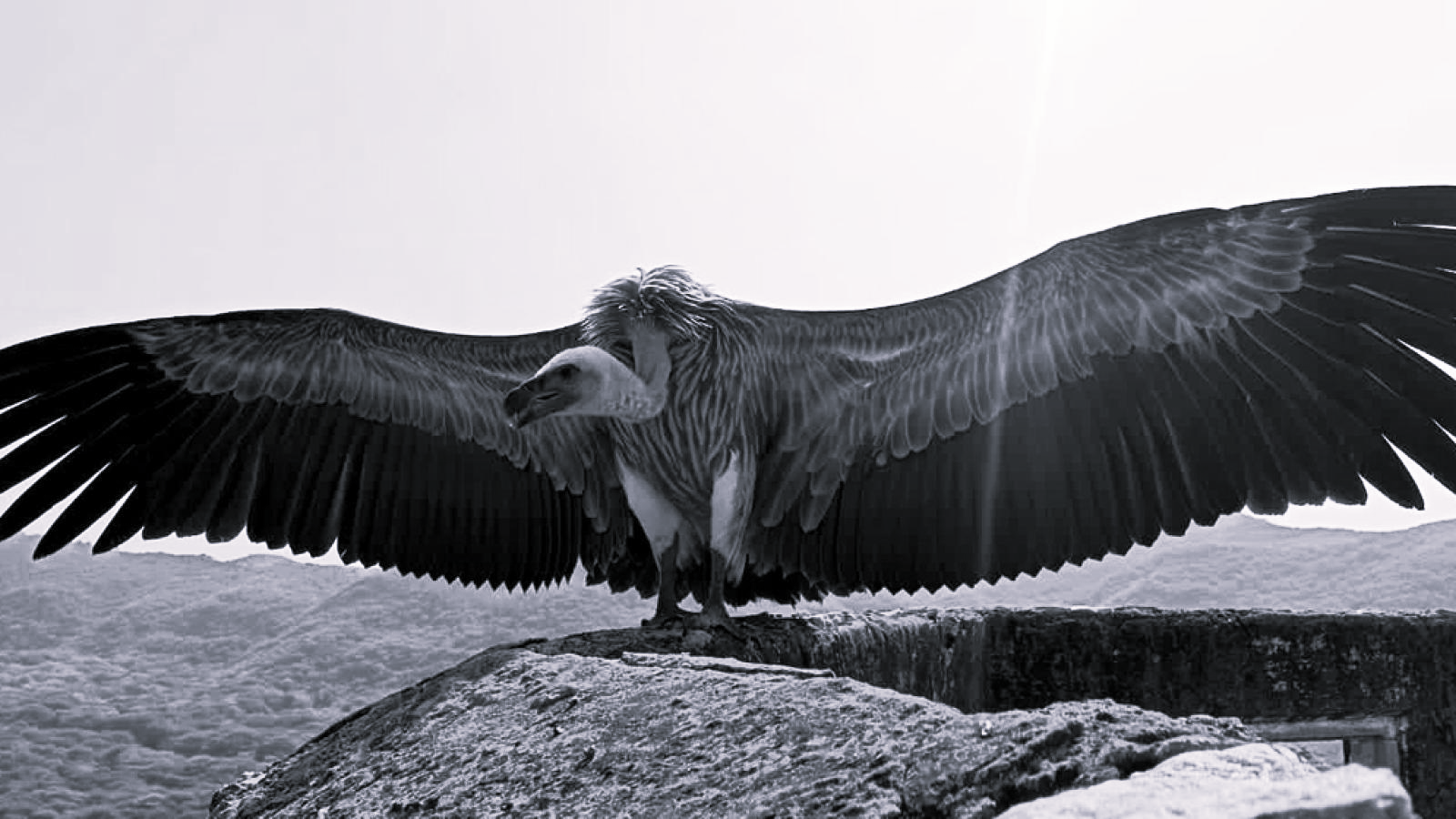
From Pench to Nashik in 17 days: Vulture J132’s 750 km flight tracked
A long-billed vulture named J132 , released earlier this month in Maharashtra’s Pench Tiger Reserve , has travelled nearly 750 kilometres in just 17 days , reaching close to the Anjaneri hills near Trimbakeshwar in Nashik district , forest officials said on Sunday.
The bird was released on December 11 as part of a vulture conservation programme jointly implemented by the Maharashtra Forest Department and the Bombay Natural History Society (BNHS). Researchers said J132 reached a location about 38 km from Anjaneri on December 27, after traversing multiple districts including Nagpur, Wardha, Yavatmal, Hingoli, Washim, Buldhana, Jalna and Chhatrapati Sambhajinagar, before entering the Nashik region.
Officials clarified that while the exact destination of the tracked vulture has been kept confidential to ensure its safety, such long-distance movement was anticipated . “Vultures are not migratory birds in the strict sense, but they are wide-ranging scavengers. Once released, they naturally explore large areas in search of food, suitable roosting sites and safe habitats,” a senior forest official said.
According to BNHS researcher Manan Singh , GPS data shows that J132 follows a consistent daily pattern. “The bird roosts in the evening, feeds in the morning and then flies to the next location. Activity data suggests it has had at least two full meals during its journey,” he said.
J132 is part of the second batch of captive-bred vultures released in Pench. In April 2025, 14 vultures were brought from Pinjore in Haryana to a specially designed pre-release aviary in the reserve, where they underwent eight months of training and acclimatisation to survive in the wild. The batch included eight white-rumped vultures and five long-billed vultures, all fitted with GPS transmitters.
After their release on December 11 by Chief Wildlife Warden Sreenivas Reddy and BNHS president Praveen Pardeshi , the birds were observed feeding alongside wild vultures in Pench between December 12 and 15. While most white-rumped vultures have remained near the reserve, the long-billed vultures have begun exploring wider landscapes.
Apart from J132, another long-billed vulture from the same batch, LBV AB 1 , has reached Dhanora in Gadchiroli district , a known vulture habitat.
BNHS director Kishor Rithe said GPS tracking would enable long-term scientific monitoring of movement, habitat use and survival of released vultures. “The journey of J132 has generated significant interest among the birding community. Continued monitoring will help strengthen vulture conservation efforts in central India,” he said.
The vulture’s journey comes amid growing public interest in bird movement studies, especially after a recent satellite-tracking project revealed Amur falcons flying non-stop from northeast India to Africa. In that case, small migratory falcons weighing about 150 grams were tracked flying over 5,000 kilometres non-stop from Assam and Manipur to Somalia and other parts of East Africa, crossing the Arabian Sea in just five to six days .
Experts note that while the Amur falcon’s journey represents true seasonal migration, the vulture’s movement reflects the broader natural tendency of birds to cover vast distances, whether to migrate, forage or locate suitable habitats. Together, such tracking projects are offering rare insights into the remarkable endurance, navigation skills and ecological roles of birds across species.
Chief Wildlife Warden Shrinivas Reddy added that similar GPS tagging operations have been completed in Melghat and Tadoba-Andhari Tiger Reserves, with plans to release vultures there soon.