
From Mauritius to a remote Odisha village: a bureaucrat’s 155-year homecoming
In a deeply emotional journey that transcends time and geography, Ramrup Jagannath, a civil servant from Mauritius, finally traced his ancestral roots to a small village in Odisha’s Jajpur district, 155 years after his forefathers were taken away from India by the British.
Driven by an unyielding longing to reconnect with his origins, Ramrup visited India four times over the past decade, in 2012, 2015, 2019, and 2024, each time hoping to find the home his ancestors once left behind. His earlier attempts ended in disappointment, but with the support of the Jajpur district administration, his fourth visit brought him the closure he had been seeking for years.
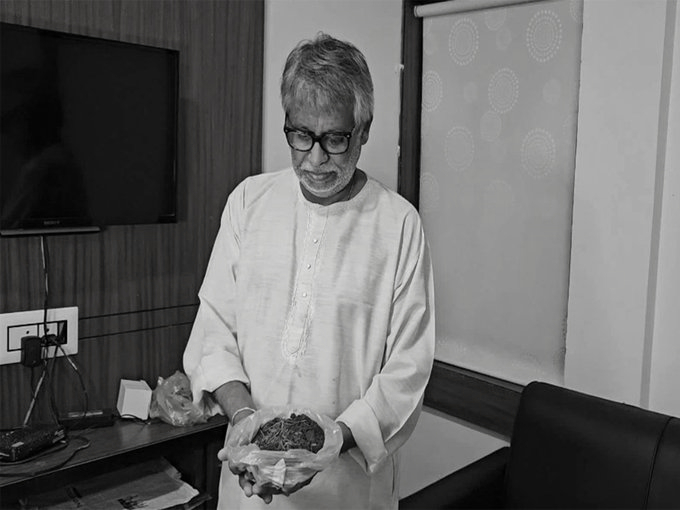
“Today was special for me. I’m taking the soil with me,” holding a small pouch of earth from his ancestral village - a symbol of love, belonging, and the spiritual bridge between two worlds.
According to British records, his ancestor was taken from Jajpur district (then part of Cuttack) in 1870 under the indentured labour system to Mauritius.
“The British used to register every person who was sent abroad - their names, their parents, their village, and even the ship they boarded. In those papers, our village was clearly written: Jajpur, Cuttack, Pragana Mulgaon. That is how I found it,” he explained.
His discovery, however, came with bittersweet emotion.
“I have found the village, but my family has left it,” he said softly, expressing both relief and sorrow.
Recognizing the historical and emotional importance of his search, the Jajpur district administration extended full support to Ramrup. Officials helped him access old land and census records, cross-check British-era registration documents, and locate the exact Pragana (Mulgaon) mentioned in his ancestral papers. Local staff also organized field visits to nearby villages, provided translation assistance, and helped him connect with older residents who remembered the family names listed in those archives.
The administration’s compassionate guidance ensured that Ramrup’s journey was not just bureaucratic but deeply personal, one that honored the emotional bond between India and its overseas descendants. Jajpur District Collector Ambar Kumar Kar praised his perseverance, saying, “He is always welcome to return to Odisha and continue his search. The district administration will support him.”
The journey has stirred deep emotions not only in Ramrup but also among those who hear his story - a reminder of the lasting scars of colonialism that still echo across generations. The British may have taken people thousands of miles away, but they could never sever their spiritual connection to the motherland.
“The British took our ancestors away for labour. But even after 155 years, our hearts still belong to India. That is something no empire could take,” Ramrup reflected with emotion.
Today, as a proud Mauritian and devoted follower of Lord Jagannath, Ramrup stands as a bridge between the past and the present - a living testament to the resilience of identity and culture. He also appealed to the Government of India to help his community of around 3,000 Mauritian devotees build a Jagannath Temple in Mauritius, a dream that would further strengthen the cultural bond between the two nations.
“There are three thousand of us in Mauritius who follow Lord Jagannath. We want to build a temple for Him. I request the Indian government to help make this dream come true,” he said.
As Ramrup prepares to return to Mauritius, carrying with him a handful of sacred soil from Odisha, his story reminds the world that colonial displacement may have scattered bodies, but it could never uproot souls. The spirit of home, faith, and belonging continues to find its way back - even after a century and a half.