
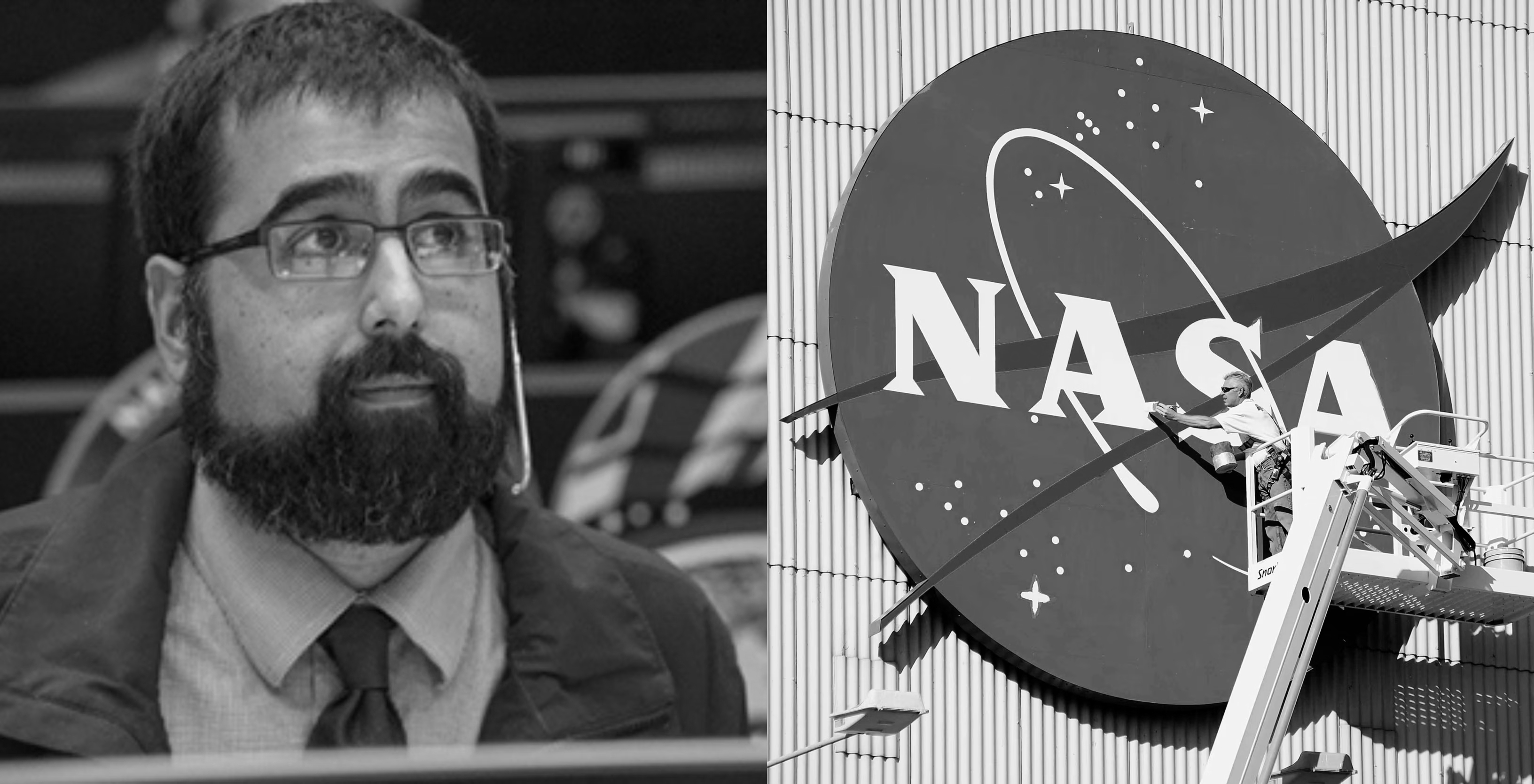
From ISS to Artemis: Amit Kshatriya Leads NASA’s Next Space Era
In a significant development for global space exploration, Indian-American scientist Amit Kshatriya has assumed a pivotal leadership role at NASA at a time when the agency is accelerating its lunar ambitions. Recent reports highlight NASA’s progress in its human spaceflight programme, including advancements linked to the Artemis missions , which aim to return astronauts to the Moon after decades. Kshatriya’s leadership comes amid these milestones, placing him at the centre of one of the most ambitious phases in modern space exploration.
Appointed as NASA’s Associate Administrator in 2025, Kshatriya serves as the agency’s highest-ranking civil servant and acts as its Chief Operating Officer , overseeing mission execution, institutional coordination, and strategic planning. A 20-year NASA veteran , he leads the agency’s 10 centre directors and mission directorates , ensuring that complex programmes move from planning to successful implementation.
Kshatriya’s rise reflects a career built on strong technical and operational foundations. Born to Indian immigrant parents and raised near Houston’s Johnson Space Center, he developed an early fascination with space. He went on to study mathematics at the California Institute of Technology and the University of Texas at Austin, equipping him with the analytical skills essential for space mission design and systems integration.
He began his career as a software and robotics engineer , later becoming a spacecraft operator involved in the robotic assembly of the International Space Station (ISS) . His expertise in mission operations saw him rise to the role of Flight Director , where he led critical ISS missions, including Expedition 50, managing real-time decisions related to astronaut safety and spacecraft operations.
Kshatriya also played a key role in NASA’s transition toward commercial space partnerships , contributing to early missions involving private players like SpaceX. His work as a lead robotics officer during the Dragon demonstration mission marked a turning point in how NASA collaborates with the private sector for cargo and crew transport.
At the strategic level, he has been deeply involved in NASA’s long-term exploration roadmap. As part of the Moon-to-Mars program , Kshatriya helped integrate critical systems such as the Space Launch System (SLS), Orion spacecraft, and ground infrastructure , aligning them into a cohesive architecture for deep space missions.
He was also instrumental in the success of Artemis I , which validated systems designed to carry humans back to the Moon, and continues to play a key role in shaping upcoming missions, including crewed lunar expeditions. His responsibilities now include ensuring the success of future Artemis missions that aim to establish a sustained human presence on the Moon , a crucial step toward eventual missions to Mars.
Beyond mission execution, Kshatriya’s role carries broader geopolitical and strategic importance. His leadership comes at a time when the United States is seeking to maintain its edge in a renewed global space race, particularly in lunar exploration. By strengthening public-private partnerships , improving mission integration , and aligning long-term goals, he is expected to play a decisive role in shaping NASA’s future direction.
Kshatriya’s achievements have been widely recognised, including the NASA Outstanding Leadership Medal and the prestigious Silver Snoopy Award , reflecting his contributions to mission success and astronaut safety.
From assembling the ISS in orbit to steering humanity’s return to the Moon, Amit Kshatriya now stands at the forefront of NASA’s next chapter one that seeks not just to explore space, but to establish a long-term human presence beyond Earth .
In a significant development for global space exploration, Indian-American scientist Amit Kshatriya has assumed a pivotal leadership role at NASA at a time when the agency is accelerating its lunar ambitions. Recent reports highlight NASA’s progress in its human spaceflight programme, including advancements linked to the Artemis missions , which aim to return astronauts to the Moon after decades. Kshatriya’s leadership comes amid these milestones, placing him at the centre of one of the most ambitious phases in modern space exploration. (The Times of India)
Appointed as NASA’s Associate Administrator in 2025, Kshatriya serves as the agency’s highest-ranking civil servant and acts as its Chief Operating Officer , overseeing mission execution, institutional coordination, and strategic planning. A 20-year NASA veteran , he leads the agency’s 10 centre directors and mission directorates , ensuring that complex programmes move from planning to successful implementation. (NASA)
Kshatriya’s rise reflects a career built on strong technical and operational foundations. Born to Indian immigrant parents and raised near Houston’s Johnson Space Center, he developed an early fascination with space. He went on to study mathematics at the California Institute of Technology and the University of Texas at Austin, equipping him with the analytical skills essential for space mission design and systems integration.
He began his career as a software and robotics engineer , later becoming a spacecraft operator involved in the robotic assembly of the International Space Station (ISS) . His expertise in mission operations saw him rise to the role of Flight Director , where he led critical ISS missions, including Expedition 50, managing real-time decisions related to astronaut safety and spacecraft operations. (Wikipedia)
Kshatriya also played a key role in NASA’s transition toward commercial space partnerships , contributing to early missions involving private players like SpaceX. His work as a lead robotics officer during the Dragon demonstration mission marked a turning point in how NASA collaborates with the private sector for cargo and crew transport.
At the strategic level, he has been deeply involved in NASA’s long-term exploration roadmap. As part of the Moon-to-Mars program , Kshatriya helped integrate critical systems such as the Space Launch System (SLS), Orion spacecraft, and ground infrastructure , aligning them into a cohesive architecture for deep space missions. (NASA)
He was also instrumental in the success of Artemis I , which validated systems designed to carry humans back to the Moon, and continues to play a key role in shaping upcoming missions, including crewed lunar expeditions. His responsibilities now include ensuring the success of future Artemis missions that aim to establish a sustained human presence on the Moon , a crucial step toward eventual missions to Mars. (Executive Gov)
Beyond mission execution, Kshatriya’s role carries broader geopolitical and strategic importance. His leadership comes at a time when the United States is seeking to maintain its edge in a renewed global space race, particularly in lunar exploration. By strengthening public-private partnerships , improving mission integration , and aligning long-term goals, he is expected to play a decisive role in shaping NASA’s future direction. (American South Asian Network)
Kshatriya’s achievements have been widely recognised, including the NASA Outstanding Leadership Medal and the prestigious Silver Snoopy Award , reflecting his contributions to mission success and astronaut safety. (Wikipedia)
From assembling the ISS in orbit to steering humanity’s return to the Moon, Amit Kshatriya now stands at the forefront of NASA’s next chapter—one that seeks not just to explore space, but to establish a long-term human presence beyond Earth .