
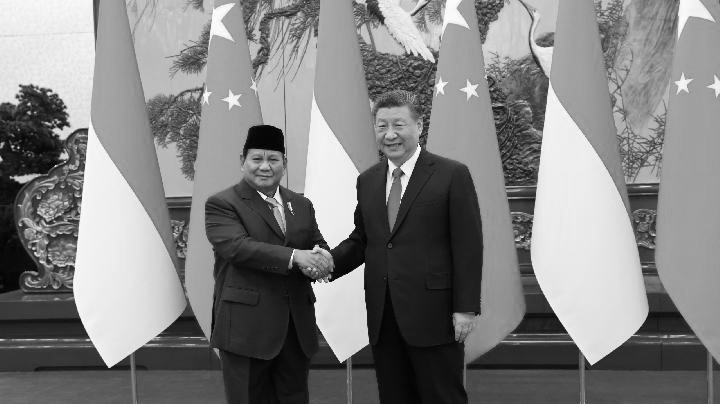
From High-Speed Rail to Military Exercises: How Indonesia-China Ties Are Expanding
Indonesia and China are deepening ties across defence, trade, infrastructure, energy and advanced technology, underscoring the increasingly strategic nature of their partnership. The latest talks in Jakarta produced plans for broader military cooperation while expanding economic collaboration in areas critical to national resilience.
On defence, Indonesian Defence Minister Sjafrie Sjamsoeddin and Chinese Defence Minister Dong Jun discussed equipment and defence-material cooperation, military personnel exchanges and collaboration between defence industries. Indonesia also invited Chinese forces to join exercises such as Heping Garuda, aimed at strengthening practical military coordination. The discussions additionally covered a proposed joint munitions factory in Indonesia, potentially involving Chinese technology transfer and production of ammunition, missiles and rockets, with operations expected by 2027.
Economic ties provide a powerful foundation. Bilateral trade reached about US$167 billion in 2025, making China Indonesia’s largest trading partner. Chinese investment has helped finance major infrastructure and energy projects under President Xi Jinping’s Belt and Road Initiative, including the Jakarta-Bandung high-speed railway and the Cirata floating solar power project, Southeast Asia’s largest floating solar facility.
Yet the partnership has not been friction-free. The Jakarta-Bandung railway faced delays, cost pressures and financial challenges, highlighting concerns over project economics and long-term sustainability. The Cirata project, meanwhile, has also been associated with disagreements over pricing and timelines. These issues show that large-scale Chinese-backed investments can deliver strategic infrastructure while creating complicated questions over costs, financing and implementation.
The latest talks seek to broaden cooperation beyond infrastructure. Indonesia and China discussed strengthening food, energy and mineral security, developing industries that support national resilience, and expanding trade through new markets and greater access for Indonesian commodities. Future cooperation could include artificial intelligence, communications satellites and other advanced technologies.
The strategic message is clear: Jakarta and Beijing want a more comprehensive partnership linking defence capabilities, critical minerals, energy security, technology and commerce. For Indonesia, however, deeper engagement must be balanced with its independent foreign policy and the need to manage financial, regulatory and geopolitical risks carefully protecting long-term national interests.