
From Hegemony to Handshake: America’s Strategic Retreat Unfolds
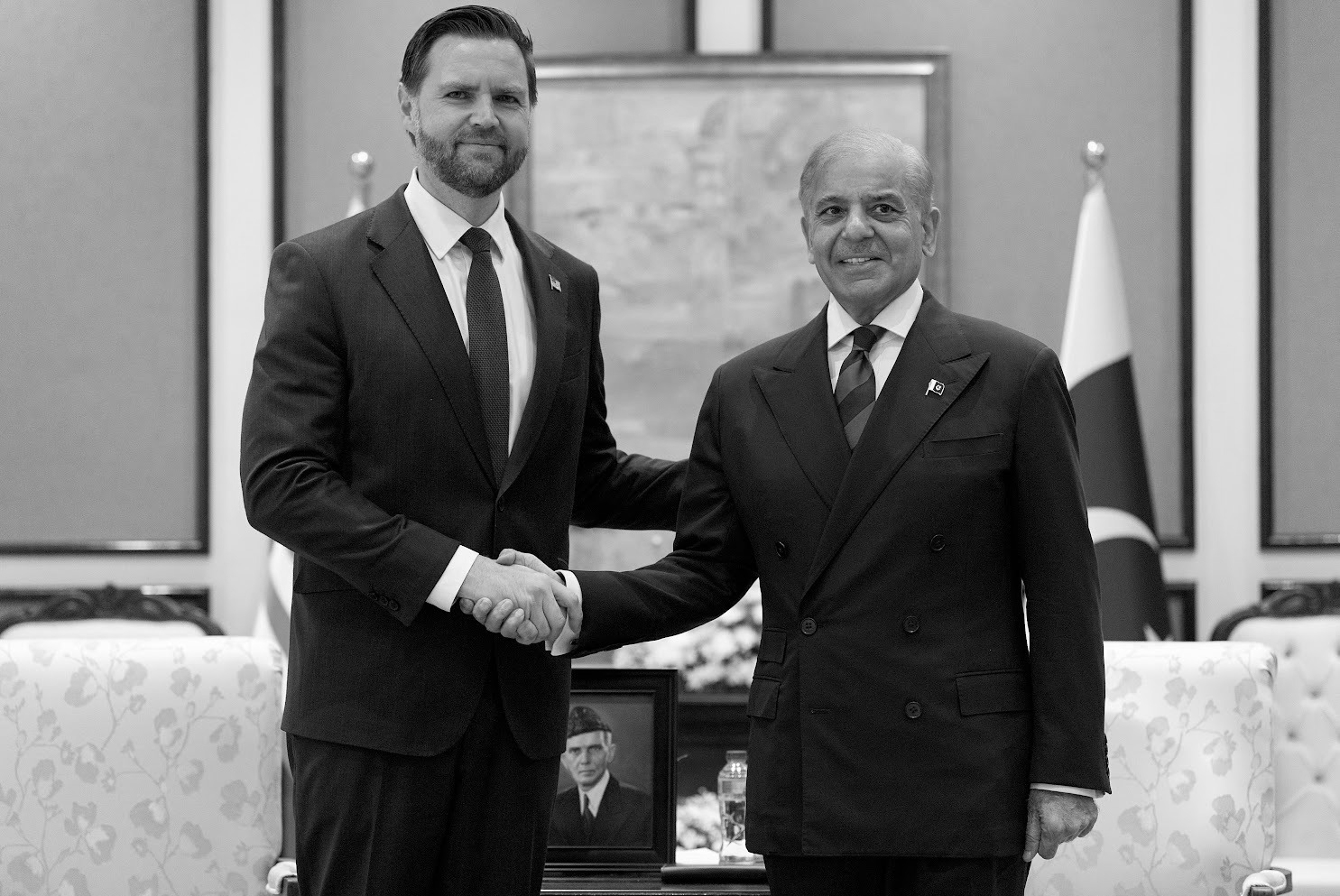
It begins, as diplomacy often does, not with spectacle but with a handshake .
In Islamabad, beneath carefully managed smiles and measured language, U.S. Vice President J.D. Vance embodies the theatre of statecraft : projecting control in a world that increasingly resists it. Yet far beyond the conference rooms, crises unfold that no diplomatic choreography can fully contain.
In Beirut, the night sky is again split by airstrikes. Israeli jets carve fire across fragile calm, underscoring a ceasefire that exists more on paper than in practice. Israel signals selective restraint ; Washington, more quietly, signals limits to its influence over allies.
Diplomacy, in this context, is becoming commentary rather than control .
But the deeper shift lies elsewhere in the maritime arteries of global commerce. The Strait of Hormuz, through which nearly a quarter of global oil flows, has re-emerged as a decisive pressure point . Disruption in shipping, rising insurance costs, and volatile energy markets reveal how geography itself has become leverage .
The lesson is stark: in today’s order, disruption no longer requires nuclear capability. A chokepoint can generate systemic shock slower, but globally pervasive through inflation, supply chain stress, and political instability.
Against this backdrop, the Islamabad dialogue reflects not assertion but adjustment . For decades, U.S. policy in the Middle East rested on the assumption that order could be engineered through presence and deterrence. That assumption is now under strain as regional actors increasingly act independently.
What was once a security umbrella is now viewed as a costly liability. Costs are rising, returns diminishing. The United States remains powerful, but no longer singular .
This is multipolarity in practice .
Seen this way, Islamabad is less about shaping outcomes than managing constraints. Not withdrawal, but recalibration . Not collapse, but redistribution of power .
The handshakes, then, are not surrender. Nor triumph. They are acknowledgements of a world where influence no longer guarantees control , and where adjustment has become the defining feature of geopolitics .