
From ‘Half the Sky’ to Homemaking: Study Finds Shift in China’s Women’s Narrative
China’s narrative on women has increasingly shifted from their role in public life towards family and child-rearing, reflecting political and demographic changes, a study has found.
Researchers Jia Wang of Hong Kong Polytechnic University and Ruiyu Zhang of the University of Hong Kong analysed more than 125,000 People’s Daily articles published between 1990 and 2023. They found that references connecting women with public roles such as leadership, careers and entrepreneurship declined sharply from the late 1990s, while associations with family, childbearing and housework remained strong.
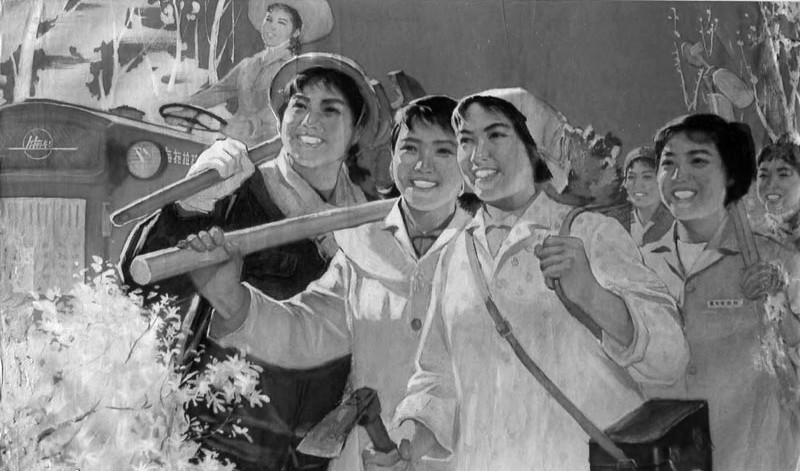
In the early 1990s, public and private portrayals were relatively balanced. A 1992 People’s Daily article invoked Mao Zedong’s “women hold up half the sky” slogan while highlighting women’s contribution to socialist modernisation and reform.
The gap widened from the late 1990s and reached its widest point in 2018, which the researchers described as a “decisive rhetorical shift” towards domestic and familial roles. From 2020, references to women’s public participation showed a modest rebound, potentially reflecting demographic pressures, labour-market needs and international scrutiny of gender equality.
The study, published in Frontiers in Sociology in May, also linked the changing media narrative to wider institutional and ideological shifts.
Women’s declining presence is visible in China’s political hierarchy. There have been no women among the 24 Politburo members since 2022, while no woman has ever served on the Politburo Standing Committee, the country’s top decision-making body. Only one of China’s 31 provincial party heads is a woman.
The findings come as Beijing seeks to reverse declining birth rates and population ageing. China ended its one-child policy in 2016 and introduced a three-child policy in 2021.
Researchers have warned that policies encouraging larger families can carry a “motherhood penalty”, reducing women’s labour-force participation, wages and promotion prospects. Analysts have also argued that reproductive expectations can constrain women’s autonomy while serving broader population goals.
The study therefore highlights a growing tension between China’s longstanding equality rhetoric and the pressures shaping women’s roles in contemporary society.