
From Energy Security to Carbon Markets: India-Germany Partnership Enters New Phase
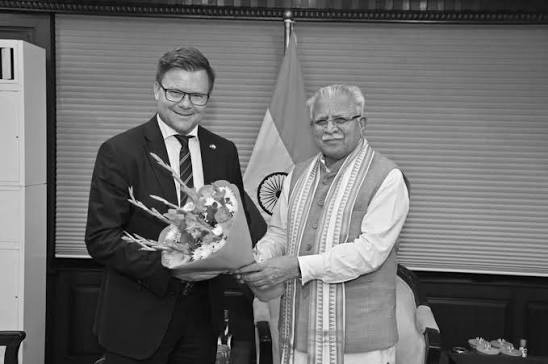
India and Germany are moving to deepen energy cooperation as both seek to balance energy security, affordability and climate action. At a September 2 meeting in New Delhi, Union Power and Housing & Urban Affairs Minister Manohar Lal and German Environment Minister Carsten Schneider discussed energy security, electrification, low-carbon development, carbon markets and supply-chain diversification.
The partnership has an institutional foundation. The Indo-German Energy Forum, established in 2006, brings together governments and the private sector around energy security, renewable energy, efficiency, investment and collaborative research. Its work includes green-energy corridors, demand-side efficiency and green hydrogen studies, providing a platform for practical cooperation.
Electrification offers significant opportunities for investment and technology transfer. Joint efforts in grid modernisation, energy storage, electric mobility, efficient buildings and industrial electrification could combine German engineering and technological expertise with India’s large and growing market. Such collaboration can support domestic manufacturing, innovation and employment while helping integrate renewable power more effectively.
Supply-chain diversification is another strategic opportunity. Cooperation on critical minerals, batteries, renewable-energy equipment, hydrogen technologies and grid components can reduce vulnerabilities caused by concentrated global supply chains. For Germany, India can become a more important manufacturing and diversification partner; for India, German investment and expertise can strengthen domestic capabilities.
Low-carbon development can further connect climate objectives with commercial opportunities. India’s emerging carbon market is intended to encourage emissions reductions, efficiency improvements and adoption of low-carbon technologies. German experience can contribute to market design, monitoring, verification and investment, while Indian scale can provide opportunities to deploy clean technologies.
The goal is a secure, affordable and sustainable energy future. The two ministers stressed that energy security, low-carbon development and carbon markets are mutually reinforcing. Their cooperation could therefore create pathways for finance, technology partnerships and research while supporting climate goals.
The timing is significant, as India and Germany have recently marked 75 years of diplomatic relations and 25 years of their Strategic Partnership. Energy cooperation can now become an even stronger pillar of their economic and strategic bilateral relationship.