
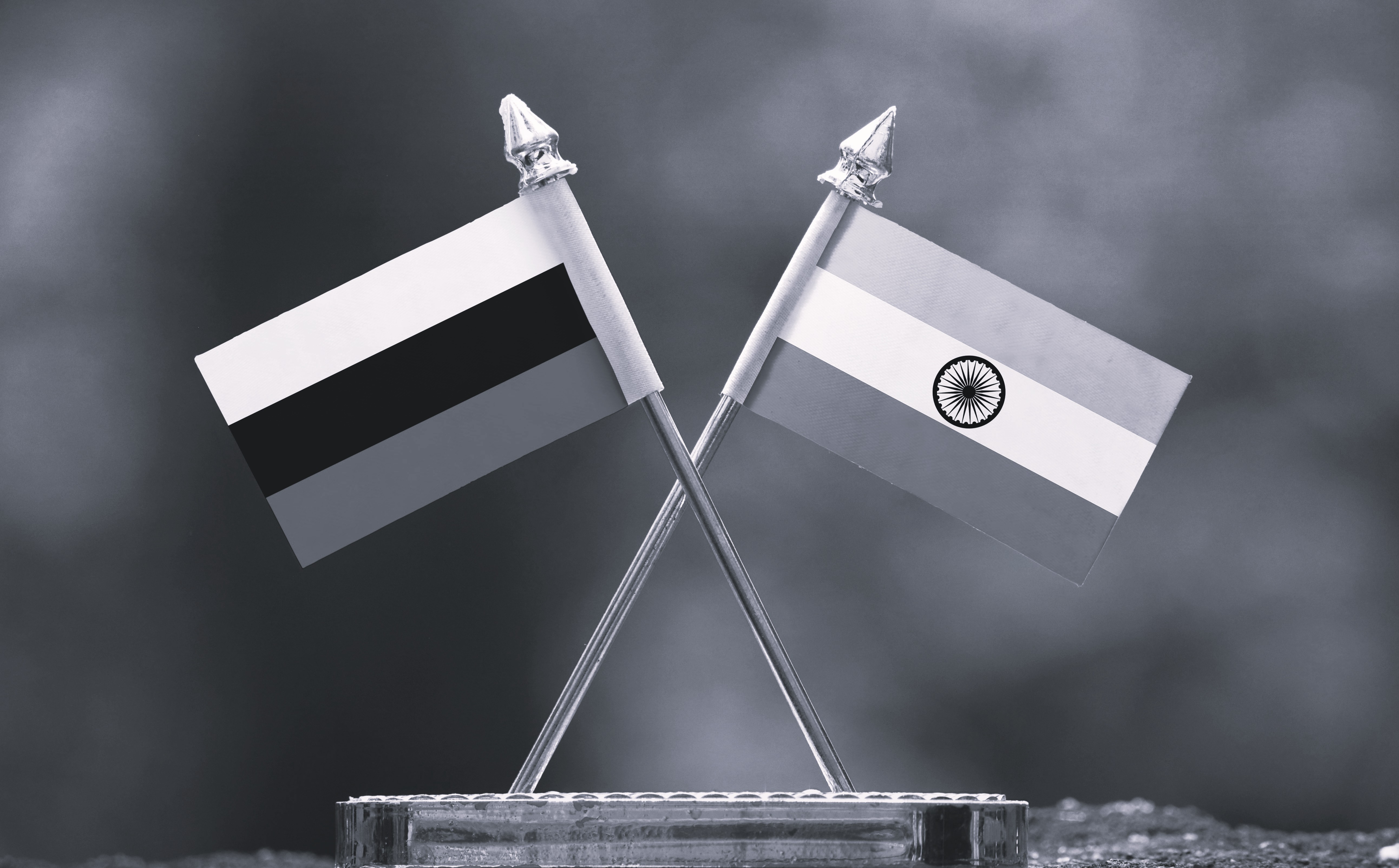
From cold war comrades to strategic ambiguity: India - Russia ties since 1947
As Vladimir Putin prepares to visit India on December 4–5 for the latest annual summit with Prime Minister Narendra Modi, the moment provides a timely opportunity to revisit a partnership that has stretched across seven decades. What began as a Cold War-era relationship shaped by anti-colonial solidarity and strategic alignment has today become a cautious, multi-layered, and often ambiguous engagement. This story traces that evolution, asks difficult questions, and considers where the partnership might be headed next.
The Genesis: Post-Independence and Cold War Solidarity (1947–1991)
When India emerged as an independent nation in 1947 and began shaping its non-aligned foreign policy, its approach to the Soviet Union was initially exploratory. But as Cold War divisions sharpened, India increasingly found the USSR to be a dependable partner. Both shared a deep suspicion of imperial power structures and supported anti-colonial struggles across Asia and Africa.
Through the 1950s and 1960s, the ties expanded rapidly. Soviet economic assistance arrived in the form of major industrial projects, including flagship steel plants in Bhilai and Bokaro. Diplomatically, Moscow offered India crucial support at the United Nations, using its veto power several times on issues like Kashmir and during periods of regional conflict.
The defining turning point arrived in 1971 with the Indo–Soviet Treaty of Peace, Friendship and Cooperation. Signed in the midst of the Bangladesh Liberation War, the treaty ensured unwavering Soviet support at a moment when the U.S. tilted openly towards Pakistan. For decades afterwards, many Indian policymakers remembered Moscow as a steadfast, value-driven ally a partner that showed up in moments of existential pressure.
Throughout the Cold War, India gained a strategic buffer against Western pressure, and the USSR acquired a reliable Asian friend. The partnership was rooted not merely in transactional interests but in a sense of ideological closeness and geopolitical trust.
Post-Soviet Transition: Calibrating the New Reality (1991–2000)
The breakup of the Soviet Union in 1991 forced India to re-evaluate its external relationships. The disappearance of its most powerful backer created an immediate strategic vacuum. Yet New Delhi moved swiftly: in 1993, both sides signed the India–Russia Treaty of Friendship and Cooperation, reaffirming the essence of the old partnership under a new geopolitical order.
In 1994, a Military-Technical Cooperation agreement ensured continuity in arms supply a vital decision given the huge inventory of Soviet-origin equipment in India’s arsenal. But the global context was changing rapidly. India’s 1991 economic reforms had opened the door to Western capital, technology, and trade. The U.S. emerged as the dominant global power, and India recognized the need to cultivate multiple strategic partners.
This period marked the beginning of a gradual shift: Russia remained important, especially for defense, but it was no longer India’s sole strategic anchor. The emotional and ideological warmth of the Cold War years slowly gave way to a more pragmatic, interest-driven engagement.
Institutionalising the Partnership: Strategic & “Privileged” Alliance (2000–2010s)
With Vladimir Putin’s rise at the turn of the century, India and Russia recommitted to deepening their ties. In 2000, they announced a Strategic Partnership, followed by the establishment of annual summits signalling an intention to keep high-level political engagement consistent.
Over the next decade, the relationship was elevated to a Special and Privileged Strategic Partnership, covering defense, energy, nuclear cooperation, space, science, and trade. Russia remained India’s principal arms supplier and allowed technology transfers in ways Western nations often resisted. The development of the Indo–Russian BrahMos cruise missile illustrated the benefits of this collaboration. Energy cooperation also grew. Russia supported India’s civilian nuclear program, including the construction of reactors in Tamil Nadu. High-level political trust persisted, and analysts frequently cited India–Russia ties as among the most stable bilateral partnerships in the post-war world.
By the early 2010s, the relationship had been thoroughly institutionalised, with multiple intergovernmental mechanisms functioning across sectors. It was a mature partnership built on decades of mutual confidence but one that was soon tested by shifting global realities.
The Drift Begins: Diversification, Declining Dependence, Subtle Distance (2010–2020)
By the late 2000s and early 2010s, structural change was underway. While defense cooperation remained strong, India began seeking alternatives. Between 2013 and 2022, Russia’s share of India’s defense imports fell from over 60% to around 45%, a notable decline driven by India’s desire for advanced Western systems and domestic manufacturing. India’s economic landscape also diversified. Russia was no longer among India’s top trading partners; instead, the U.S., Europe, China, and the Gulf emerged as major economic anchors.
Geopolitically, India’s outlook changed. China’s rise, India–China border tensions, Indo-Pacific dynamics, and new frameworks like the Quad shifted Delhi’s priorities. India’s foreign policy became more multi-aligned, and Russia’s own deepening relationship with China added another layer of complexity. The result was subtle but unmistakable drift. The partnership remained functional and essential in many domains, but the exclusivity and ideological closeness of earlier decades began to erode. What remained was cooperation, not comradeship.
New Realities, Old Ties: Post-Ukraine War Reset & Strategic Ambiguity (2022–Present)
The 2022 Russia–Ukraine war and the subsequent Western sanctions on Moscow created one of the biggest geopolitical shocks in recent memory. Many expected India–Russia ties to weaken. Instead, they adapted.
India sharply increased imports of discounted Russian crude, turning Moscow into one of its top oil suppliers. Bilateral trade surged from pre-war levels of around USD 13–15 billion to more than USD 65 billion in FY 2023–24. To navigate sanctions-related hurdles, India introduced trade mechanisms such as Vostro accounts to facilitate rupee payments, an example of how both sides sought practical solutions rather than symbolic gestures.
Connectivity ideas like the Chennai–Vladivostok Maritime Corridor gained attention, and cooperation expanded in petrochemicals and fertilizers. Defense ties continue, though with clearer limits. Legacy platforms keep Russia central to India’s military ecosystem, but diversification and indigenous production are reshaping the future.
Politically, India avoided condemning Russia directly, calling instead for dialogue and de-escalation. This balanced approach reflects the broader principle of strategic autonomy: maintaining ties with Moscow while deepening cooperation with the U.S., Europe, and Indo-Pacific partners. Analysts increasingly describe this era as one of strategic ambiguity, a relationship still driven by necessity but moderated by caution and hedging.
Strengths That Endure - But With New Conditions
Despite shifts, several foundational pillars continue to support India–Russia ties:
• Defense and military cooperation : A large portion of India’s core equipment remains of Russian origin, making support and spare parts essential.
• Nuclear and energy cooperation : Russian reactors and fuel supply remain important pillars of India’s energy strategy.
• Institutional frameworks : Long-standing commissions and annual summits offer stability.
• Energy security advantages : Discounted Russian oil has helped India manage inflation and maintain energy stability.
These factors ensure that, despite geopolitical turbulence, the partnership remains relevant and functional.
Core Challenges & Strategic Ambiguities
But major uncertainties continue to test the relationship:
a) Over-dependence vs. diversification:
India’s historic reliance on Russian arms is gradually giving way to a diversified procurement strategy and a push for indigenous production.
b) Economic imbalance:
The trade surge is driven primarily by oil imports, while India’s exports to Russia remain limited, a structure prone to volatility.
c) Sanctions and geopolitical pressure:
India must carefully balance Western expectations with its own strategic needs, navigating sanctions without compromising its autonomy.
d) Fading ideological intimacy:
The emotional and political warmth of earlier decades is no longer a defining feature. The partnership is now firmly interest-based.
e) Domestic imperatives:
India’s emphasis on self-reliance and multi-alignment makes it difficult to sustain the depth of dependence that once characterized the relationship.
What the 2025 Landscape Suggests - Pragmatism Over Passion
Putin’s 2025 visit reflects the current reality: a relationship that is steady but not sentimental. Agreements on energy, trade, and possibly defense may emerge, but both governments recognise that the old alliance model of the 1970s is gone. India aims to reap benefits such as secure energy supplies, technology cooperation, and stable defense maintenance, while avoiding entanglement in Russia’s geopolitical confrontations. Russia, isolated from much of the West, values India as a major market and diplomatic partner.
In this phase, India’s hallmark strategy multi-alignment reinforced by strategic autonomy remains central. The partnership is still labelled “special and privileged,” yet flexible enough to allow India room to deepen ties elsewhere.
What Should India Watch Out For?
Going forward, India must assess several risks:
• Energy security uncertainties if global sanctions evolve or Russian supplies fluctuate.
• Technological stagnation if India remains tied to older Russian systems without adequate modernization alternatives.
• Geopolitical backlash as India balances ties with Russia while engaging deeply with Western blocs.
• Trade imbalance unless India pushes for more diversified and value-added exports to Russia.
From Brotherhood to Business But Relevance Remains
From Cold War solidarity and the 1971 treaty to the post-Soviet recalibration, institutionalized cooperation of the 2000s, and the strategic ambiguity of the present, India–Russia ties have undergone continual reinvention. The relationship has not collapsed; it has adapted to shifting global realities.
The emotional and ideological closeness of the past has faded, replaced by interest-driven cooperation shaped by pragmatism. For India, the challenge is to harness the benefits in defense readiness, energy security, and economic stability while preserving strategic autonomy and avoiding overexposure to Russia’s geopolitical uncertainties.
As Putin prepares to land in New Delhi in 2025, the India–Russia partnership stands not as an unshakeable ideological bond but as a cautious, calibrated, and transactional engagement perhaps the only type of long-term friendship a rising India can realistically sustain in today’s fluid global order.