
From China to Mumbai: Remote Robotic Surgery Breaks India’s Medical Barrier
In a development that would have seemed implausible until recently, a surgeon based in Shanghai remotely performed two complex urological procedures on patients admitted at a hospital in Mumbai , more than 5,000 kilometres away. The surgeries, a radical prostatectomy and a partial nephrectomy were carried out at Kokilaben Dhirubhai Ambani Hospital (KDAH) in Andheri, marking what the hospital described as India’s first international cross-border remote robotic surgeries.
What sets this achievement apart is that it goes far beyond conventional robotic surgery. In most robotic procedures , the surgeon is physically present in the hospital, seated at a console just a few metres from the operating table. In this case, the surgeon and patients were located in different countries, making the surgeries entirely dependent on high-speed telecommunications , real-time data transmission, and multiple layers of technological safeguards. This form of surgery, known as telesurgery, introduces complexities that are not clinical alone but also technological and regulatory.
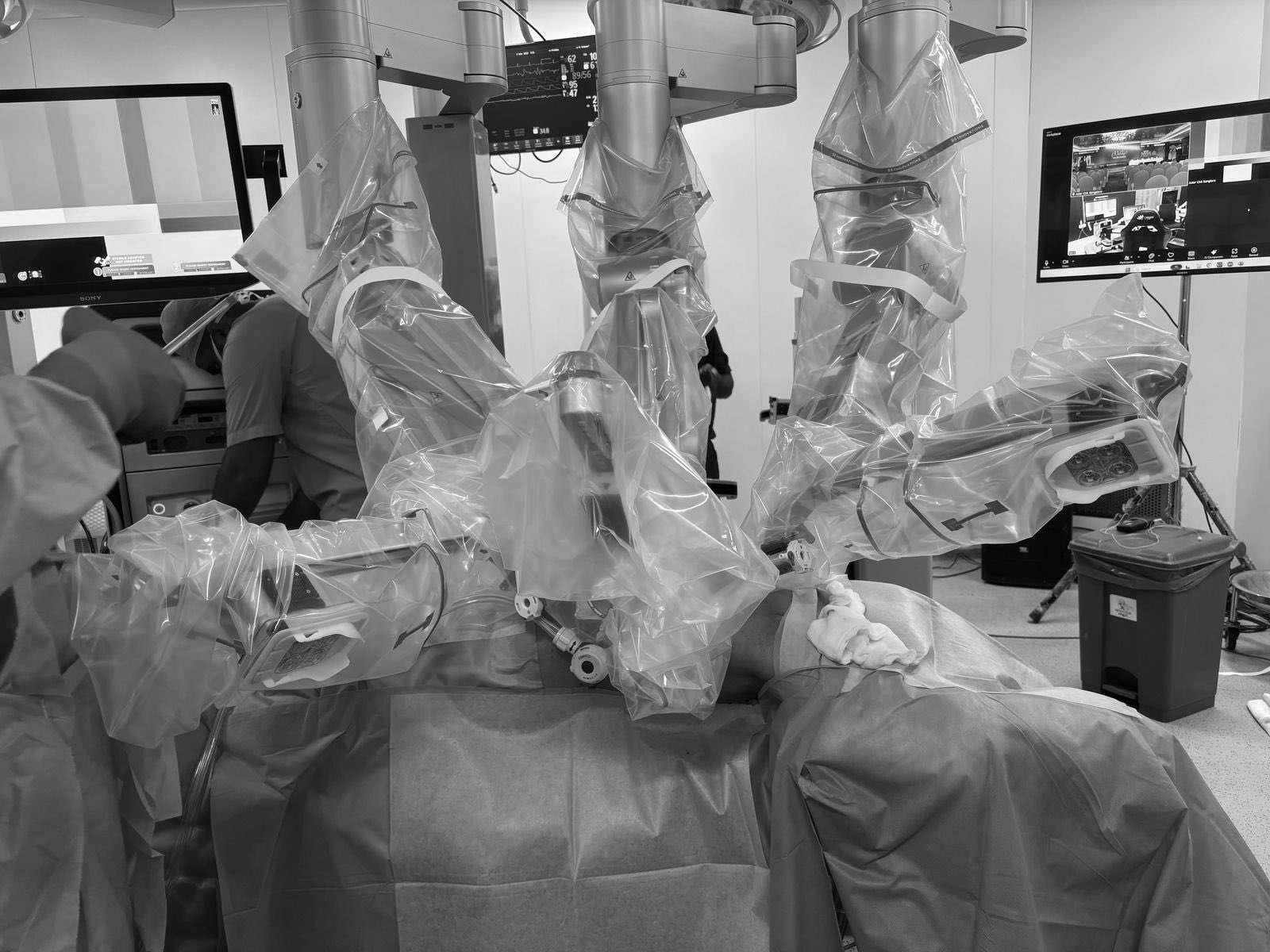
The procedures were enabled by the Toumai Remote Robotic Surgery System , a platform specifically designed for long-distance surgical intervention. The system consists of robotic arms positioned beside the patient in Mumbai and a surgeon’s console located in Shanghai . Every movement made by the surgeon’s hands and feet is converted into digital commands and transmitted instantly to the robotic instruments, which replicate the actions with millimetre-level precision inside the patient’s body. At the same time, high-definition visual feedback from the operating field is streamed back to the surgeon continuously.
A critical factor in the success of these surgeries was latency, the time delay between the surgeon’s movement and the robot’s response. KDAH said the system achieved an ultra-low bidirectional latency of just 132 milliseconds , a delay so small that the surgeon experiences near real-time responsiveness. In delicate procedures such as cancer surgery, even slight delays can affect accuracy and safety, making low latency essential rather than optional.
Behind the technology is Shanghai MicroPort MedBot (Group) Co., Ltd. , a China-based medical robotics company that developed the Toumai system. Unlike many robotic platforms originally designed for in-hospital use, Toumai has been positioned as a telesurgery-capable system from the outset. The platform has received clearance from India’s Central Drugs Standard Control Organisation and has US FDA study approval for telesurgery, meaning it is authorised for use in controlled clinical studies in the United States. This regulatory status is significant, as remote surgery raises heightened concerns around system reliability, patient safety, and accountability.
The surgeries in Mumbai were led by Dr T B Yuvaraja , Director of Uro-Oncology and Robotic Surgery at KDAH, who has performed more than 4,100 robotic procedures. After completing the operations from Shanghai, he said remote robotic surgery has the potential to transform access to specialised surgical care by overcoming geographical barriers and enabling world-class expertise to reach patients regardless of location.
While cross-border telesurgery has been demonstrated globally before most notably in 2001 , when surgeons in New York operated on a patient in France the Mumbai–Shanghai procedures are significant in the Indian context. They represent a shift from experimental demonstrations to hospital-led clinical applications, positioning India within a small group of countries capable of executing such complex cross-border medical interventions.
The development also comes amid growing experimentation with remote surgery within India itself. Recent reports have highlighted domestic remote robotic procedures carried out between cities and even in smaller towns, using both imported and indigenous robotic systems. This parallel trend suggests that while international telesurgery remains rare and complex, domestic remote surgery may scale more quickly due to fewer legal and jurisdictional hurdles.
Despite the clinical success, the milestone raises important questions that extend beyond the operating room. Cross-border telesurgery will require robust digital infrastructure, strong cybersecurity protections, clear liability frameworks, and well-rehearsed fail-safe protocols in case of network disruptions. It also raises broader questions about cost, access, and whether such advanced technologies can eventually benefit patients in remote and underserved regions rather than remaining confined to elite medical centres.
For now, the surgeries stand as proof that distance is no longer an absolute barrier to advanced surgical care. As hospitals, regulators, and policymakers assess the implications, this rare convergence of robotics, telecommunications, and medicine may mark the beginning of a new chapter in how and where complex surgeries are performed.