
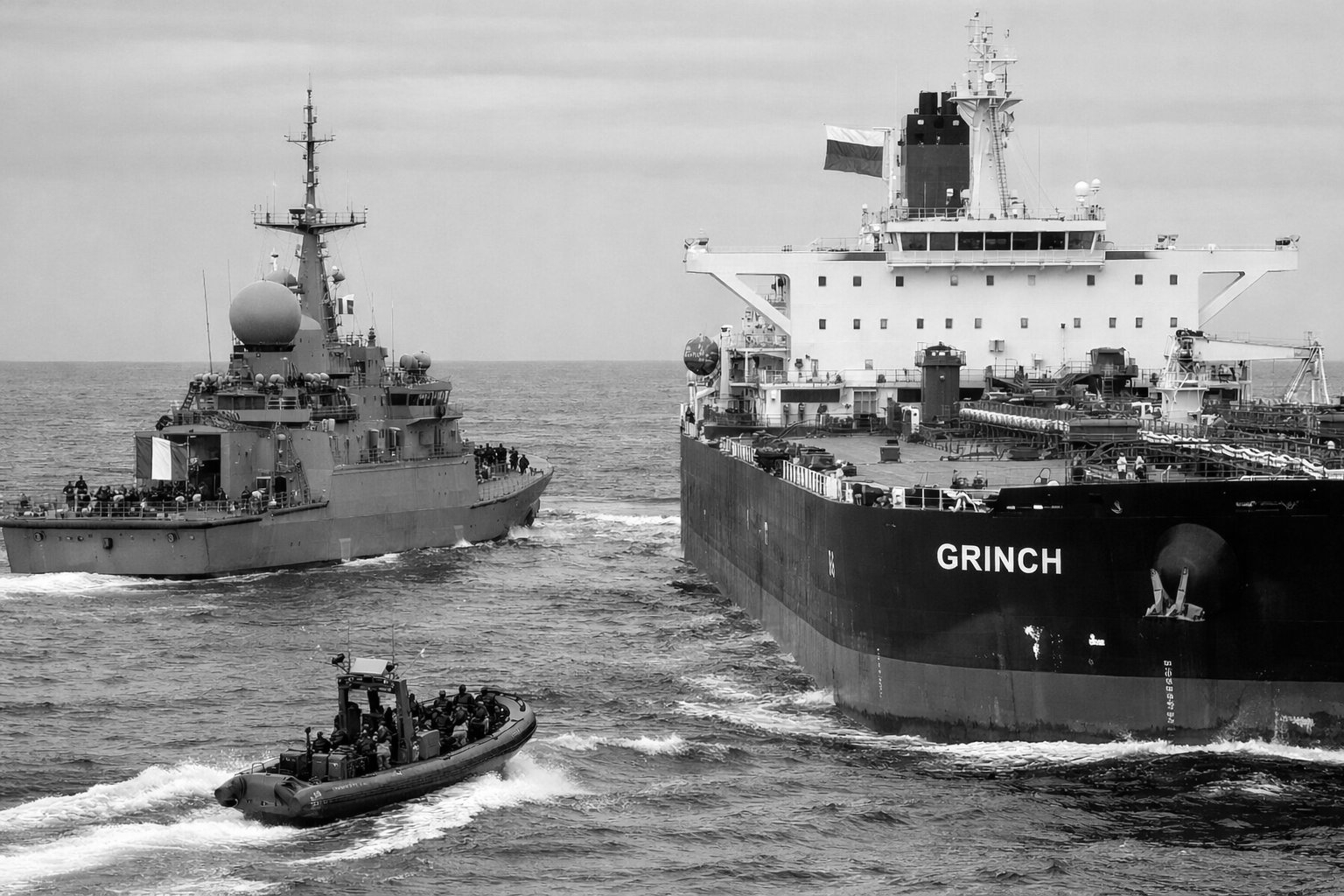
French navy intercepts Russian Grinch tanker, investigation launched in Marseille
French authorities have opened a formal investigation into an oil tanker intercepted by the French navy in the Mediterranean Sea that is suspected of carrying Russian petroleum in violation of international sanctions targeting Moscow’s energy exports. The vessel, known as The Grinch , was seized on January 22 after being stopped in international waters and is now being redirected to the port of Marseille‑Fos for detailed inspection and legal review.
Prosecutors in Marseille said they are examining whether the ship failed to confirm its true nationality and possibly violated sanctions designed to curtail Russian oil exports linked to the country’s war in Ukraine. The tanker is believed to be part of Russia’s so‑called “ shadow fleet ,” a network of vessels used to conceal ownership, flag identity, and cargo origins to evade sanctions.
The French navy’s interception took place in international waters of the western Mediterranean between Spain and Morocco with support from allied forces, including the United Kingdom, which helped track the vessel before boarding. Military footage released by France shows commando teams fast‑roping from helicopters onto the tanker to secure the ship and examine its documentation.
The Grinch had departed Murmansk in northwestern Russia and was sailing under a Comoros flag, a registry now suspected to have been falsely claimed, a common tactic used by shadow fleet tankers to hide their true links to sanctioned entities. Western officials say these older, opaque tankers continue to transport Russian crude to destinations such as India and China in defiance of sanctions.
President Emmanuel Macron underscored France’s resolve in the operation, declaring, “We will let nothing pass,” and described the naval action as lawful and conducted in compliance with the United Nations Convention on the Law of the Sea. This interception follows similar actions by Western navies targeting other shadow fleet tankers in recent months as part of a broader effort to choke off revenue streams that could finance Russia’s military operations.
Russia’s shadow fleet has expanded dramatically since Western sanctions were imposed after the full‑scale invasion of Ukraine in 2022. Analysts estimate the number of tankers and vessels involved varies widely because of their opaque nature, but multiple assessments suggest there could be hundreds to over a thousand such ships operating globally. Some estimates put the Russian shadow fleet at over 1,100 to 1,400 vessels involved in transporting oil and petroleum products around the world, with only a portion of them currently sanctioned by the United States, European Union, or United Kingdom.
The European Union alone has blacklisted nearly 600 shadow fleet vessels , imposing bans on access to EU ports and a range of maritime services, as part of efforts to disrupt Russia’s ability to export oil around sanctions and support its war economy.
The investigation in Marseille will determine next steps, including possible charges or legal proceedings, and authorities have not yet released details about the crew’s status or the timeline for any trial. Observers say the outcome could set an important precedent for how Western nations enforce sanctions against shadow fleet operations on the high seas.