
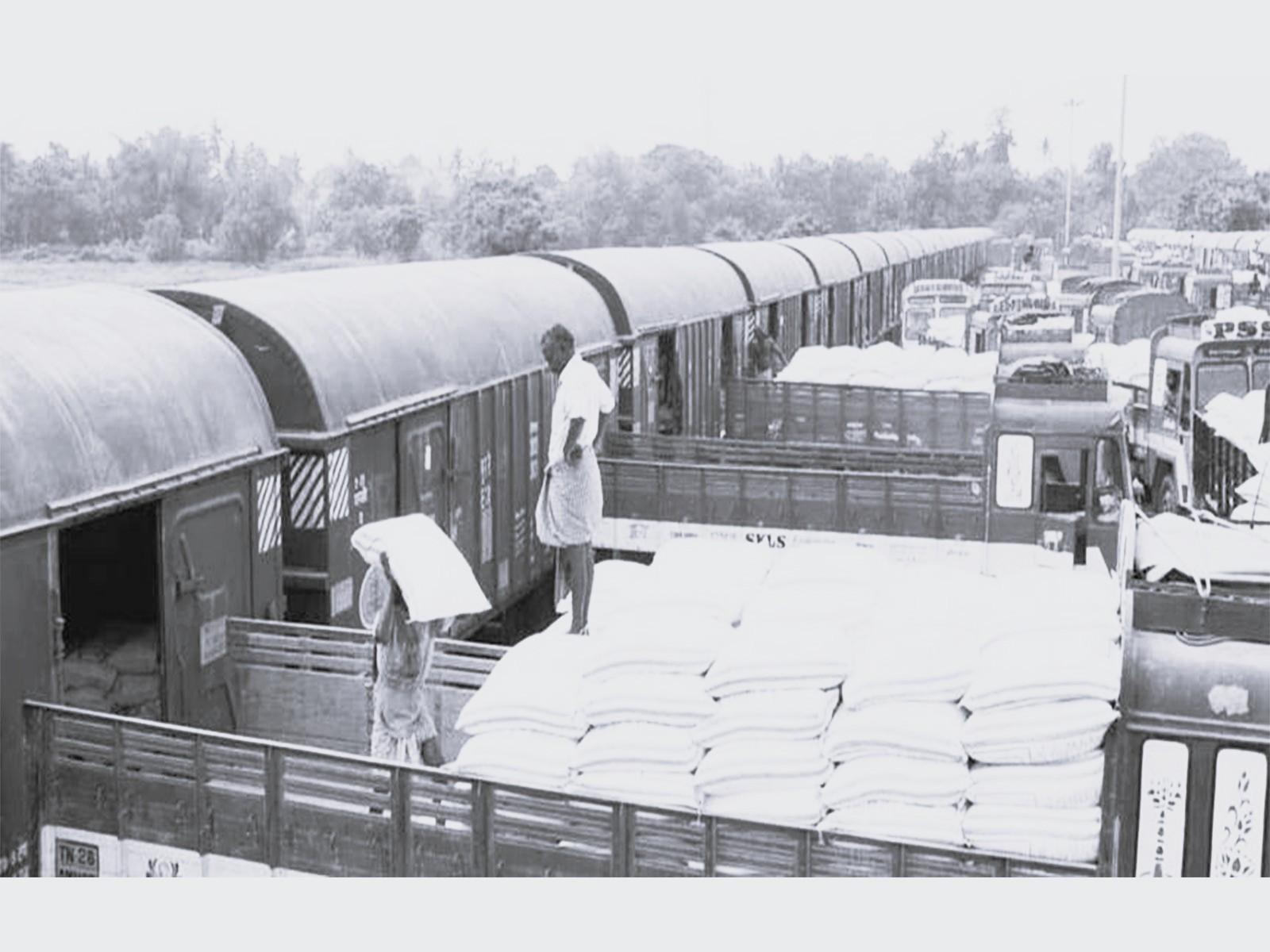
Freight Revolution: Indian Railways crosses 1 Billion tonnes
Indian Railways has crossed a historic milestone by surpassing the cumulative one-billion-tonne mark in freight loading for the financial year 2025-26, achieving this target ahead of schedule. Official figures released by the Ministry of Railways show that as of mid-November, total freight loading reached 1,020 million tonnes, underscoring strong operational performance and the impact of sectoral reforms. Coal continues to lead as the pivotal sector with 505 million tonnes, followed by iron ore at 115 million tonnes, cement at 92 million tonnes, container traffic at 59 million tonnes, pig iron and finished steel at 47 million tonnes, fertilizers at 42 million tonnes, mineral oil at 32 million tonnes, food grains at 30 million tonnes, steel plant raw materials at approximately 20 million tonnes, and other goods at 74 million tonnes. Daily freight loading has risen to 4.4 million tonnes from 4.2 million tonnes last year, while cumulative loading between April and October 2025 reached 935.1 million tonnes, up from 906.9 million tonnes during the same period the previous year, reflecting enhanced operational efficiency, strong demand, and the railway’s growing role as the economic backbone of the country.
The remarkable growth in freight transportation has been fueled by major infrastructure initiatives aimed at modernizing India’s rail logistics and bringing it up to global standards. The establishment of Dedicated Freight Corridors (DFCs), particularly the Eastern and Western corridors, has revolutionized long-haul freight transport by providing high-capacity, dedicated tracks for cargo movement. These corridors allow higher average speeds, reduced transit times, and decongestion of conventional lines shared with passenger traffic. Complementing this, the government has commissioned 118 Gati Shakti Multimodal Cargo Terminals across 18 states as of October 2025, exceeding last year’s target of 100 terminals. These terminals act as central hubs for cargo consolidation and first/last-mile connectivity, integrating rail with road transport, and aligning India’s freight network with global multimodal logistics standards. Plans are underway to expand this network to 200 terminals along the freight corridors, many under public-private partnerships, to enhance efficiency and capacity further.
Containerization and modern rolling stock have also contributed to this transformation. The Container Corporation of India (CONCOR) has expanded double-stack container train services on key routes, improving efficiency, reducing emissions, and making rail a more competitive option for short- and long-haul freight. Additionally, 23 new container terminals are being developed in multiple states to meet growing demand. Modern locomotives, such as the WAG D-9 electric freight engines, are now powering these operations, offering higher hauling capacity while reflecting India’s push toward self-reliant high-power freight solutions. Policy reforms like the General Purpose Wagon Investment Scheme (GPWIS), Liberalized Special Freight Train Operator (LSFTO), and Automobile Freight Train Operator (AFTO) schemes are drawing private investment and expanding operational capacity, while incentives such as haulage charge discounts for returning empty containers encourage efficiency.
Indian Railways has also prioritized sustainability alongside growth. Over 95% of the broad-gauge network is electrified, enabling the railways to target Scope 1 net-zero carbon emissions by 2025, five years ahead of the government’s original goal. The shift to electrified freight, coupled with mechanized bulk handling, has saved over 143 million tonnes of CO₂ over the past decade, equivalent to planting 1.21 billion trees. Transporting bulk and containerized cargo by rail reduces congestion on highways, lowers logistics costs, and supports India’s broader climate and economic goals. For example, moving goods by rail is up to 50% cheaper than by road, saving the nation approximately three lakh twenty thousand crore rupees in logistics costs over the past ten years.
Cement transport has emerged as a flagship example of how modernization is transforming rail freight. The introduction of a uniform bulk freight rate of ₹0.90 per tonne-kilometre for cement moved in specially designed tank containers has replaced the older, complex slab system, simplifying costs and supporting short-haul shipments. Mechanized bulk cement terminals equipped with hoppers, silos, and bagging plants now allow rapid loading and unloading with multimodal connectivity to roads, enabling turnaround times of 25–30 minutes. These reforms, praised by the Cement Manufacturers’ Association, are expected to raise rail’s modal share for cement from seven million tonnes in 2024-25 to 30% of total output by 2030.
Technological advancements further enhance the efficiency and safety of rail freight. The in-house train protection system “Kavach” is being deployed on major routes to reduce accidents, while digital operations and predictive maintenance strategies optimize rake management and overall operational resilience. Research into AI-based logistics, 6G-enabled telemetry, and smart infrastructure indicates that Indian Railways is preparing to remain competitive with global best practices in freight transport.
The billion-tonne milestone, therefore, represents more than a record; it signifies the successful culmination of comprehensive reforms, infrastructure expansion, technology adoption, and sustainability initiatives. By modernizing its corridors, terminals, rolling stock, and operational systems, Indian Railways has transformed itself into a world-class freight network, offering faster, cheaper, greener, and more reliable logistics. This achievement not only strengthens India’s economic backbone but also supports industrial competitiveness, affordable infrastructure, and the nation’s commitment to sustainable development.