
France's Education Reforms Fall Short as Students Vow to Protest Again
France's education reforms have failed to quell student anger, with protest leaders vowing to continue demonstrations despite government concessions. The unrest, driven by concerns over school funding, university admissions and the rising cost of living, has escalated into a wider crisis involving violent clashes, business losses and growing political pressure on President Emmanuel Macron's minority government ahead of the 2027 presidential election.
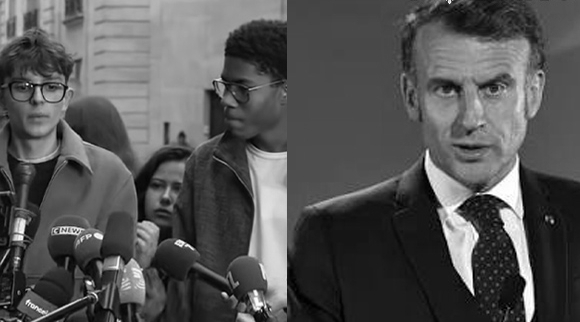
High school student representatives met Prime Minister Sébastien Lecornu and Education Minister Édouard Geffray on Monday before the government announced its proposals. However, student leaders said their demands remained unmet. “Not all our demands were met. We'll go on for as long as it takes,” Reuters quoted representative Louis Letoublon as saying.
The government has pledged to replace Parcoursup, France's national university admissions platform, by 2028, with substantial changes for the 2027 admissions cycle. The platform has faced criticism over unclear selection criteria and unequal access to preferred courses. The proposed reforms include greater transparency in admissions decisions and explanations for rejected applications. The government also plans to create 15,000 additional higher education places, link student grants to inflation from 2027 and cap certain high school classes at 28 students.
Other measures include four billion euros in low-interest loans for school renovations, one billion euros for university campuses by 2029, additional teaching positions and improved arrangements for replacing absent teachers. The government has also pledged to improve learning conditions in disadvantaged schools. However, France's public debt, approaching 120% of gross domestic product, limits its ability to increase spending.
The concessions follow violent demonstrations on October 17, when protesters set fires, looted shops and stormed public buildings, including Marseille City Hall. During a visit to Marseille on Monday, Macron criticised social media as a “tool for mobilising the worst impulses”, accusing it of damaging democracy. He said looting and vandalism must never happen again and promised to maintain public order while addressing students' legitimate grievances.
Authorities have acknowledged security and intelligence failures surrounding the October 17 violence. Security was subsequently strengthened, and local authorities imposed curfews in more than a dozen areas. Interior Minister Laurent Nunez reported 1,435 arrests during Saturday's demonstrations, alongside injuries to 267 police officers and gendarmes and 150 protesters, three of whom were gravely injured.
The October 24 demonstrations drew an estimated 410,000 people, according to the Interior Ministry, while the CGT trade union put turnout at nearly 800,000. Macron warned that further demonstrations could turn risky, with fresh protests expected around Halloween and a nationwide mobilisation planned for November 5. The movement has expanded beyond students, drawing support from trade unions and yellow-vest activists protesting economic pressures, including high fuel costs.
The unrest has also inflicted heavy losses on businesses. Alain Di Crescenzo, head of France's chambers of commerce and industry network, said retailers had kept shops closed as a precaution after the violence, with sales falling by around 80%. Meanwhile, clashes between organised far-right and far-left groups in several cities have heightened concerns about public order.
Politically, the unrest has strengthened far-right leader Marine Le Pen ahead of next year's presidential election. An opinion poll cited by Reuters placed her support at 32-33.5%, ahead of hard-left leader Jean-Luc Mélenchon at 17%. With students refusing to abandon their campaign, Macron's government faces the twin challenge of delivering meaningful education reforms and restoring public confidence in its ability to maintain order.