
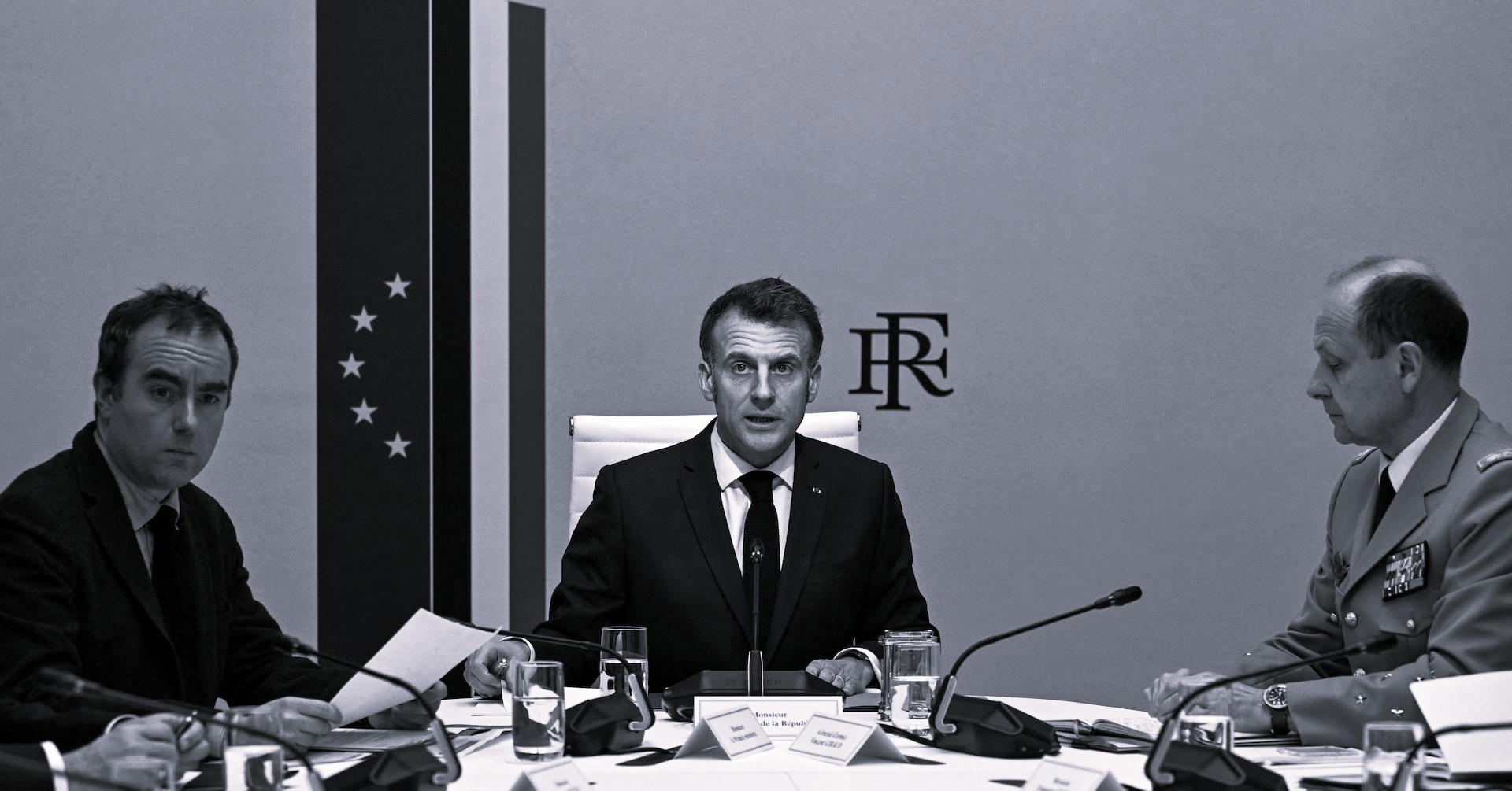
France Strengthens Military Presence in West Asia Ahead of Macron’s Postwar Diplomacy Push
France has significantly increased its military presence in the Middle East, deploying an aircraft carrier and multiple warships as President Emmanuel Macron attempts to balance military readiness with diplomatic engagement amid escalating regional tensions. Paris has sent the nuclear-powered Charles de Gaulle aircraft carrier along with several warships and helicopter carriers to the eastern Mediterranean and nearby waters. The naval group also includes fighter aircraft such as the Rafale jets, which are capable of conducting air defence and strike operations. Macron described the deployment as “unprecedented” , emphasising that France’s role is defensive rather than offensive.
The French president said the military build-up is meant to protect French citizens , support regional partners and respond quickly to emergencies. More than 400,000 French nationals live across the Middle East, including large communities in Israel and the United Arab Emirates . The deployment also allows France to organise evacuations if the conflict intensifies. France has therefore positioned its naval forces strategically across the region to ensure rapid response capabilities and reinforce its influence during the crisis.
French forces are also reinforcing defence arrangements with Gulf allies such as Qatar , Kuwait , and the UAE, where France maintains a permanent military base in Abu Dhabi . Authorities confirmed that French Rafale jets have intercepted drones targeting the UAE since the conflict escalated, highlighting Paris’ commitment to protecting its partners. These defence partnerships allow France to provide military training, intelligence sharing and air defence support in the region.
The rising tensions were underscored last week when a French soldier was killed and several others injured in a drone attack near Erbil in northern Iraq. The troops were participating in a multinational counter-terrorism mission aimed at training Iraqi security forces and strengthening regional stability. The incident highlighted the risks faced by foreign forces operating in volatile conflict zones.
Alongside military measures, Macron has intensified diplomatic efforts aimed at containing the conflict. He has urged de-escalation between Hezbollah and Israel in Lebanon , where renewed fighting has caused heavy casualties and displaced hundreds of thousands of civilians. France has longstanding historical ties with Lebanon and continues to play a key role in diplomatic initiatives related to the country’s security and political stability.
France maintains troops in the United Nations peacekeeping mission in Lebanon and recently sent humanitarian assistance to Beirut. The aid included medicines, medical equipment, shelter materials and essential supplies aimed at helping civilians affected by the fighting. Paris has also supported the Lebanese military as part of broader efforts to stabilise the situation.
Macron has also maintained contact with Iranian President Masoud Pezeshkian , urging Tehran to halt attacks across the region and reduce tensions. At the same time, he has held discussions with Israeli Prime Minister Benjamin Netanyahu and US President Donald Trump in an attempt to encourage diplomatic dialogue and prevent further escalation of the conflict.
Another priority for Paris is protecting global shipping routes. Macron has proposed an international effort to secure the strategically vital Strait of Hormuz , through which a large share of the world’s oil and gas shipments pass. France believes international cooperation will be necessary to safeguard maritime trade once the security situation improves. Despite the large deployment and diplomatic outreach, analysts say the crisis remains complex and may take months before any meaningful diplomatic breakthrough is achieved.